The sun sets across North America, casting cinematic shadows over the Azteca. For many, the 2026 World Cup is a grand, operatic finale — a Twilight Of The Idols.
At the centre of it all stands Cristiano Ronaldo, a marvel of biological defiance at 41. He has bartered with time to grace a record-breaking sixth World Cup. Having scored in five consecutive editions, Ronaldo sits on a ruthless 971 career goals as of May 2026. His physicality allows him to rage against the dying of the light, as he inches toward an elusive 1,000th career goal.
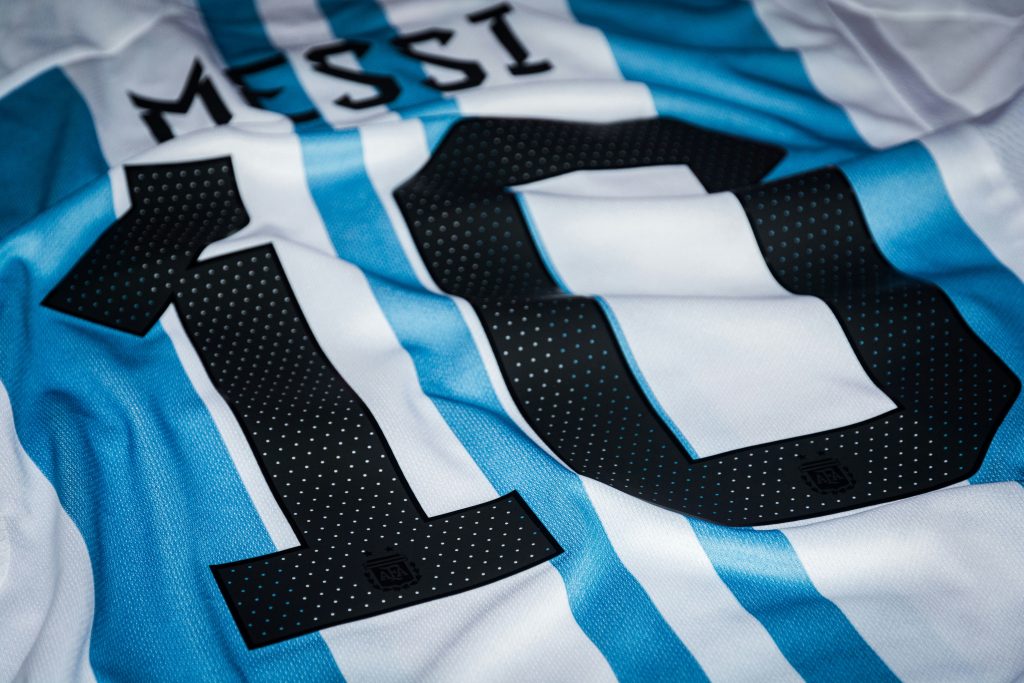
Across the tactical divide stands Lionel Messi. At 38, the man who touched the heavens in Lusail remains a figure of brilliance. His 2026 bid is a gruelling battle of will over weariness, though that term has fundamentally shifted. While Diego Maradona played his final World Cup at 33, Messi’s relevance at 38 highlights how technical genius is often insulated.
This unprecedented longevity is no accident, however. It is the triumph of modern sports science. The current era has benefitted from bio-science, gene-targeted nutrition, and hyper-customised physiotherapy. Real-time cellular monitoring is now paired with sports psychology, guarding players against mental burnout.
Crucially, the dark cloud of the career-ending injury has been dismantled. Shattered joints and chronic ankle traumas, which prematurely destroyed geniuses like Marco van Basten (retired at 28) or Dean Ashton (retired at 26), are treated as highly-manageable setbacks.
Players are rebuilt biomechanically and psychologically, retaining elite performance deep into their thirties. Consequently, every position is haunted by prehistoric greatness.
Guillermo Ochoa (40) enters his sixth World Cup with 152 international caps, while Manuel Neuer (40) wields a record 243 Bundesliga clean sheets.
The defensive lines are marshalled by the iron will of Pepe (43) and Thiago Silva (41), anchors holding firm against youthful pace.
In the engine room, Luka Modrić (40) eyes an astonishing 200 caps for Croatia, supported by Arturo Vidal (39) and Jesús Navas (40).
Up front, the vanguard features the lethal Robert Lewandowski (37), Olivier Giroud (39), and Ángel Di María (38) constructing roadblocks against a youth movement led by Kylian Mbappé.
But what happens on the other side of this tournament for these gods?
The footballing afterlife is an existential wilderness. When the final whistle blows at MetLife Stadium on July 19, they will step into a reality that Eric Cantona once described as a slow, psychological unravelling: “When you retire, you die a little bit... It's a huge shock to the system.”
Some will choose complete detachment, mimicking Gabriel Batistuta retreating to his agricultural ranch.
Yet, an unprecedented number now bypass traditional retirement by conquering television studios or digital empires on YouTube. Roy Keane and Gary Neville’s The Overlap or Gary Lineker's The Rest Is Football have turned analytical banter into multi-million-subscriber juggernauts.
The public views this digital migration with mixed feelings. For most, however, the transition remains a painful confrontation with normalcy. As Neville candidly admitted, “The hardest part is losing the dressing room. You miss the camaraderie, the routine, and the absolute certainty.” Gone is the roar of eighty thousand fans, now replaced with administrative suits and commercial ambassadorships.
The true tragedy belongs to the sport itself. The game they leave behind will never look the same. We are transitioning from an era of individual, divine spark to a homogenised landscape of hyper-athletic systems. We are watching the closing of a chapter in human excellence.
We shall not look upon their like again.

Esquire Malaysia
©2026, Heart Media Pte Ltd
