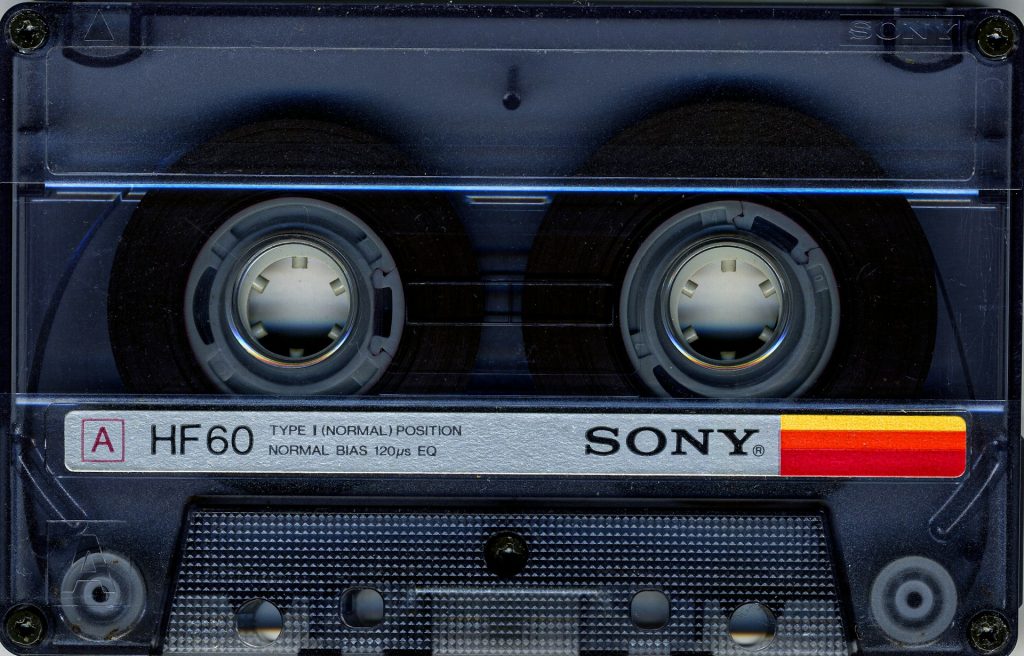
In the 1970s, the Sharpe family were trying to break into a music career. They were unknown singers, part-time backing vocalists in Columbus, Ohio. But one day, they recorded a demo called ‘You and Me’ for a local record label. The demo was never released, and the family forgot all about it.
More than 30 years later, a record collector found a tape at a yard sale. The song made its way onto a compilation of soul music, although nobody could trace the original singers. Not long after, Ryan Gosling happened to hear the song and he pitched it to the director of the movie he was working on. The movie was Blue Valentine.
‘You And Me’ by Penny & the Quarters, with its sweet, earnestly unpolished sound, became one of the film’s defining songs. Today, it has over 59 million streams on Spotify. By the time the band was identified, the lead singer, Nannie Sharpe, had already retired. She had been working as a mail sorter for the past three decades.
This is how a forgotten soul gem finally had its day in the sun. Over 50 years, it traversed cassette tapes, vinyl records and digital streams to make its way to you (and me), here in the present. The song was found against all odds. A rare rediscovery.
I have a weakness for stories like these. Stories that speak to the power of music and the triumph of art. Stories about how some unknown talents finally got their flowers. All of that grand, feelgood stuff.
But recently, it seems, songs keep coming back. The phenomenon of old music being rediscovered is now more frequent and more familiar. The era of globalised entertainment has given Netflix an outsized role in this.
In 2022, Stranger Things single-handedly taught Gen Z about the existence of Kate Bush, sending her 1985 song ‘Running Up That Hill’ to No. 1 around the world. The final season sprinkled the same magic on other tracks from the eighties: the Police, Prince and David Bowie soared in the Billboard charts after being included in the show’s soundtrack.
If Netflix is a behemoth, then Spotify is its gargantuan monster buddy. Both have caused tectonic shifts in the way we consume media. We can stream almost anything, anywhere, all at once. This would have been unimaginable even one generation ago.
We’re all walking around with hundreds of years of music in our pockets. Johann Sebastian Bach is now in a playlist called ‘hopeless romantic’. Not to be outdone, my boy Beethoven is featured on ‘royalcore’.
All this is to say: if a song hits the zeitgeist, it spreads fast. Just ask Sophie Ellis-Bextor. In 2023, she had just released a new album, but she was very likely resigned to never having another hit that equalled her breakout popularity twenty years prior. Even at her peak, circa 2001, she was best known in her home country, the UK.
But when her song ‘Murder on the Dancefloor’ was licensed for the final scene of Emerald Fennell’s Saltburn—yes, the scene where Barry Keoghan dances naked through an English mansion—she had an overnight comeback. A whole new generation discovered Ellis-Bextor’s nu-disco bop. Off the back of that success, she booked a world tour in 2024.
The world is full of musicians who once had a hit or two. Some of them have continued to chip away at it, for the love of the craft. Others have quietly put their instruments down. For many of them, seeing these comeback stories is likely to trigger a heady mix of envy and hope. When is it my turn?
Kate Bush has reportedly made more than £10 million (approximately RM54 million) from streaming royalties, thanks to her Stranger Things needle drop. "It's so exciting. But it's quite shocking really, isn't it?” she remarked in an interview. “I mean, the whole world's gone mad.” One tabloid titled her success story ‘Running to that bank’.
These days, it doesn’t even take a TV show, or a movie. A song’s comeback can hinge on a fifteen second clip, and it’s anyone’s guess what that clip might be. One day in 2020, a man in Idaho shot a TikTok video of himself skateboarding while drinking cranberry juice. As he skated, he vibed to ‘Dreams’ by Fleetwood Mac.
The video went viral, bringing new attention to the song. Mick Fleetwood, the band’s drummer and co-founder, was so happy about it that he posted his own version of the viral video. He also personally thanked the video’s creator, Nathan Apodaca, in an interview. “We owe you,” he said.
If you don’t remember that video, don’t worry. Another viral comeback will be here shortly. In January 2026, it was Jeff Buckley's (or rather, his estate's) turn to enjoy the patronage of Gen Z. Buckley’s 1994 deep cut ‘Lover, You Should’ve Come Over’ is all over TikTok, soundtracking videos of young people #yearning. Not long ago, Kato’s ‘Turn the Lights Off’, from 2010, saw a resurgence thanks to a meme of Jon Hamm blissing out in a club.
If social media feels too slippery for musicians to bank on, then there’s more hope to be found in sampling. Sampling is when a song intentionally integrates part of an existing piece of music. It’s a way for musicians to pay tribute to their influences; and of course, it’s another way for old music to be rediscovered.
The art of sampling emerged with the rise of samplers in the 1980s, and has become central to hip-hop. But it’s now so ubiquitous, you may not even realise you’re listening to a song with a sample.
To give some recent (and excellent) examples: Doechii’s ‘Anxiety’ builds on the plucky instrumentation of Gotye’s ‘Somebody That I Used to Know’ (2011). On ‘luther (with sza)’, Kendrick Lamar samples from Luther Vandross and Cheryl Lynn’s ‘If This World Were Mine’ (1982). So now you know why the song is called ‘luther’.
Music, like all art, is a kind of conversation. It’s thrilling that songs can speak to each other through time: that forgotten hits (or even misses) can find a new audience decades later. The most unexpected mashups can make for something beautiful. Plus, the extra royalties are a small win for musicians, in a world where people have almost entirely stopped buying music.
I was recently listening to PinkPantheress, whose music blends RnB, UK Garage and Drum & Bass. Her song ‘Pain’ includes a chord progression from French composer Erik Satie’s Trois Gymnopédies. The piano composition was written in the 1880s.
Satie passed away in 1925, but I like to think that he’d be proud to be influencing and inspiring musicians today. Surely he’d be happy to know that, more than one hundred years later, his music is still relevant. You’d just have to explain sampling, streaming and remixing to him first.

Esquire Malaysia
©2026, Heart Media Pte Ltd
