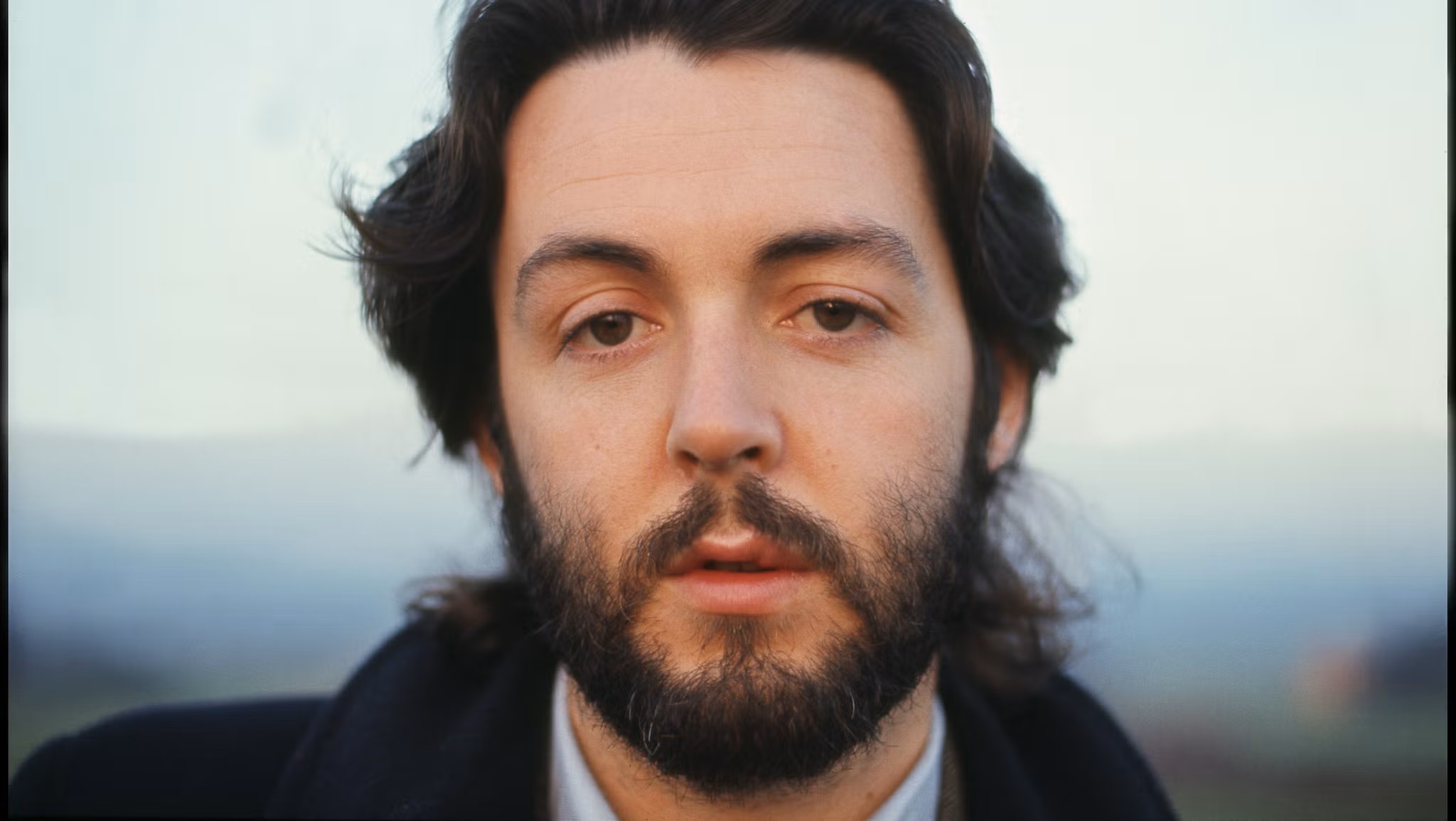
Let this sink in: Paul McCartney was 27 years old when the Beatles broke up. By the age LeBron James was when he won his first NBA championship, Paul McCartney had written, recorded, toured, and released 13 albums—each and every one of them a hit. Given McCartney’s astronomical early success, it’s a wonder why so much of the world turned on the artist when he escaped to Scotland in 1969 to sort out the end of the Beatles.
Peter Jackson’s The Beatles: Get Back docuseries showed the band’s demise unfold over nearly eight hours of footage in 2021, minting another generation of Beatles obsessives. Turns out, the now-83-year-old songwriter isn’t done processing that era either. According to Morgan Neville, the director of a new documentary about McCartney titled Paul McCartney: Man on the Run, the decade that McCartney spent processing the end of the Beatles is still something that has the musician racking his brain today.
“Paul started to understand that the reality was not what everybody told him it was: that the end of the Beatles was all horrible and they all hated each other,” Neville says. “A lot of the ’70s was painful. There’s still this process of Paul reevaluating what he did in that time. When he saw the film for the first time, he was very emotional. When you hold up a mirror to people and say, ‘This is what I see,’ then they can see themselves in a different way.”

Morgan Neville, director of 20 Feet from Stardom, Won’t You Be My Neighbor? and now Paul McCartney: Man on the Run.
Very much a spiritual successor to Jackson’s Get Back, Man on the Run follows McCartney just days after the final Beatles record is released. In place of talking heads, the Beatle narrates over archival footage and never-before-seen views of his home in Scotland as he pieces together the recent critical reappraisal of his first solo albums, the formation of Wings and its Spinal Tap–like rotating cast, and why he felt as though he couldn’t win no matter what direction he went in after the Beatles broke up.
Man on the Run also tackles McCartney’s infamous reaction to John Lennon’s death (“It’s a drag,” he glibly told reporters), a moment that is recontextualized by Lennon and Yoko Ono’s son, Sean. But when I ask Neville why Man on the Run is such a must-watch for everyone—not just Beatlemania fans—the documentarian says that it’s because McCartney’s story is so relatable.
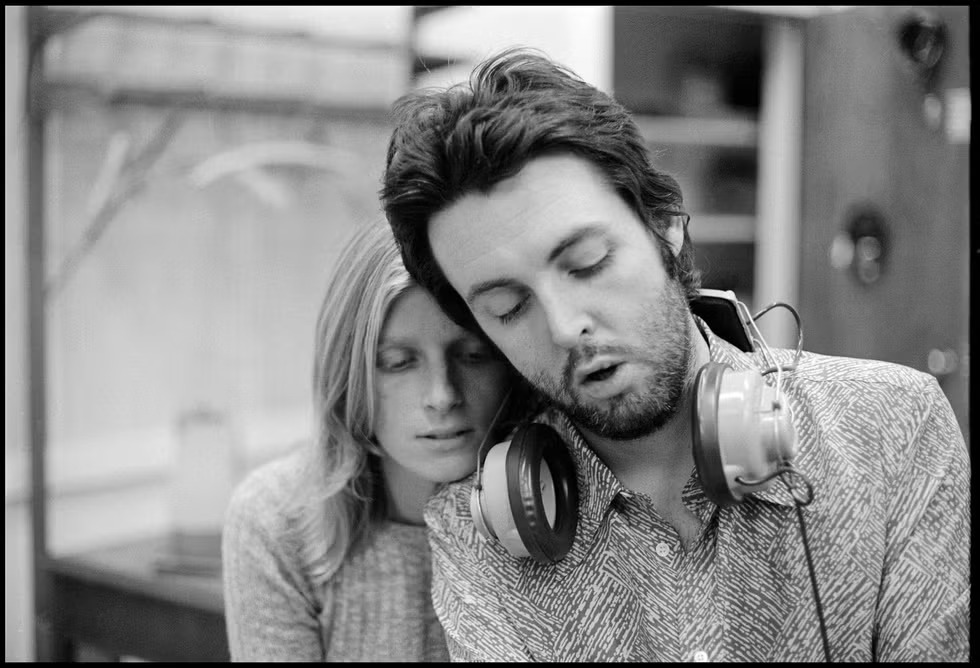
“I went to that house in Scotland,” Neville says. “I’ve been calling it Paul’s fortress of solitude.”
“It mattered a lot to me, personally as such a fan, to not just fanboy and make a film just for fans,” Neville says. “Paul McCartney, the musical genius? We all know that. I wanted to put that on the shelf and just make a film about a guy named Paul who’s going through a midlife crisis at the age of 27. Even though most people think, How could I ever relate to somebody like Paul McCartney? my goal was to just treat him like a guy who’s going through some shit.”
Man on the Run is now available to stream on Amazon Prime Video. Read below for more from Neville as the director shares the secrets of interviewing McCartney, asking the artist about Lennon, and why he named the film Man on the Run.
ESQUIRE: It always feels like just when you think there’s no more Beatles material, there’s mountains of more Beatles material.
MORGAN NEVILLE: As somebody who’s watched every Beatles documentary and read Beatles books my entire life, I felt like this was actually a chapter that there was more to say about. That’s why I jumped on it. There’s only ever been one documentary about this period, and that was Wingspan, 25 years ago. But it’s just Paul talking, and none of the members of Wings were ever interviewed. It also doesn’t deal with the breakup of the Beatles, really. So the existential crisis that Paul was having in the wake of the Beatles breaking up was a great place to start a movie.
That’s what I kept thinking as I was watching it. Even for Beatles mega fans, you don’t really know the ins and outs of his time in Scotland.
I went to that house in Scotland. It hasn’t really changed. It’s still a tiny house that has the same stove and the same drawings on the wall. But I could finally get a sense of place. That’s probably why I wanted to go there. It felt like that was the location of the movie in a way. I’ve been calling it Paul’s fortress of solitude. And Linda—being a photographer—took pictures of everything, the pictures of the food and the cabinets and all of that. Just the texture of what their life was—it was great.
You mentioned in a recent interview that Paul was very good at making you forget that he was Paul McCartney. How does he make you feel at ease, exactly?
The first interview I did with him was at his office in London, and he had a sound engineer who said, “Oh, we’ll set up microphones.” So I walk in and there’s a tiny love seat, and Paul and I are sitting right next to each other. He’s like six inches from me, eating hummus and talking. I was like, “Okay, I guess we’re doing this!”
This is something I’ve been reading in books my entire life, so I know it feels intimidating to ask about it, but actually Paul loves to talk about John Lennon. As much as I think he likes to talk about remembering the good things, part of my whole job on the film was to try and not have the normal conversations. There are stories that I’ve heard Paul tell many times. It was more like I kept saying, “I don’t want to talk about the events as much as I want to talk about the feelings and the ideas of the time.”
When you make a film like this, you end up with this therapeutic relationship with your subject where you come in and ask them about very important things in their life. Then they try and make sense of ’em, and you try and help ’em. It’s rewarding for both of us. But I think Paul actually really was enjoying the conversations too, because we would go [on talking] way longer than we were supposed to go.

“The old joke is that there was a time in the ’70s when people didn’t know that Paul McCartney had a band before Wings,” Neville says.
But even for someone who is interviewed as much as Paul, I’m sure it still must be difficult to basically say, Let’s go back through some of the biggest moments of your life, and please tell me something new about them.
My strategy was to either go really high or really specific. I’d say, “Why did you stop playing the Rickenbacker bass in the 1975 tour?” Or “How do you play this bass line and sing over it?” Stuff that the music geeks enjoy. I remember one interview we started by talking about Willen de Kooning, who Paul knew because he was a neighbor in the Hamptons and because Linda’s dad had been his lawyer. But de Kooning helped teach Paul how to paint. Paul started painting in the ’80s, and [through those stories] it was just the sense that we could talk about whatever.
I imagine that some younger audiences aren’t even aware that Paul McCartney had a band after the Beatles.
Well, the old joke is that there was a time in the ’70s when people didn’t know that Paul McCartney had a band before Wings. [Laughs.] But you see, an album like Ram—which was savaged by most critics, including Rolling Stone—it’s one of the top 500 albums of all time, according to Rolling Stone.
Why I called this film Man on the Run is because Paul’s trying to escape the gravitational pull, and the shadow, of the Beatles. And it’s impossible. Even today, everything Paul does is going to be judged in some way against the Beatles. That’s also why I ended the film where I ended it—when John dies. Everything changes. He never records with Wings again. He starts writing with George and Ringo again. I feel like the Paul we have today began at the end of this film.
When you make something that everyone loves—say, the Anthony Bourdain documentary or the Mr. Rogers documentary—do you ever have the feeling, How could I ever follow this up?
Yes, I have. It’s funny, I’ve been doing it long enough to just take a long attitude on it. I remember when the Mr. Rogers film came out, people would say, “Well, I liked the Mr. Rogers film, but I really liked 20 Feet from Stardom.” Paul even said, “Well, when we put out The White Album, people were saying it’s not Sgt. Pepper’s.” Not to equate myself with Paul McCartney, but you don’t really know what a film’s going to mean for a long time. So you can’t get overly caught up in the moment of anything. You just try and make good films, and audiences can decide what to do with it.
Originally posted on Esquire US

Esquire Malaysia
©2026, Heart Media Pte Ltd
