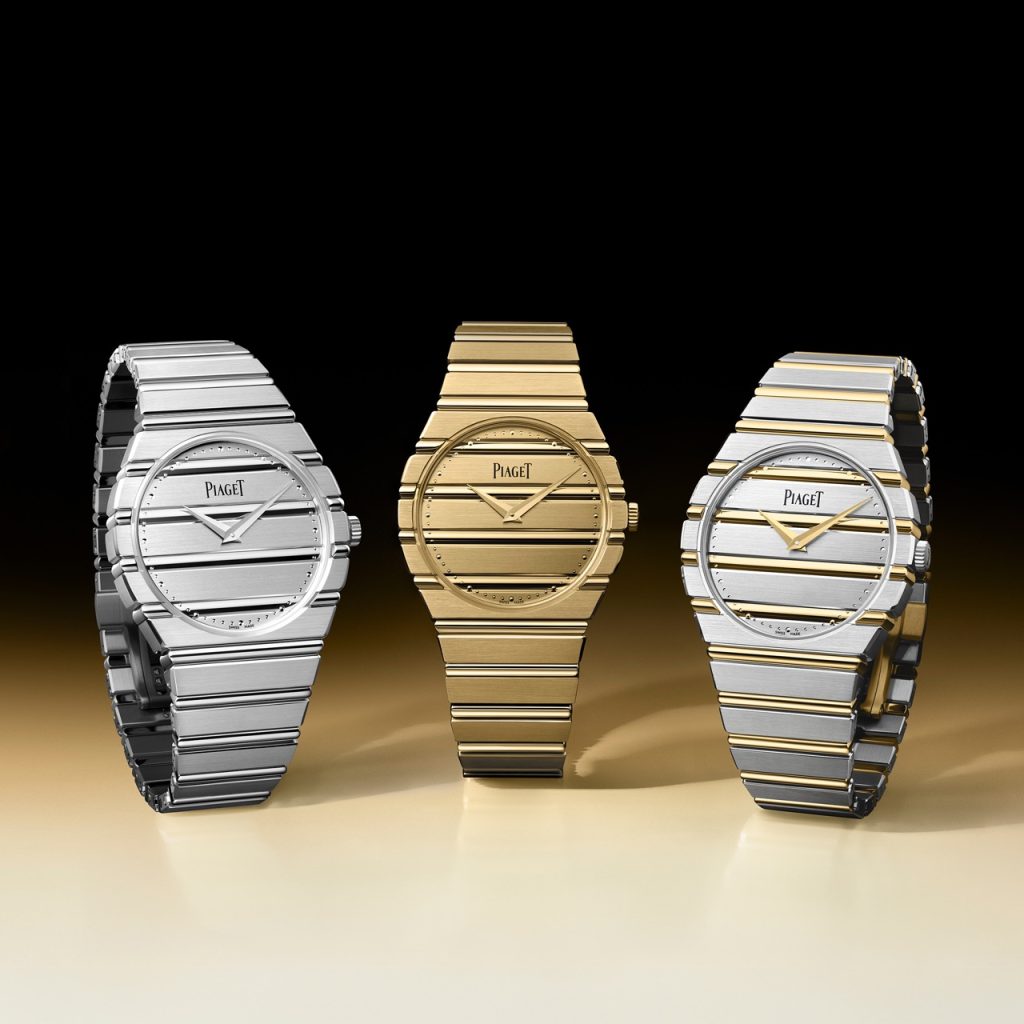
If there was an iconic sleeper watch (if that combination is even possible), it would be the Piaget Polo. It's adorned the wrists of many a notable personality, yet it’s not the first choice when one decides to splurge. In this case, that is a good thing. Because now the watch belongs in the ‘if you know, you know’ category. And even among the uninitiated, this is still a beauty that would hold its own against the other icons available.
Its first iteration came to be in 1979, made fully from gold, with its hefty weight to back it up. Trust us when we say this: the Polo is still one of the heaviest watches we’ve ever handled. This is important because throughout its consequent redesigns, regardless of square or round cases, the Polo has always consisted of gold. Pretty apt, seeing how Piaget’s philosophy is ‘time should only be measured in gold’. This focus on gold was the basis of its revival in 2024 when Piaget brought back the full gold variety, which worked well to mark the brand’s 150th anniversary.
Of course, the outliers of this model involved leather straps and valuable stones, but all in all, the basic gadroon DNA remained. Why is it important to bring up these differences? Because it’s good to note that it’s not the first time Piaget has created a two-toned Polo (ref. 791 and ref. 7661 being a couple). Yet ‘two-toned’ doesn’t readily come to mind when one thinks of the Polo.
That could very well change today, thanks to the Piaget Polo 79 Two-Tone.
What it is, is essentially a 38mm diameter watch, made out of brushed white gold and polished yellow gold. It is 7.45mm thick and embodies all things luxury and class. If you’ve always been drawn to this design, but found the gold to be too striking and the white gold too understated, this would be the perfect middle ground.
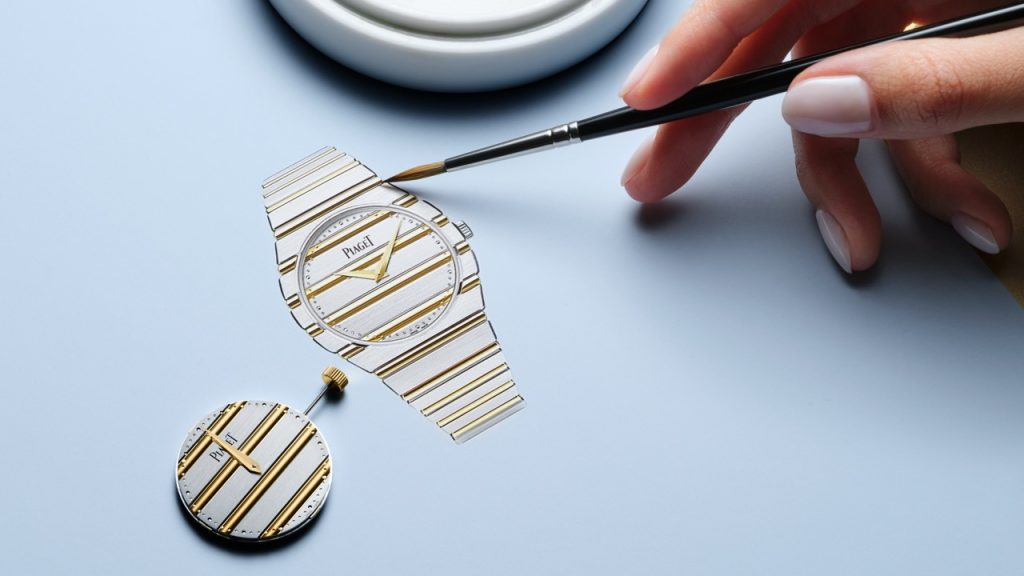
As mentioned, the Polo has gone through many tweaks and redesigns. And part of this lineage consists of quartz movements. This particular piece, however, carries the self-winding calibre 1200PI. And it measures just 2.35mm in thickness. What makes it even more impressive is that it's an automatic, a term that usually adds thickness to any movement. That's not the case here.
For the technically inclined, this movement also provides about 44 hours of power reserve, at a frequency of 21,600 vibrations per hour. Another draw of the movement is the off-centre oscillating weight, visible through the see-through caseback. As if we need more things to admire about this watch. There is something about a small rotor that adds elegance to a movement, compared to the full-sized counterpart. Then again, we shouldn’t be expecting anything less from this watch, should we? By the way, all these technical specifications remain the same for the yellow- and white-gold versions.
What remains the same is also the integration of its bracelet, case, and clasp. At a glance, you won't be able to work out the connection points between the separate components. When Piaget says 'integrated bracelet', it takes the term seriously. In a similar vein, what remains the same is the 1979 spirit that this watch embodies, one that dared to lean into extravagance, even when the world around it was pivoting into pragmatism. And perhaps, when one acquires the Piaget Polo 79 Two-Tone, that statement is exactly what they’re looking for.

Esquire Malaysia
©2026, Heart Media Pte Ltd
