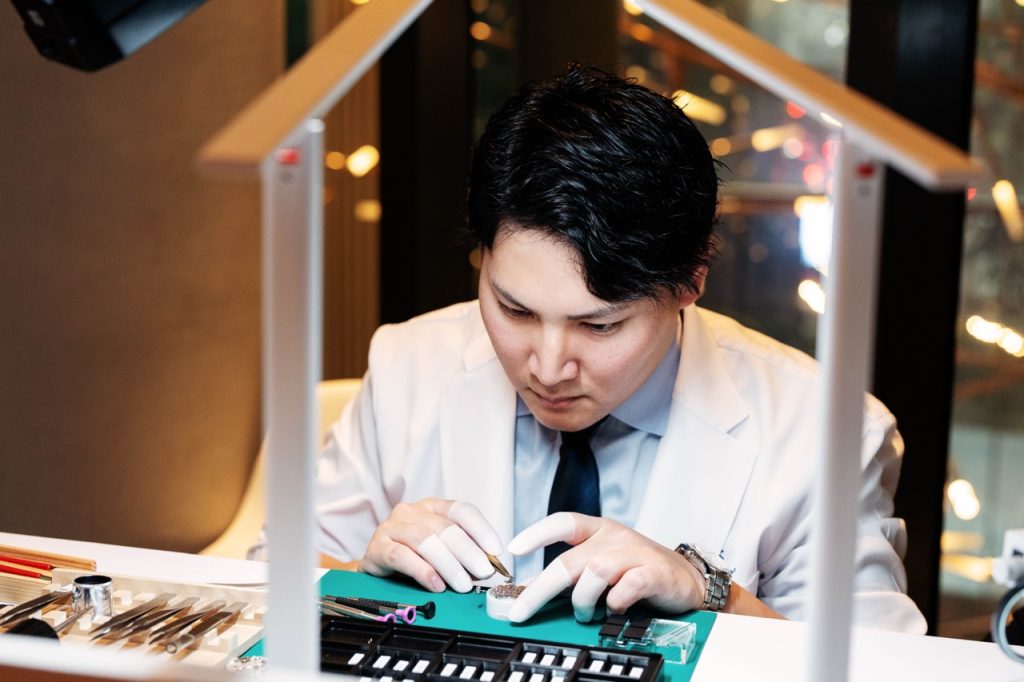
Despite the black-and-white nature of watchmaking, the human touch—and all its imperfections—will always play a role in the creation of timepieces.
Yes, we’re talking about measurements in microns, differences of which are imperceptible to the human eye. And yet, there’s something about having an actual person assemble a watch that gives it its soul.
Kato Tomoya, a master watchmaker from Grand Seiko, would know a thing or two about this. In fact, during his visit to Malaysia, he showcased to a live audience what a pair of steady hands can do in the realm of watchmaking. Through his hands, he also showed that the industry wasn’t headed towards a showdown between man and machine. In fact, both man and machine can coexist.
As in, the parts can be manufactured to precise specifications, but it is the human that will detect the components’ irregularities and fine-tune each component to work better as a whole.
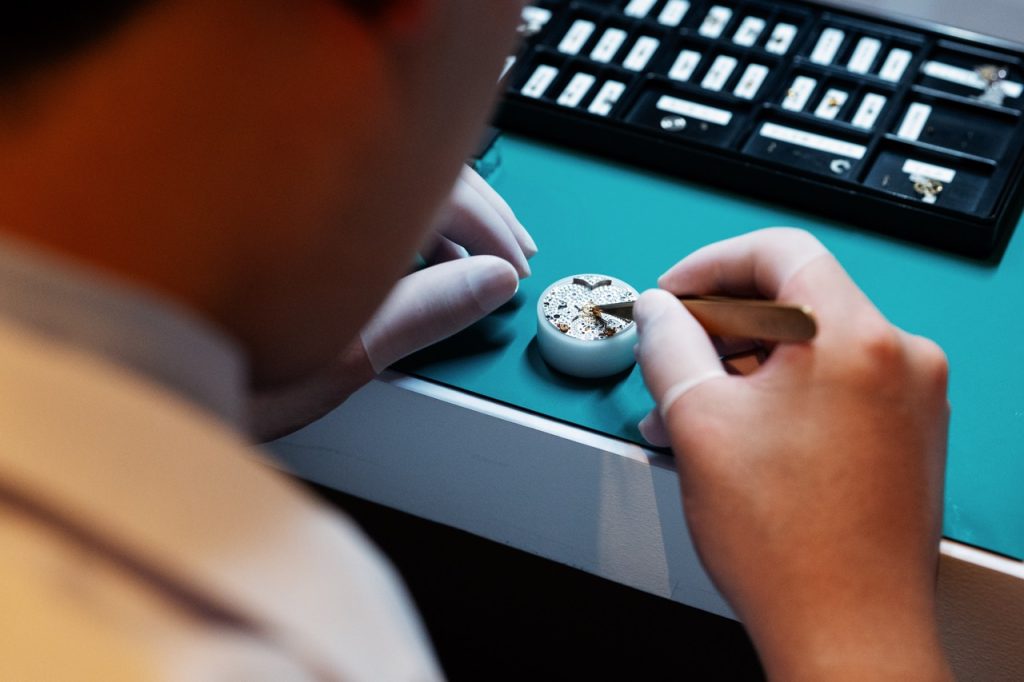
The word ‘whole’ is the focus here. On its own, each part of a movement is insignificant, both metaphorically and literally (you can’t see some screws without a loupe, for instance). But attach the mainspring to some gears and voila, you have a beating heart.
Tomoya is part of this esteemed group of artisans, people who can turn gears and springs into works of art, and he starts us off by telling how he got into the profession.
“Grand Seiko was always there as a major watch manufacture in my hometown city of Morioka,” he says. “The path to Grand Seiko started with three years of learning technical skills in the training department. After competing in the Skills Olympics, I began working on the assembly of Grand Seiko watches.”
The Skills Olympics, in this case, is a competition built around vocational skills, and where watchmaking is concerned, competitors are put through tasks like repairing broken watch movements to determine a winner. It is in one such event that Tomoya medalled gold in, but despite all that, he’s never been one to revel in his achievements.
“I wouldn’t say I have ever reached a moment where I feel I’ve arrived. In this craft, there is always something new to learn, and I approach every day with the mindset that I’m still improving,” he says.
Coincidentally, Grand Seiko provides the avenues for him to continue expanding his skills. “I think the best way to improve is through the steady accumulation of daily work,” he continues. “In my studio, there is the ‘Meister Programme’, which helps enhance the watchmakers’ technical skills on a continual basis. Under this programme, skilled watchmakers mentor younger colleagues, sharing their expertise. Through this, I learn and receive guidance from senior colleagues, gaining practical insights and advanced techniques that help me grow.”
Besides asking Tomoya about his skills, the Esquire Malaysia team was also curious about the tools of the trade. Because when you see an artist at work, you tend to question if the instruments played any role in the beauty.
This question could be seen as an insult to some—as if Steinbeck’s novels were dependent on his love for Blackwing pencils—but we couldn’t resist. And to that, Tomoya is indifferent. He does have a favourite tool, however. “That would be my tweezers. The reason is that I customised them myself to suit different purposes. So they have become a unique, one-of-a-kind tool, made just for me.”
Next, we ask what parts of his job add a tremble to his unusually steady hands. “The hardest part is applying oil to the pivots of the movement’s gears. Achieving a consistent application is super challenging. And I also find assembling the balance wheel the most challenging part. That's because it is an extremely delicate component, so I have to handle it with the utmost care.”
But just like that, our time with the watchmaker, quite ironically, runs out. We badger him with the cliched question one typically asks to end an interview. And that is: What advice would he give those wishing to follow his footsteps?
To that, he says to value the question ‘why’, and to always maintain the desire to explore. Judging from his fast rise in the world of watchmaking, it’s obvious that Tomoya doesn’t just value the question ‘why’. Maybe, he’s also a huge proponent of ‘why not’.

Esquire Malaysia
©2026, Heart Media Pte Ltd
