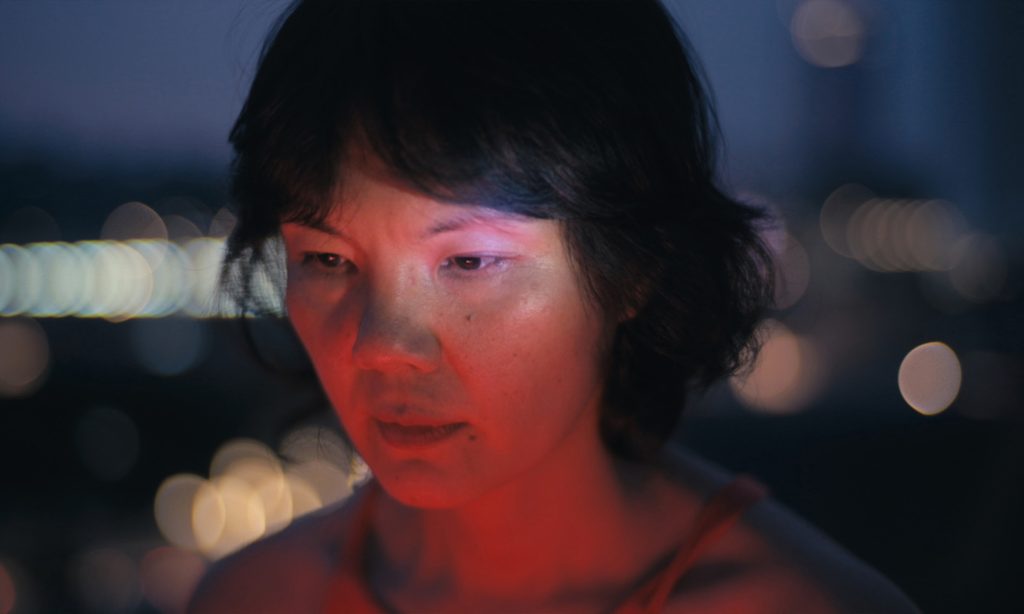
The city is solid. We know this because we feel it beneath our feet as we fall forward with each step, trusting it to push back and keep us upright. Soil, concrete, wood, steel, and glass comfort us with their weight and presence. They lend structure and permanence to our homes, offices, streets. And yet, our social lives are anything but solid. Our encounters with others—strangers, friends, family, lovers—push and pull us in uneven, unpredictable ways.
We are moved as much as we move others. Or so we hope.
Ridhwan Saidi’s latest feature film, Air Mata di Kuala Lumpur or Tears in Kuala Lumpur (2025), explores these entanglements by reimagining the city as a precarious human landscape of memory, fact and fiction. These elements intertwine to render a Kuala Lumpur without a stable history or narrative. Instead, the city emerges in fragments through the preoccupations, recollections and anxieties of his characters.
Playwright, novelist, photographer, publisher: Ridhwan is a relentlessly prolific artist. With more than twenty short films, six novels, numerous essays, and countless theatre works, his entire constellation of works is vast and difficult to contain (visit mokamochaink.com for a deep dive). What binds all of them together are thematic threads of memory, longing and nostalgia; an intentional drift between the real and imagined.
In Air Mata, Jay (Lee Qi) is a photographer looking for models to explore ‘male vulnerability’; Tze (Lim Paik Yin) is a car workshop owner searching for her lost husband (Liew Chee Heai). Meanwhile, a wandering spirit (Eff Hakim) serenades sites both forgotten and remembered with songs written by P. Ramlee. Their paths intersect in small but meaningful ways.
It's a film that’s arrestingly stylish, and yet refuses any notion of style. Ridhwan’s barebones, unconcerned cinematography is reminiscent of Ryusuke Hamaguchi’s masterful Happy Hour (2015). The fuss-free shooting style is complemented well with gentle, considered editing, colour grading, and Joni Atari’s sound design. In the film, some scenes are staged like student films, and others are so achingly beautiful they linger in the mind for days after.
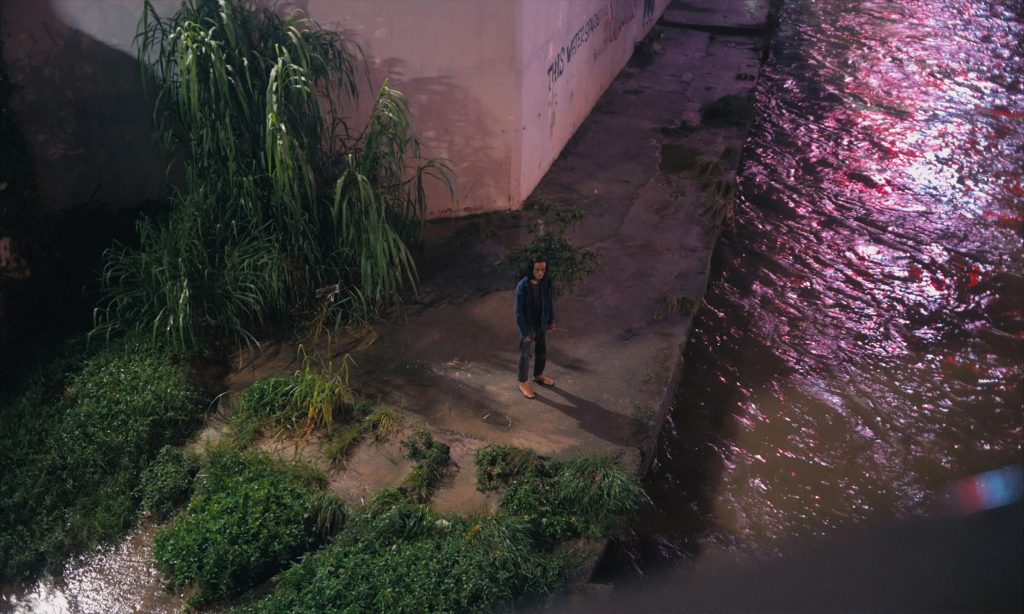
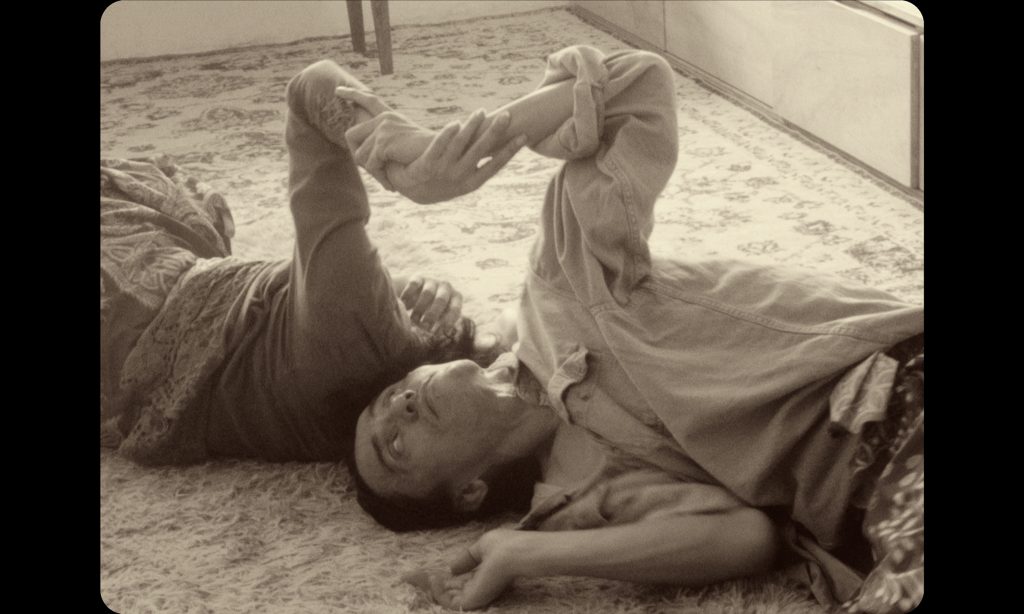
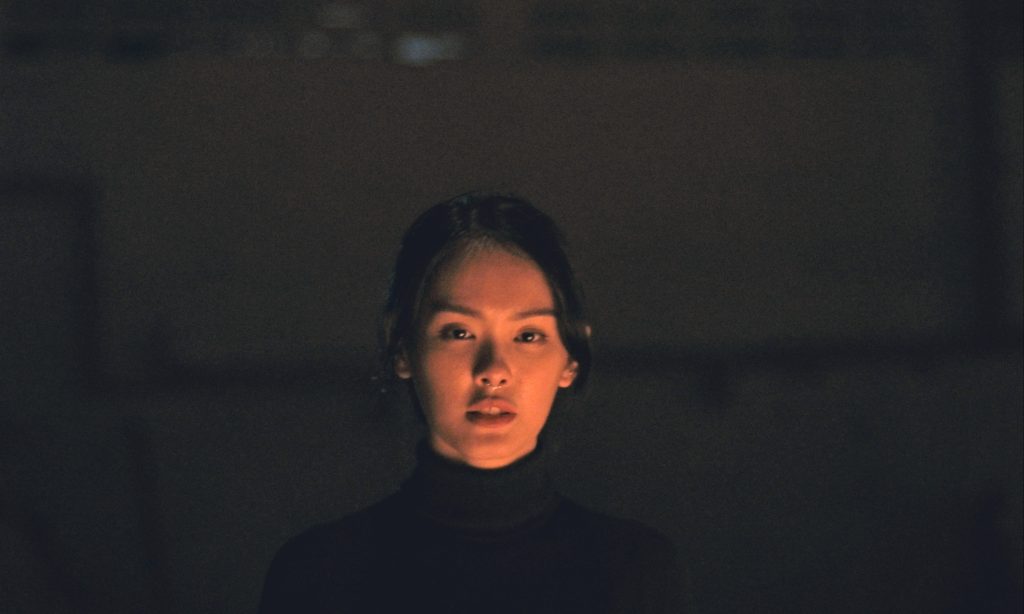
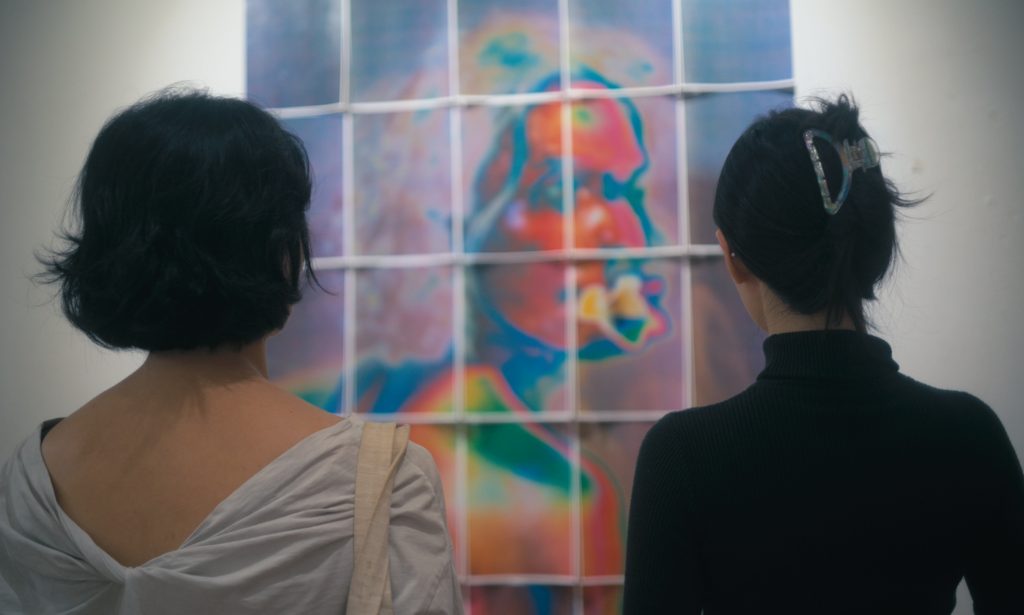
After premiering in competition at the 54th International Film Festival Rotterdam in 2025, and screening at several other festivals, Air Mata has come home. Its first public screening in Kuala Lumpur was a wayang lambak at the arts venue The Godown KL, where people brought their own stools and cushions along. At the time of writing, there are no plans for a cinema release, but the director and producers hope to host more screenings.
The title of the film comes from a song written and composed by P. Ramlee for an imagined colour film. Unfortunately, P. Ramlee died before the film could be made. The song ‘Air Mata di Kuala Lumpur’ was later recorded by his wife, Saloma, and performed publicly in 1973.
Originally from Penang, P. Ramlee built a successful career in Singapore, before returning to Malaysia. Despite promising opportunities, his Malaysian films largely flopped. Increasingly side-lined and overlooked, P. Ramlee saw his ambitions collapse. In the song, the line "Istana ku bina menjadi pusara" can be read as an expression of despair, as his hopes and dreams grow bleak in the city.
Ridhwan and his crew shot Air Mata in just 14 days. In early 2024, he received a message from a film festival programmer asking if he had a new film. Feeling a sense of urgency, he quickly replied that shooting was already underway. He then got started, wearing various hats: writer, director, cinematographer and finally editor. The film is produced by his long-time collaborators Nurul Aizam and Tan Cher Kian.
There are no monochromatic heroes or villains here, no orchestrated climaxes, no false notes resolved into neat acts. And, in what is a rarity for Malaysian cinema, female characters are not written in the service of male desire. They do not exist only to receive violence for the sake of dramatic turns. The filmmakers are far too sensitive for such cheap devices.
Those familiar with Ridhwan’s work in theatre and film will recognise the connecting threads. He’s drawn to devised work, where closure is elusive. Feelings, bodies and elements move by invisible forces. In his short film Menjadi Laila dan Sairah (2021), two women meet weekly to devise new characters. In the process, boundaries blur between memory and fiction, self and the other. In his debut feature, Tiada Cinta Selama Muda (2020), improvised movements and conversations explore the meaning of love.
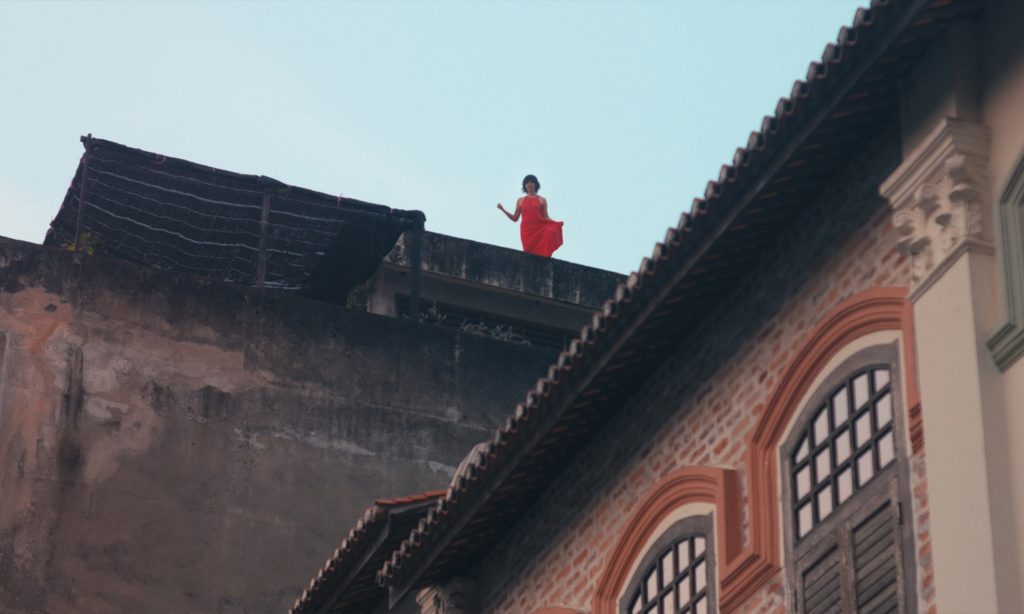
Audiences accustomed to mainstream storytelling may find the elusiveness of clarity and resolution frustrating. Yet the film does not withhold meaning so much as it asks for a participatory leap. In one scene, Tze, the film’s lead, is asked to do precisely this when her acting mentor urges her to strain beyond her comfort zone. To jump—quite literally—in search of hope.
Films are costly endeavours, with demands on logistics, time, money, friendships, and labour (both physical and emotional). With such high stakes, film projects are often expected to operate with absolute certainty, even when the reality of production is anything but certain. As a micro-budget film funded by the creative team and crowdsourced contributions (with a budget totalling RM10,534.10), Air Mata sidesteps the trappings of industry discourse.
This is a film unconcerned with FINAS (the National Film Development Corporation of Malaysia) or LPF (the Film Censorship Board), financing structures, script doctors, or market trends. By holding onto its internal truth, the film liberates itself as a creative endeavour. While local filmmakers continue to lament market-oriented government initiatives that still look to Hollywood as a benchmark, Air Mata’s success at major international film festivals points toward an alternative path.
What happens when the manufacturing mindset of filmmaking is overturned? When a film does not begin with an idealised, totalising vision that steadily erodes through compromise?
What if, instead, the fantasy of perfection is abandoned from the outset, and the creative process opens itself to uncertainty, collaboration, and risk? In this sense, Air Mata di Kuala Lumpur challenges the industrial logic of capitalist film production and distribution.
It reminds us that the joy of making art lies in the creation and practice, in the willingness to probe unfamiliar terrain and remain receptive to what lies beyond comfort.
Air Mata di Kuala Lumpur will screen at independent venues this year. Ridhwan Saidi’s latest theatre show, TEATER NORMCORE: Odisi Romansa, opens in May 2026.
Ridhwan Saidi shares five films which have influenced him.
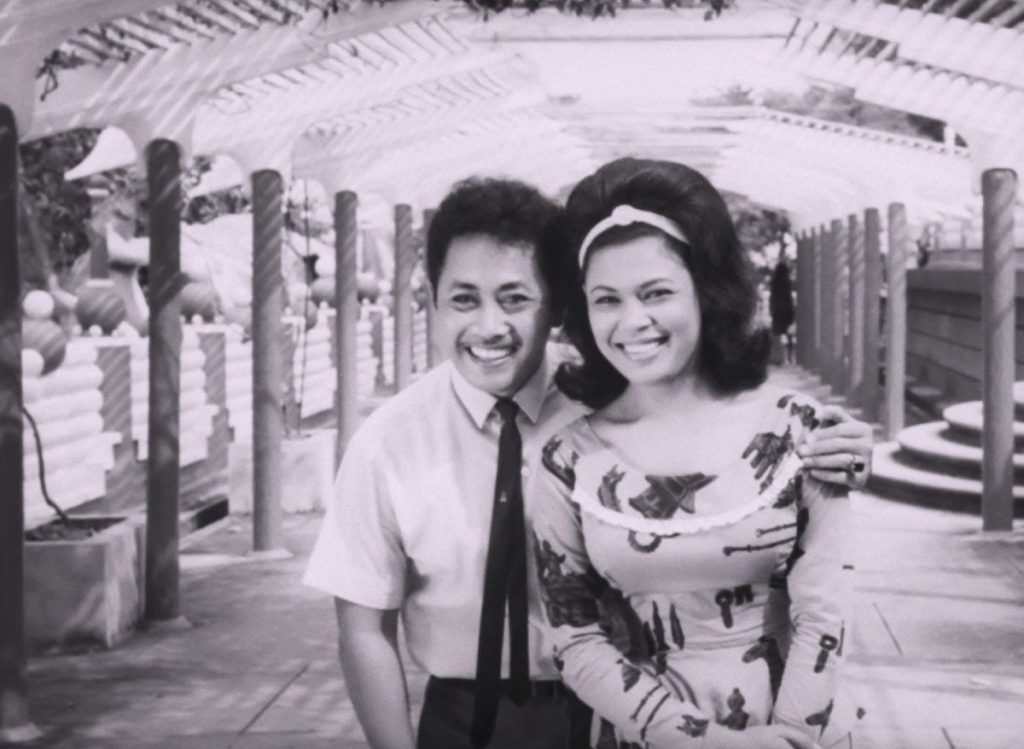
Toute Une Nuit (A Whole Night), 1982, Chantal Akerman
I have watched this film without subtitles and had no idea what it was about. But the actions and movements of lonely city-dwellers (in this case, Brussels), escalating into hugs and dancing, feel like choreography. The film inspired my movement-based film Tiada Cinta Selama Muda (No Love for the Young).
Chinta Kaseh Sayang (1965), Hussein Haniff
Bunga Tanjong (1963), Ramon A. Estella
These are two films about women dealing with everyday problems, but one ends in life affirmation while the other ends in tragedy. The female characters in my Air Mata di Kuala Lumpur are their spiritual descendants.
Grass (2018), Hong Sang-soo
I binge-watched Hong Sang-soo’s films during the pandemic, but Grass somehow stood out to me for its depiction of a writer who eavesdrops in a café to write her stories. It’s a funny film, but in a quiet way.
The Umbrellas of Cherbourg (1964), Jacques Demy
A colourful, heart-breaking musical. In Air Mata di Kuala Lumpur, I use a cappella songs to lift the otherwise heavy mood of its grieving character.

Esquire Malaysia
©2026, Heart Media Pte Ltd
