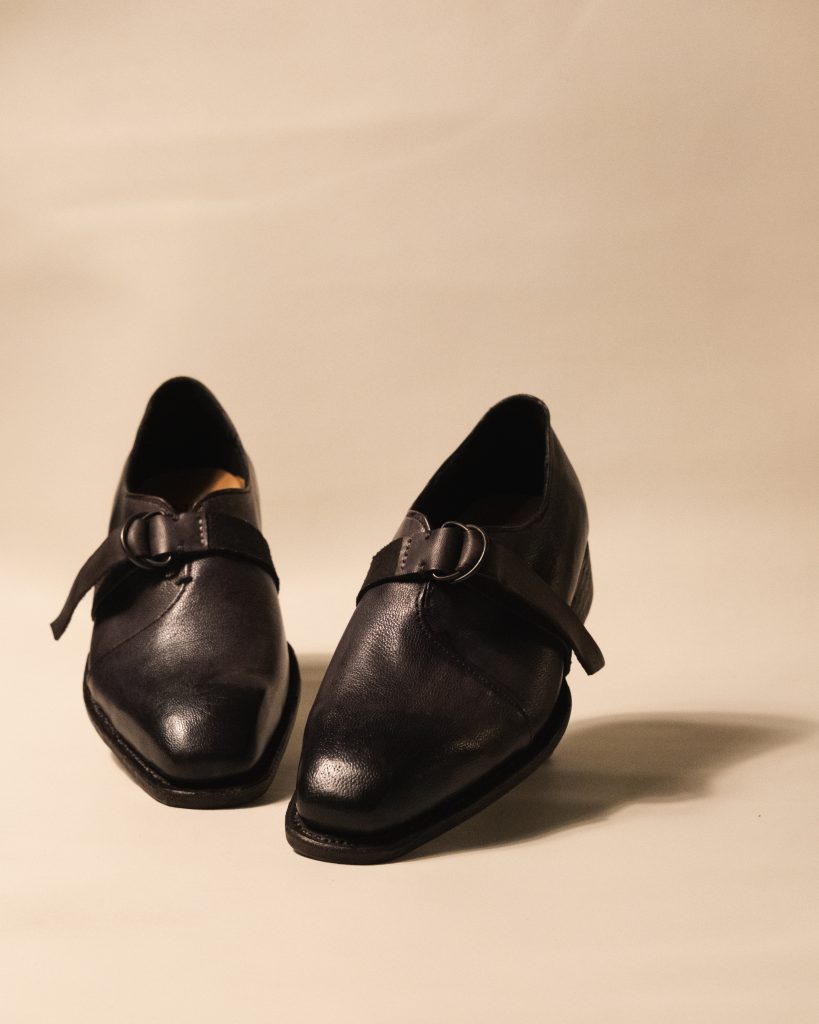
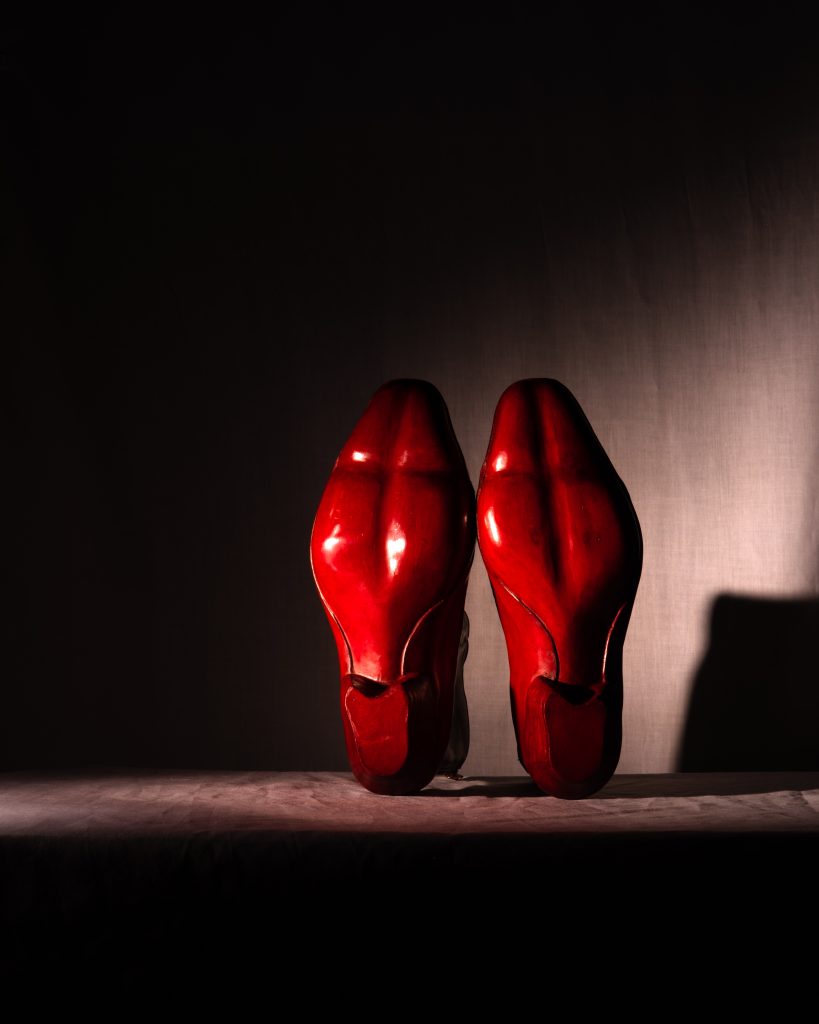
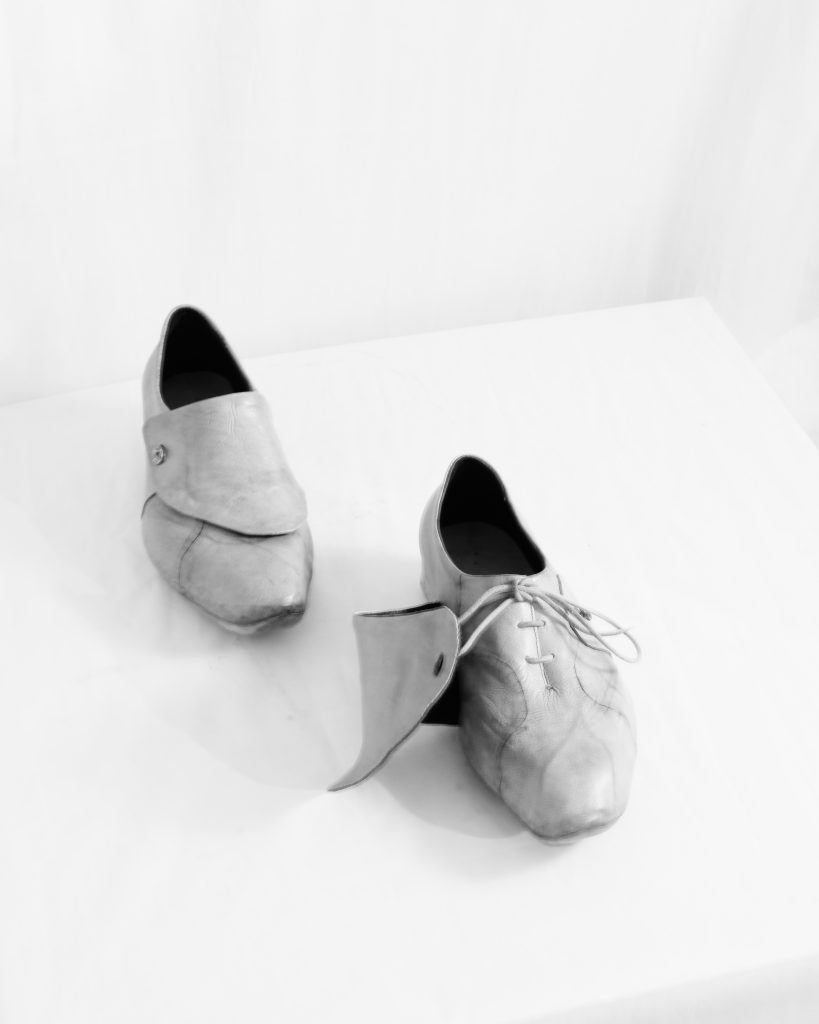
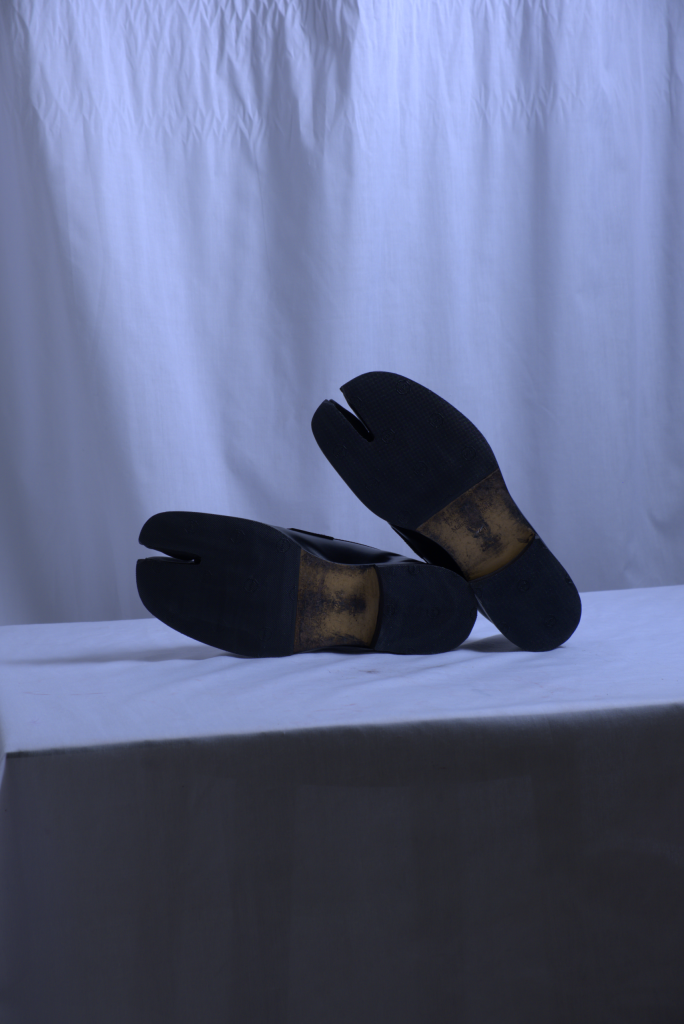
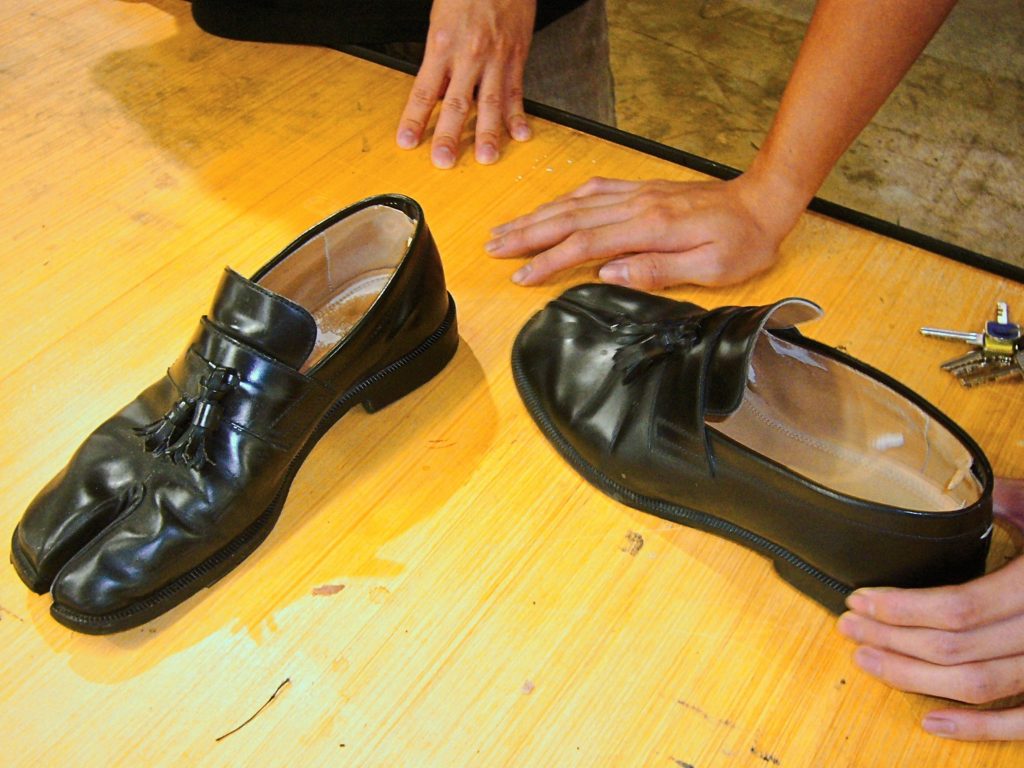
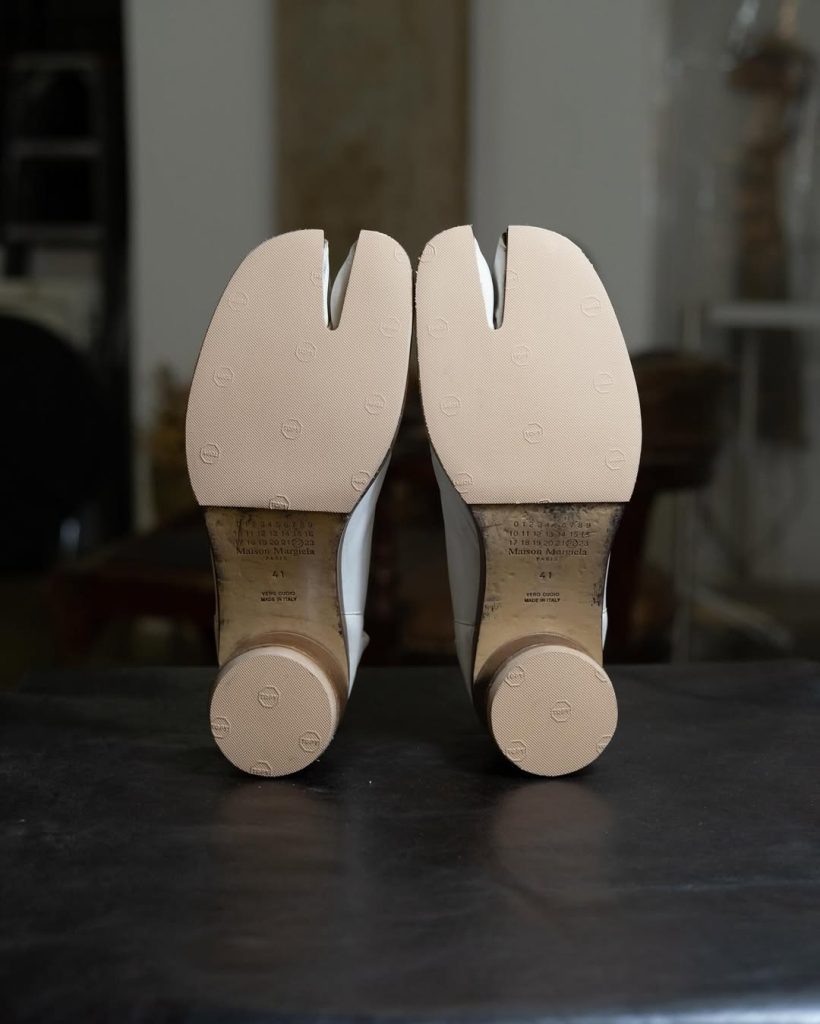
I came to get a pair of Tabi loafers fixed and ended up staying to understand how shoes are made, the Banya way.
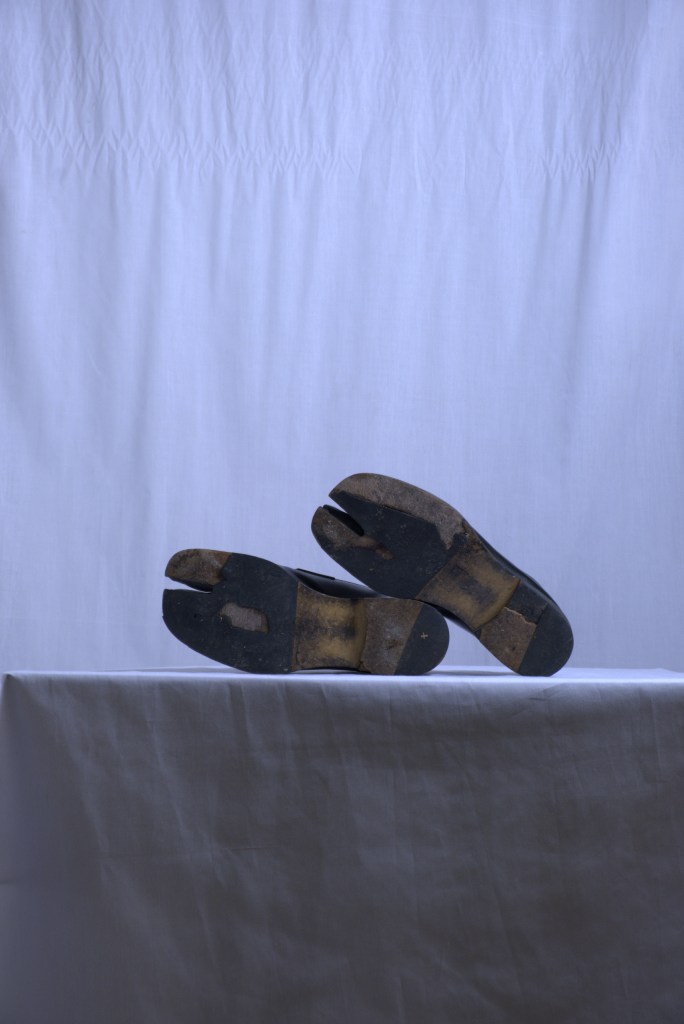
My pair had seen better days. The sole was worn, and a careless encounter with a clogged hand sanitiser pump left a scar across the leather. Nothing catastrophic, just the kind of damage you can ignore… until you can’t.
It had been sitting on my shoe rack for a while now, looking fragile and exhausted enough to be excluded from the rotation, but it wasn’t in a state where it was no longer wearable. It had reached the state where I wasn’t sure if they were worth fixing.
“It looks beat up but fixable,” says Loy Yew Keinn, co-founder of Banya.
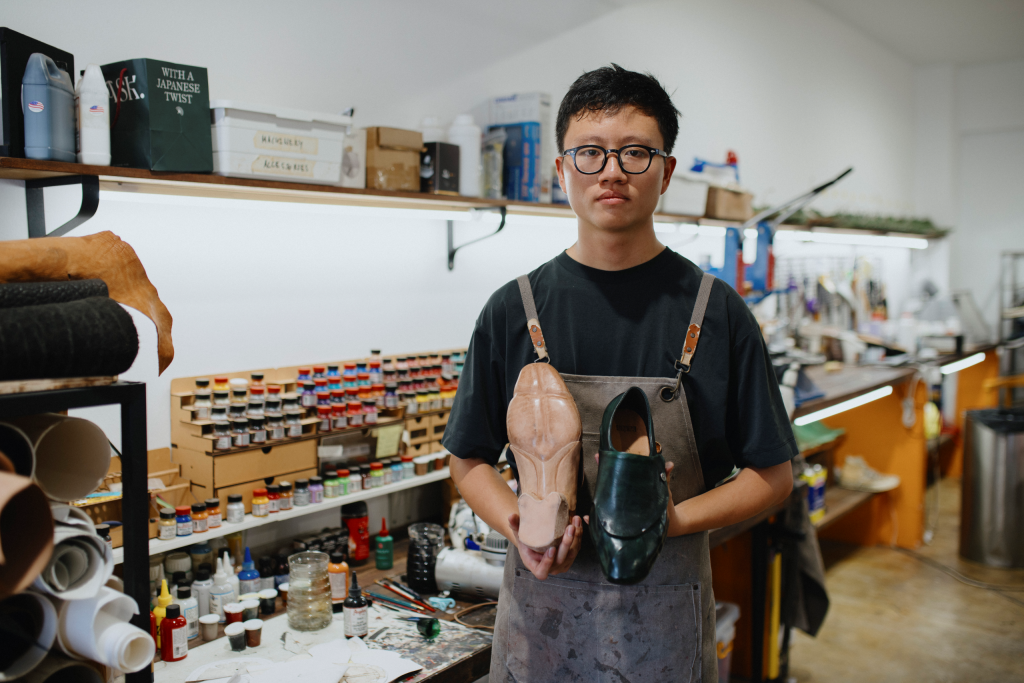
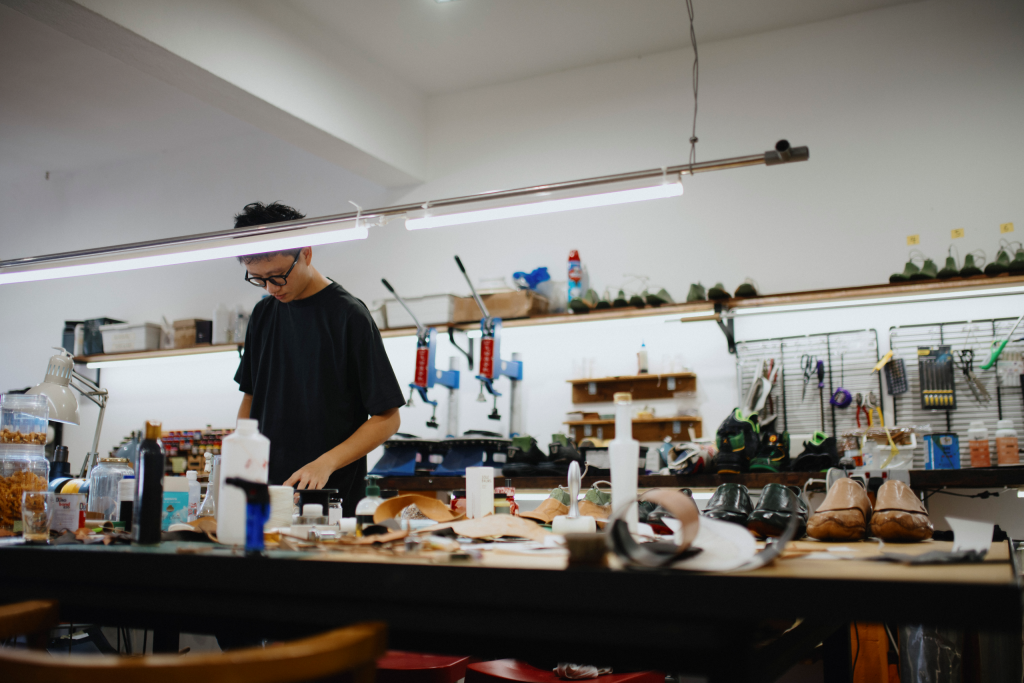
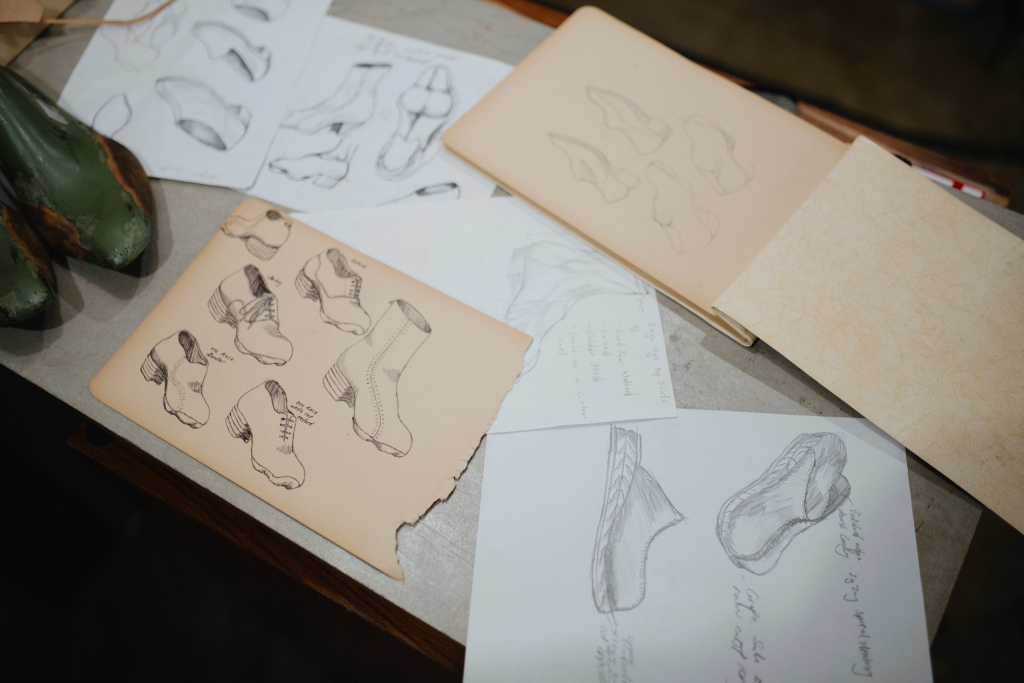
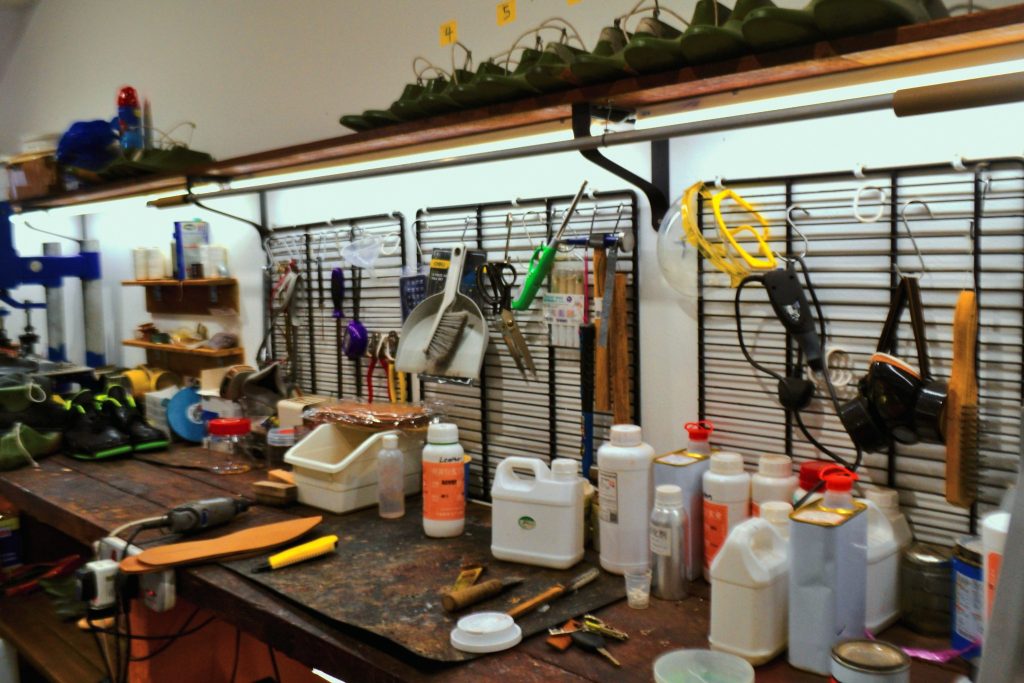
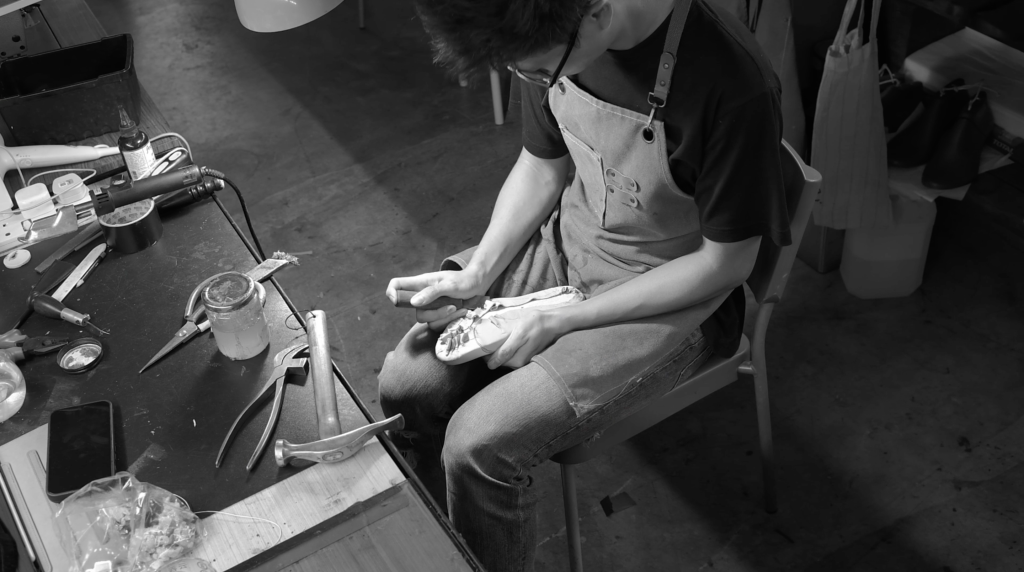
Inside the workshop, everything feels used. Tools are laid out within reach. Half-finished original designs sit beside worn pairs, all waiting to be worked on.
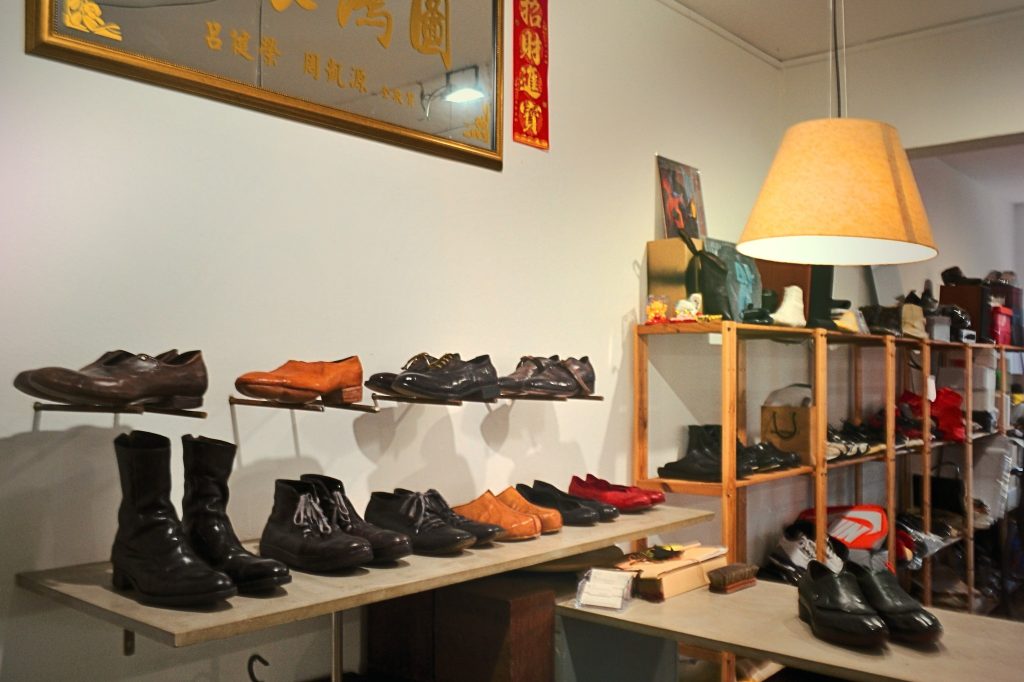
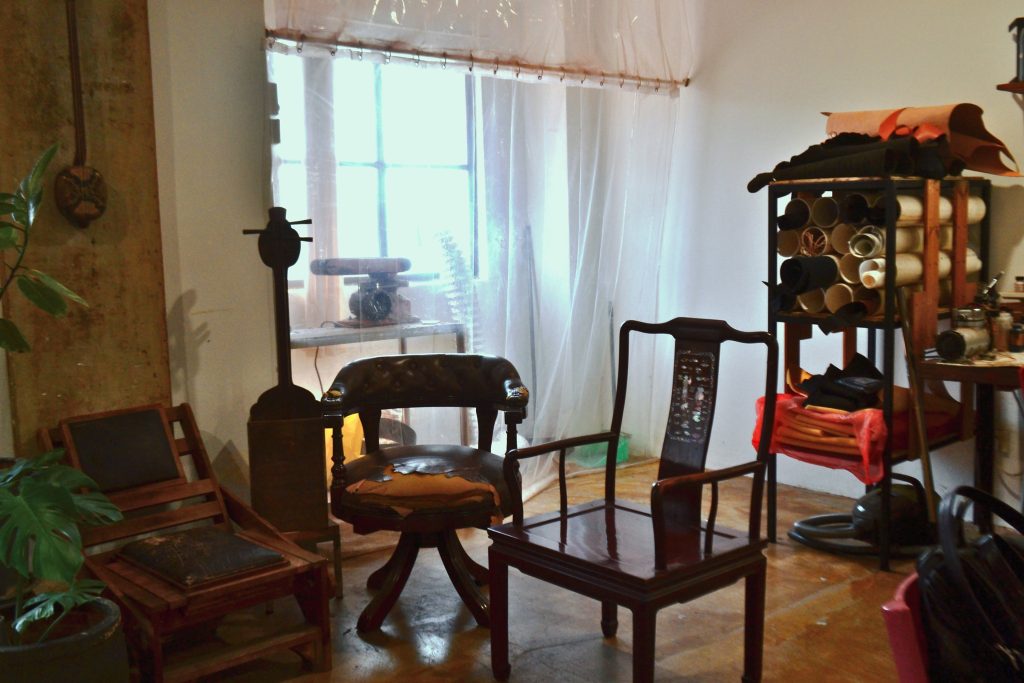
There is a quiet character to the space. Exposed steel bars protrude from a section of the wall, holding up their original designs. An erhu hangs adjacent to it, with old Chinese wooden chairs placed below. It’s strange at first, but it doesn’t feel staged; there must be a reason these things were laid out this way. Somehow, it forms a kind of order.
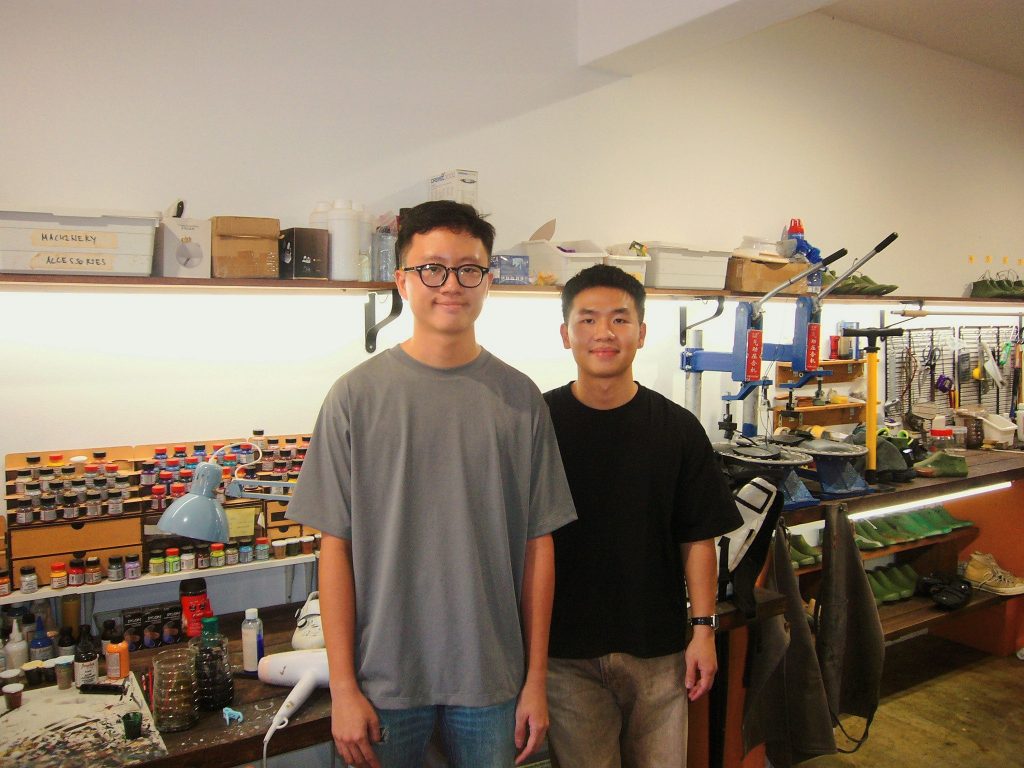
As the founders speak—Ong Su Chen and Loy Yew Keinn—it starts to make sense. There is a respect for tradition, not just in how things are made, but in how they approach the work. The craftsmen who came before them. The history of the process itself. Everything settles into place.
I watch as they turn my shoes over, pressing into the sole, tracing the lining, and checking the structure. The sound of leather being handled, the dull knock of soles against the tabletop, the quiet back and forth between them. Despite being just 25 years old, there is no hesitation in their analysis. These young people were seasoned veterans.
“Just a caveat, we don’t have the Tabi lasts, so we will shape them by hand. The outcome will vary,” Su Chen warns. I would rather gamble on non-uniformity over anyone who claims perfect restoration every time, so I tell them to go ahead.
Stripping It Down
Before Banya, there was Bathhouse.
“Our journey started with Bathhouse shoe care and repair because we already had the know-how at the time. Leather shoemaking and design have always been the priority, so while repairing shoes sustained the business, we were also working on leather shoe prototypes.”
Loy and Ong met through a shared interest in sneakers. One worked in construction, the other in a shoe restoration shop.
Once schoolmates, they had not seen each other in a while until they crossed paths again, both on their way back from work, one cycling, the other driving. Bonding again over their shared love for sneakers, they realised shoe repair was the easiest way to grow that bond. The barrier to entry was low, and the jobs were immediate, making it relatively risk-free. In March of 2023, Bathhouse was born.
“We liked sneakers, so being able to handle our favourite shoes for a job seemed like a sweet deal at the time,” says Loy.
There was no long-term plan, just passion and dedication at first, but that slowly snowballed.
“Slowly, there was some interest in our shoes, and we started to get orders. That gave us some confidence to focus on shoemaking, so now the bulk of our time is directed towards the shoemaking arm of our business, Banya.”
What started as repair became something else.
“‘Bathhouse’ is the English word for ‘banya’, a Russian term meaning a communal place for people to relax, socialise, and clean up. We resonated with the historical and cultural connotation of the phrase.”
A bathhouse is where you go to get a washdown, to physically remove the grime. The evolution into Banya feels almost spiritual. Buying into the brand feels like a cleanse, a new direction, embarking on a new journey with your own two feet.
“Once we get the overall idea of how the shoe will be built and the form it will take, we like to imagine what type of person or profession matches the shoe and use that as a guide for its final form,”
What The Sole Reveals
When I asked if they could tell how someone wears their shoes just by looking at them, they replied, “More or less yes.”
Most of it comes down to walking patterns, where the heel wears out and how the sole collapses, whether the pressure sits evenly or not. But sometimes it goes further. Things like cigarette burns and alcohol stains gives hints on a person’s habits. You start to uncover posture, routine, even personality. That is the reason why, if ten identical pairs of shoes come in all at once, they never are truly the same. Hence, no two repairs ever turn out the same.
Under Heat And Humidity
“We have to understand how different materials react to the environment chemically over time,” Loy says.
Leather dries out. Coatings crack. Soles harden and break down. Some materials look fine on the surface but are already failing from within, absorbing moisture and slowly giving way.
Focusing back on my pair of shoes on the table, some repairs are straightforward. The sole can be replaced. The uppers can be treated. The inner lining is where it gets tricky.
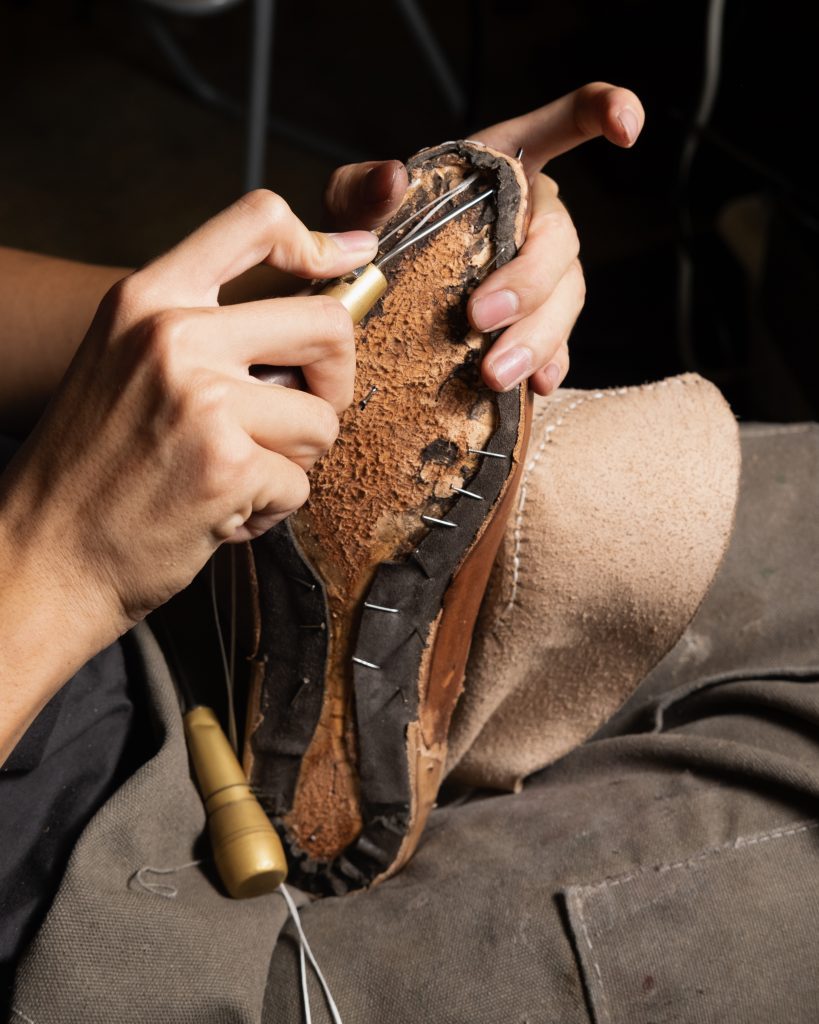
“To fix this, we need to deconstruct the stitch that runs across the perimeter of the lining here. The shape might not be the same as the original.” Fixing one part means changing another. “If we stitch it back, the shape might not be aligned enough. Even if we work at it, it won’t last that long.”
There is no attempt to oversell, nor are there any grand promises. Just a clear sense of what is possible and what is not. There is a sense of danger from this potential trade-off. You begin to understand that repair work is not just about restoring something to what it was, but betting on the possibility of what it can still be. It’s not about extending its first life but giving it a second.
It becomes less about whether it can be done and more about whether it should. Coming in, I wasn’t expecting to be confronted with questions about renewal and mortality. I am no longer just thinking about fixing a pair of shoes, but what I want it to be after the process, whether to turn it into something new or simply make it wearable.
Forging Something New
The duo’s journey at Bathhouse showed them what failed and why. From that experience, they set the standards for what Banya handcrafted footwear should be.
“We would say organic,” says Ong when asked how they would describe their design language. And organic it is, from the lack of a design process to the actual form of the shoe. “Our design process is spontaneous. Most of our design ideas are discovered while working on a current shoe.”
It could be a new stitching method, or a different way of layering leather. Maybe it is a small adjustment that changes the structure. One decision leads to another until the shoe takes a form that was not fully planned for at the start. There is no strict sequence from sketch to final product. Most ideas come while working on something else.
“Once we get the overall idea of how the shoe will be built and the form it will take, we like to imagine what type of person or profession matches the shoe and use that as a guide for its final form,” says Ong.
Sometimes, it happens in conversation with the client. They propose an idea, adjust along the way, and introduce changes mid-process. What starts as a commission becomes something closer to a collaboration. They offer a catalogue of shoes, but that works more as a starting point—everything is adjusted along the way.
The customer’s routine dictates the choice of sole and its durability. New ideas can emerge while the shoe is still being made, and when they do, they go back to the customer, depending on their appetite for risk and patience. The chosen design rarely ends up being what is delivered.
“So we try not to limit ourselves. If we both have an idea, we come up with it, consult, and then we just do it rather than overthinking it,” Ong says.
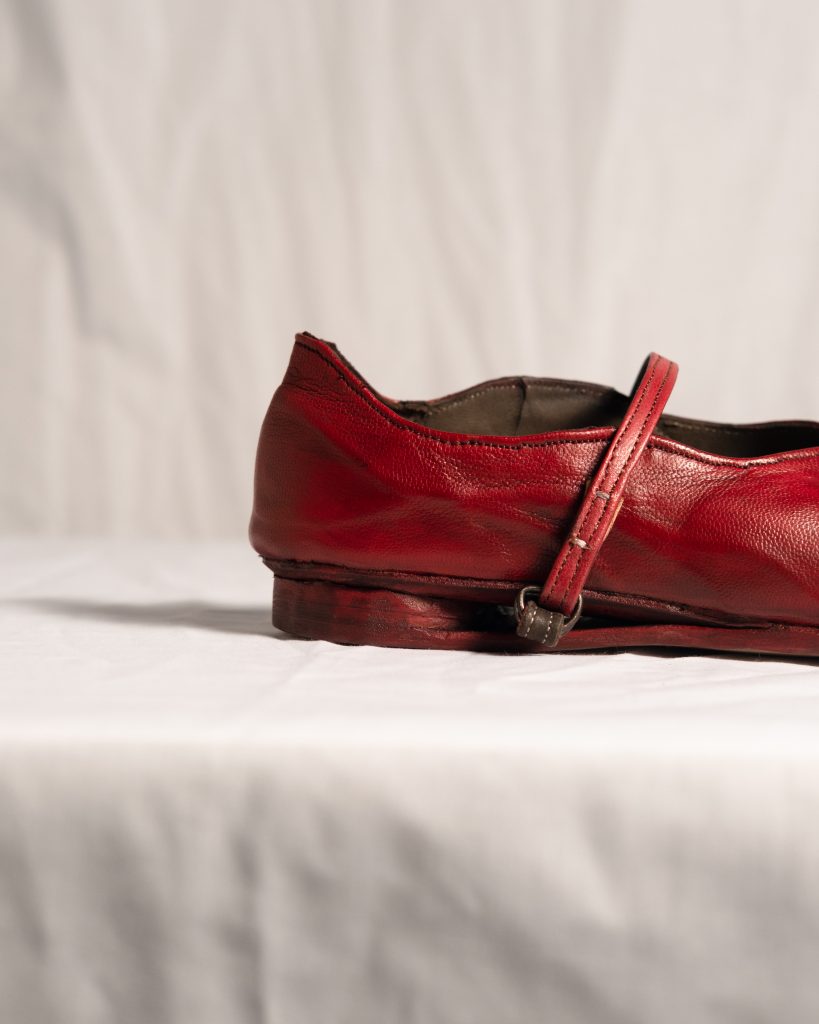
Like true craftsmen, they obsess over the details that are unseen but felt. Stitching that cannot be seen, joinery that sits beneath the surface, constructions that are not just held together with glue.
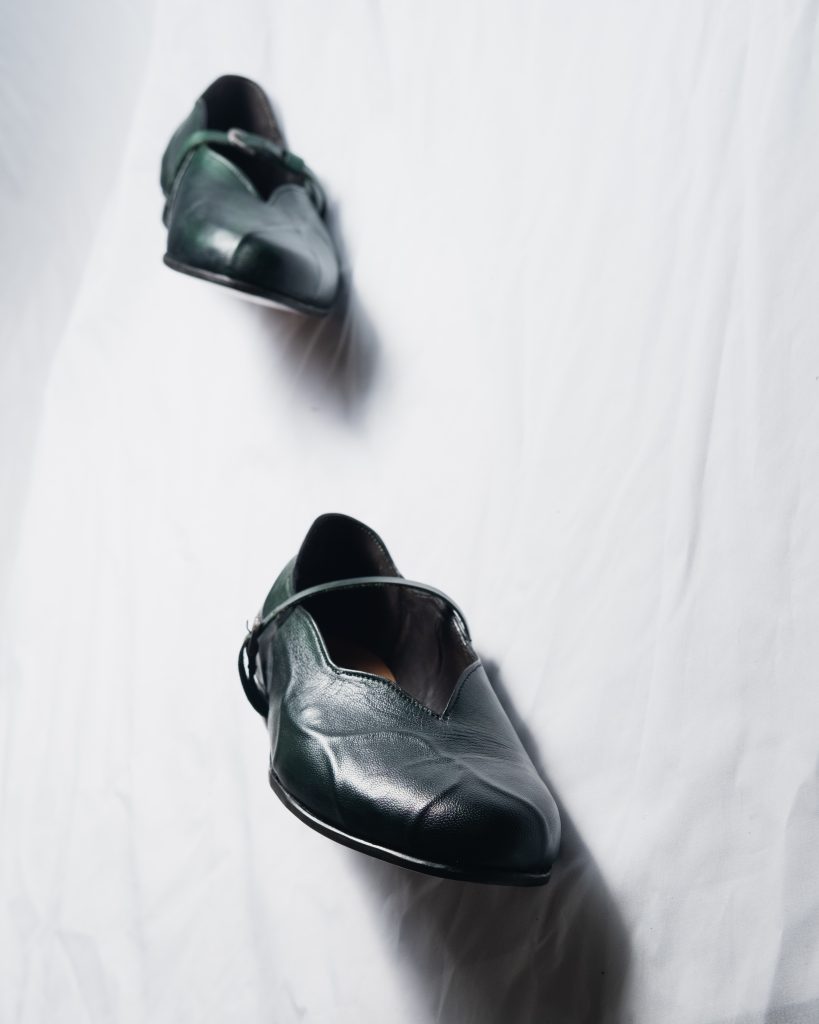
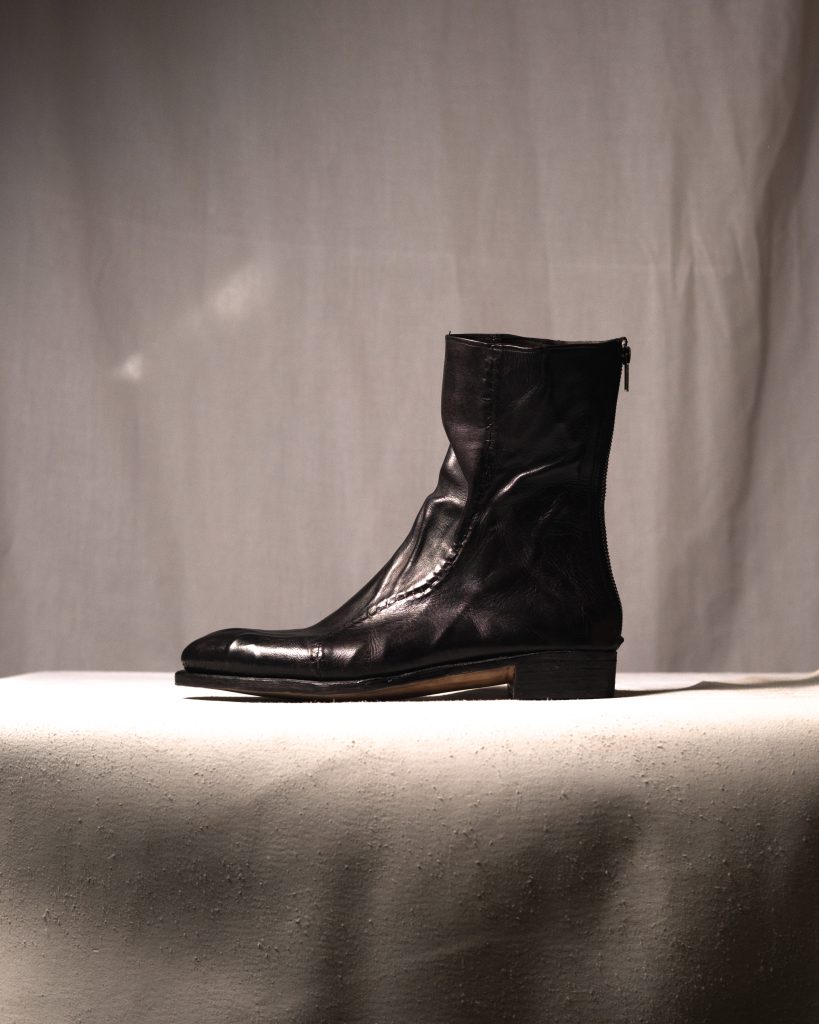
“Our inverted surgical stitch, hand-stitched soles, and hand-dyed finishes are the ones we spend the most time on. We call it the veins.”
Even their signature leather textures are built this way. It is not something that comes from the leather itself, but something constructed between layers. A subtle lift beneath the surface that gives the shoe a different dimension, an organic, veiny look. A detail that most people might miss, but one that becomes part of how they recognise their own work.
The Slow Burn
The process of making Banya shoes is a long and arduous one. But it is only this way because they choose it to be. They intentionally forego optimisation and standardisation. To a certain degree, they are prioritising creative freedom instead, even if it means putting future scalability at risk.
They do things by hand, taking days for what could have easily been done in minutes by machines. Like the inverted surgical stitch, for example. Now that’s a long-discarded medieval leather shoe sewing technique, after speed and efficiency became the industry priority.
And that difference creates a ripple. What takes longer will end up costing more opportunity, and limit how much they can produce. Mistakes, because of that, hit twice as hard. There is a half-finished pair sitting to the side, one side completed, the other rejected.
“I ended up making the right side of the shoe better. But the left side was unacceptable,” Loy says.
Not compromising on their work, they remade just one side of the shoe, absorbing the loss in both time and cost.
Sampling also has to be done carefully. There is no room to freely develop samples in isolation, so new ideas are often tested within actual orders, shaped alongside the customer rather than before them. “That’s because we can only work on one pair at a time,” Loy explains.
On average, a standard pair takes about eight to ten days to complete, sometimes longer depending on the build. Not all of it is hands-on, but it still has to move at a certain pace for the materials to set and cure properly. It might not be the most efficient way of doing things, but this is ultimately what defines their craft and design. The decision to slow down is built into their brand.
“We’re lucky to have some customers who take the bet on us.”
Taking The Plunge
Growth does not come easily, and in some ways, it is not something they are chasing in the usual sense. Their initial plan was straightforward and safe: bring in retailers, increase output, then hire. To run Banya as a profitable business, standardisation felt like the natural next step, a system that could be repeated and scaled. But it did not take long for that idea to fall apart.
“Why be the same? Not everyone wants the same pair,” Loy says.
Part of it comes down to the material. Leather does not take colour uniformly. Each piece absorbs dye differently and ages in its own way. They tried correcting it at first, but somewhere along the process, it becomes clear that forcing consistency means losing something else.
“At that point, we wouldn’t be focusing on design anymore. It would be efficiency.”
They quickly pivoted away from that and embraced non-uniformity. What replaced it was simpler in theory, but harder in practice. Make each pair better, and let the value speak for itself.
“We are not better just because we claim to be. The determination lies with the market; if people are willing to pay for it, then we really are better,” Loy says.
That shift also means they are doubling down on the bespoke and tailored aspect of their brand. And oftentimes, what they are offering clients is not always a finished design, but an idea that takes shape as it is being made. “We are giving them imagination. We have nothing to show them.”
It requires a certain kind of trust and a willingness to accept that the outcome may shift along the way. “We’re lucky to have some customers who take the bet on us.”
Going Big
The possibility of Banya expanding internationally is there since most of their customers are overseas, with China leading the way. Locally, things move slower. The value of what they are doing takes time to register, and even more time to be paid for.
“One day, we posted onto our Xiao Hong Shu account spontaneously. After that, it just started gaining traction. On the flip side, the Malaysian crowd isn’t willing to pay for our products yet. Maybe we need more time to prove our worth.”
I find it telling how they took accountability for a wider market limitation onto the value of their own work. But beyond price and perception, the structure of their operations remains a constraint, especially when it comes to their human capital. Growth requires skilled labour beyond the founders, yet teaching the craft comes with time and money with no guarantee of return. So instead of building around people, they’ve decided to build around value. Each pair of shoes has to justify the time and costs it takes to make.
“So right now we try to make our shoes high value so it’s worth it for us to make it,” Loy says.
“We are building Banya to last a long time. But anything could happen tomorrow.”
Stepping Back Out
I leave the workshop without my shoes. They will need time. I can’t help but admire their laissez-faire approach to their business. Maybe they are used to the impermanence of objects. It's almost like a ‘screw it, if it works out it works out’ mentality. Even in the way they speak about their work, there is an acceptance that nothing really lasts forever. They strive to build longevity, but without the illusion that anything is guaranteed.
“We are building Banya to last a long time. But anything could happen tomorrow.”
Obviously, everyone wishes for success, the best marker being monetary. But for the duo, success, in their terms, is not expansion at all costs. It is something more discreet. “It would mean sustainable revenue and having creative freedom,” Loy says.
It is a simple answer, but a prideful one. As a fellow Malaysian creative, this journey of theirs is something worth paying attention to.
Banya feels like the kind of project that could turn into something lasting. The kind of slow burn that, given enough time, finds its place alongside names like Guidi or Crockett & Jones. Something local. Something that we can be proud of for generations to come.