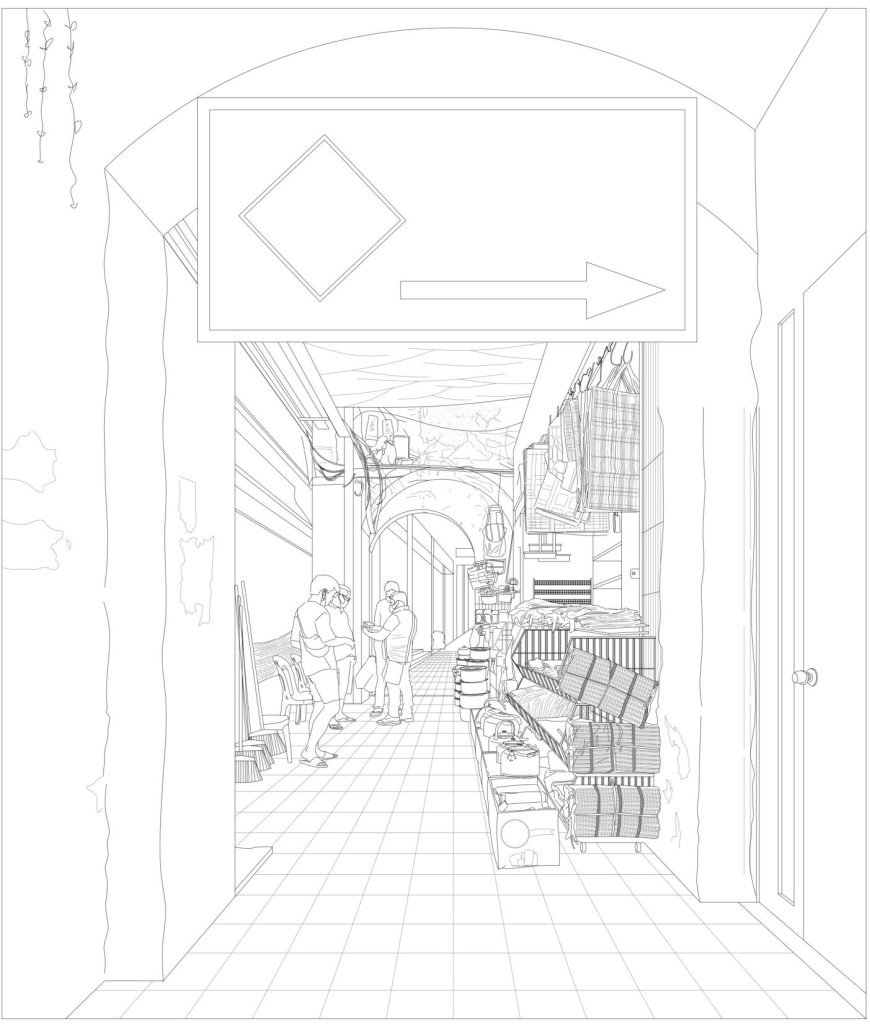
Take a walk through old Kuala Lumpur and you’ll find yourself, at some point, in a “kaki lima”—a five-foot way. These covered walkways are often separated with arches, and they’re so common in this part of town that you might have stopped noticing them.
Ideally, the path is clear enough to keep you shaded from both rain and sun. It’s likely you’ll find something to capture your attention along the way: perhaps a shopkeeper has set out their wares, or there’s a cobbler at his stall. There could be a small shrine fixed to a pillar, or a snack seller. A parked motorbike, a sleeping person.
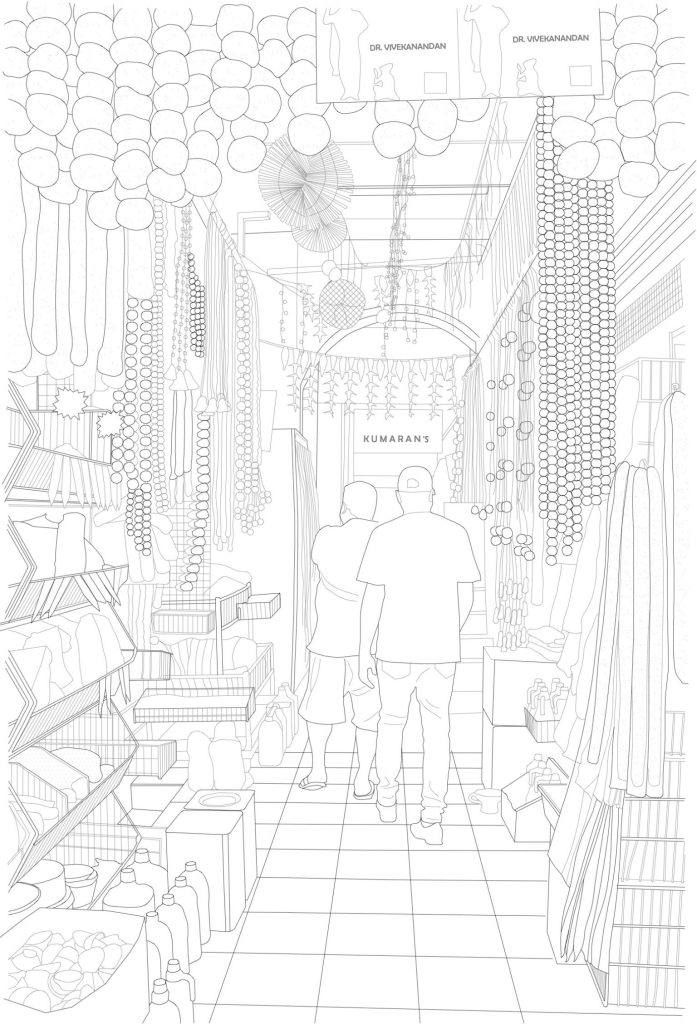
It’s thought that the five-foot way originated in Malaya from mid-19th Century city planning proposals by Stamford Raffles, first in Singapore, and then later in Kuala Lumpur. Five-foot ways are a feature of other cities in Southeast Asia too. While they provide a respite from the heat, they’ve also become a place for lingering.
In Kaki Lima Stories, authors Camelia Kusumo and Lee Sze-Ee document life in these shaded colonnades in downtown Kuala Lumpur. The authors are architects and academics with a passion for urban design.
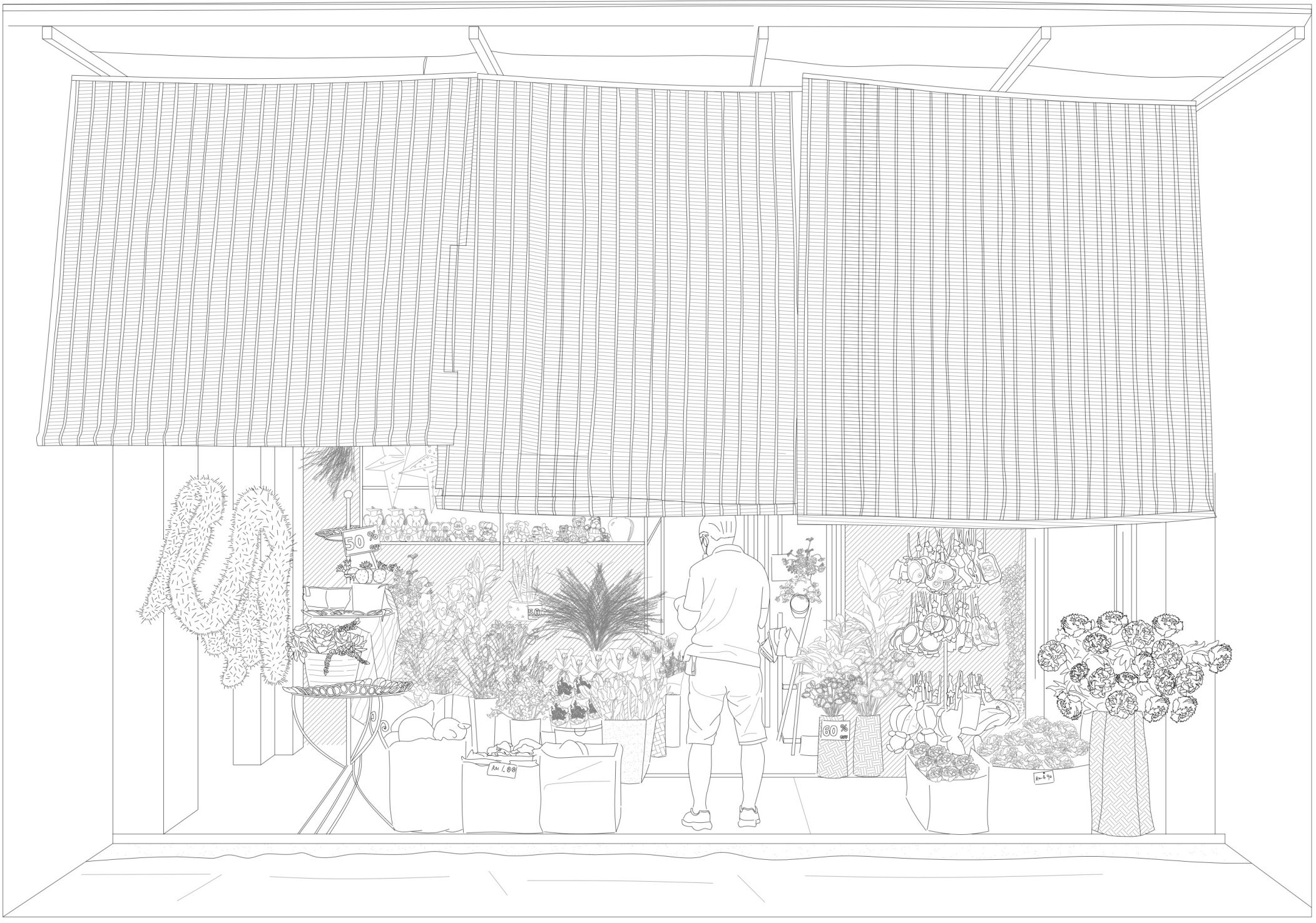
With their research team, they interviewed various business owners and employees along these streets. Together, these stories and illustrations show a picture of how public and private spaces come to overlap; and the way that both heritage and change jostle together in the old city centre.
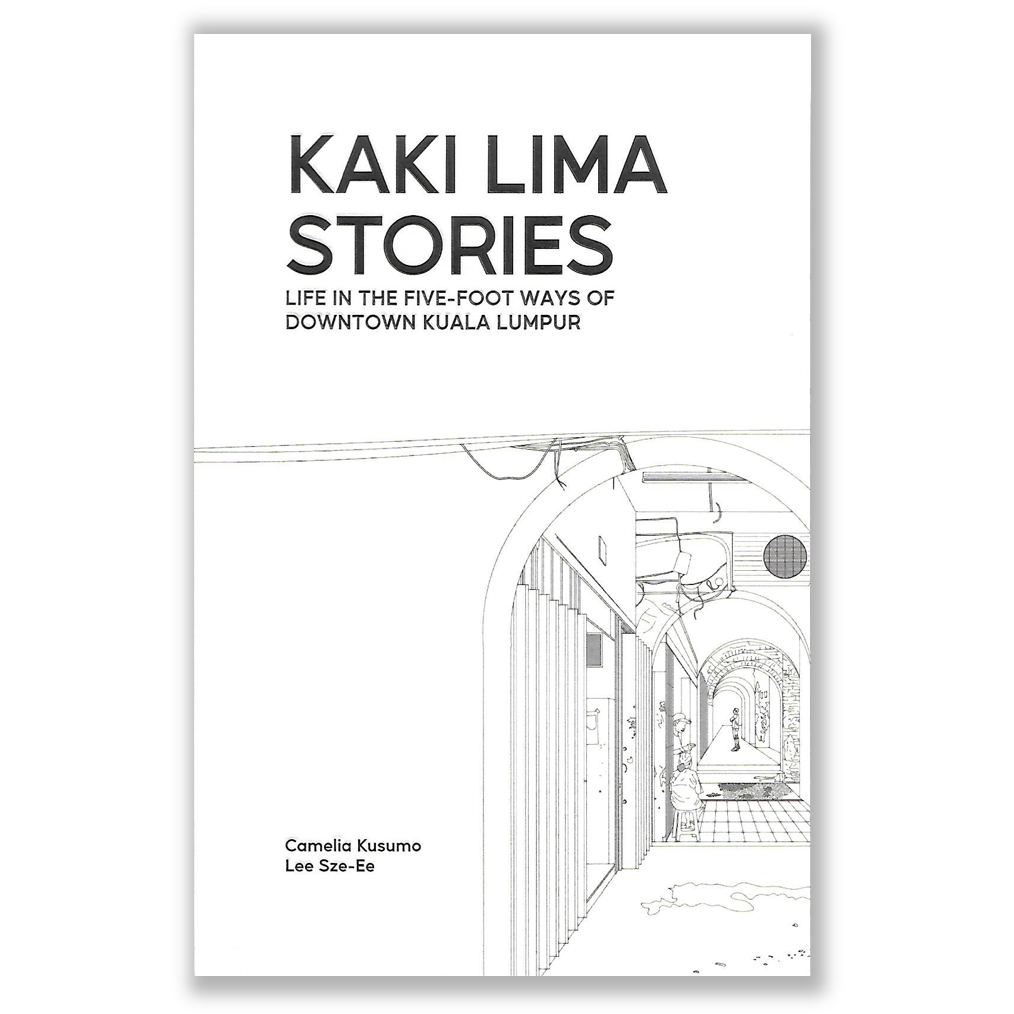
Kaki Lima Stories is published by Suburbia Projects, an architecture focused publisher, bookseller, and platform based in Petaling Jaya. Founded in 2020 by Ashran Bahari and Naadiya Hani, Suburbia Projects is dedicated to expanding conversations around architecture, cities, culture, and the built environment.
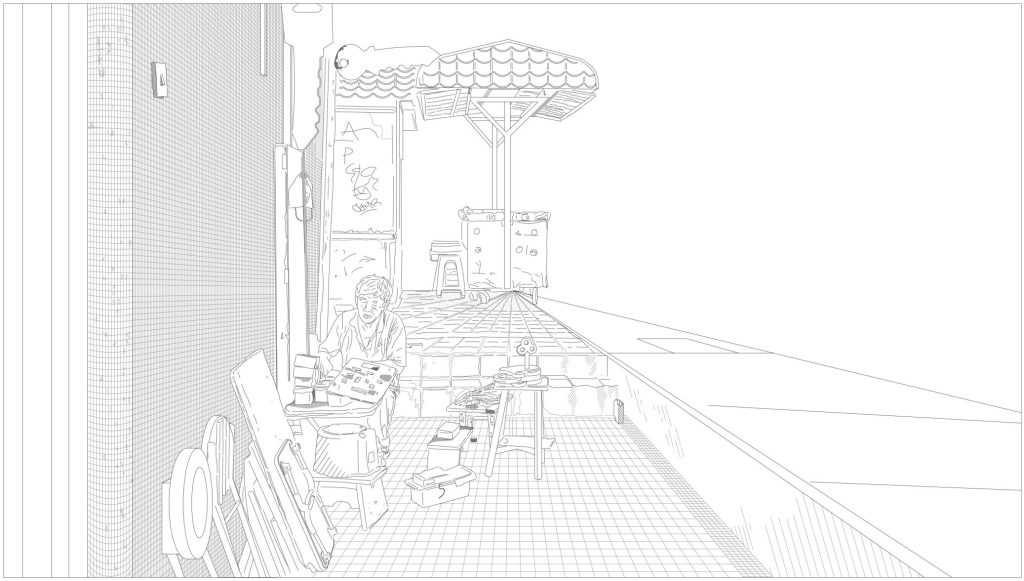
A hidden locksmith is located next door to the Pasar Seni Starlight Hotel in a space of less than 3 square feet. Tools of all kinds, large and small, some even covered with signs of age, occupy this small space. The shop has been in the same spot for over 50 years. The owner told us how prosperous and lively the place was in the 1900s, with people coming from all over the world.
Nowadays, it is deserted, with only a few loyal customers coming in on weekdays, and most of the shops in the area are at risk of closing down. Due to the space limitation, Mr. Chen displays his products and works on the plinth of the shopfront, which serves as both a backdrop, a leaning space to rest, and maximum visibility for his goods. The presence of two steps to connect the changes in floor level not only increases the enclosure of the space but also slows down pedestrian movement and focuses their attention on his work.
How long have you been operating here? I have been here for about 50 years.
Why did you choose this place? I've been here since I was in my teens and it's changed a lot from here to now. Before the construction of the MRT, there were a lot of people here, and many people would buy things here. Since the construction of the MRT, the crowd has gradually decreased, which has led to the slow closure of the shops here, and there is no bustling before.
Why do you extend to the kaki lima? Because my store is small, only about 3 sq ft, so there is no place for me to sit inside. I need to sit here at kaki lima to fix these keys. (The internal environment is filled with various tools.)
Do you need a permit to do so? Yes, I have applied. (Showing the permit to interviewer)
Do you change the setting regularly? It wasn't so messy before, but after that, more things were bought and picked up, and there was no sorting out, so it became what it is now.
How do you feel about people around you at this place? There is a big difference here from before. In the past, the entire row of shophouses here were filled with people doing business, and many people came from different places. Not like the present, there are a lot of foreign workers, and most businesses have closed down. Now, the money I earn is barely enough for my living, so I spend a little less money, I only spend about RM5-8 a day. Most of my lunch is provided by other people (meaning the hotel staff next door). They are very kind.
Do you face any challenges? What are the challenges that you are facing now? How do you solve it? The biggest difficulty now is that there are no more customers. (Smiling bitterly) Most of the people who come here are old customers, and there are no new faces to visit me. Coupled with the impact of the epidemic, there are even fewer people. I'm probably going to the morning market here (near the MRT) every weekend to sell some antiques now. Come every evening to make some special locks so that I can sell them in the morning market. (Showing the cute bear-shaped lock and key made by the visitor locksmith himself from the wood he found.)
Any differences to what you are doing before and after the pandemic? Differ greatly. Affected by the epidemic, I lost nearly 70% of my customers and could only earn about RM600 a month.

Esquire Malaysia
©2026, Heart Media Pte Ltd
