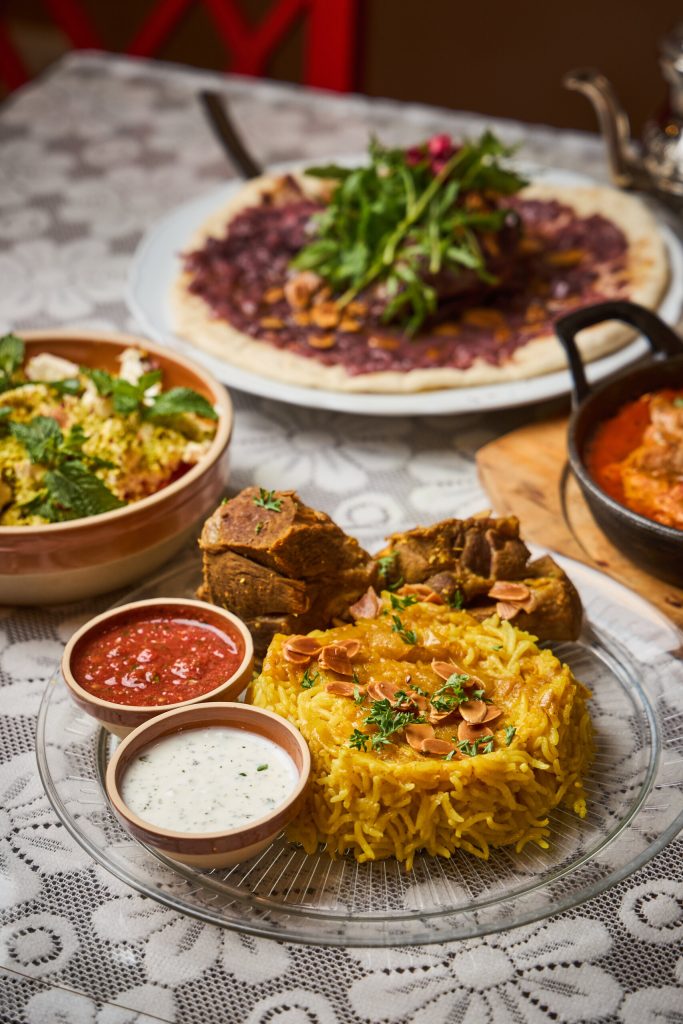
The suburbs of Taman Tun have long been cosmopolitan. Its restaurant scene boasts a diverse mix of cuisines, where it feels like every corner of the world is represented. When Yafa restaurant opened a year ago, Palestine joined the neighbourhood.
Yafa—together with Marookha, the women-only lifestyle club upstairs—is run by a Palestinian and Malaysian couple, Ahmad Hallalo and Zara Riza.
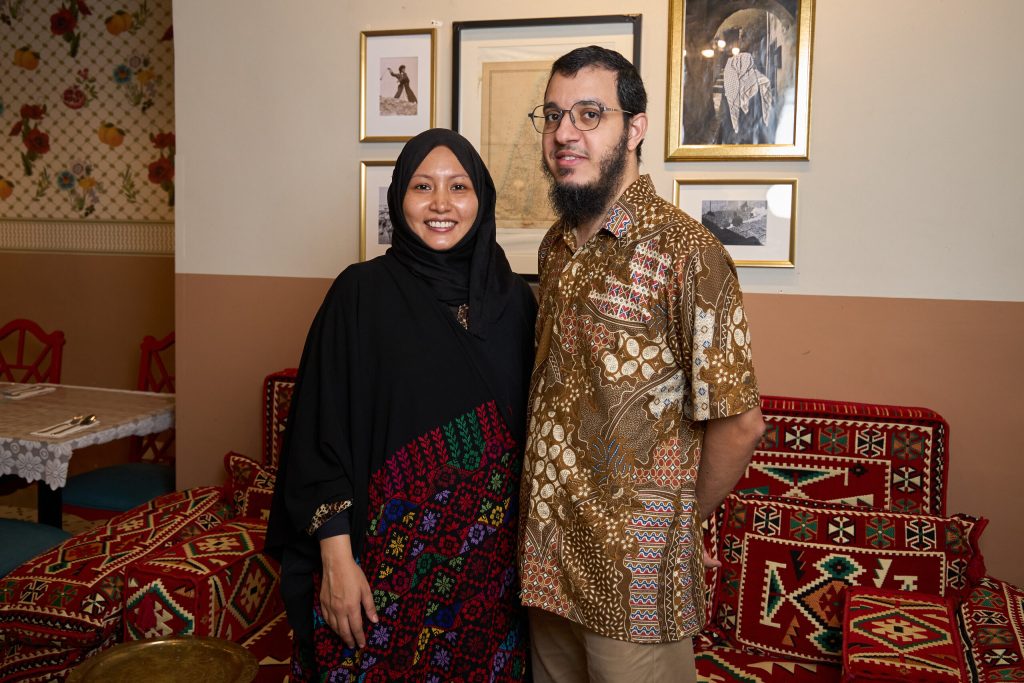
Ahmad grew up in Abu Dhabi, but still has uncles and aunts in Gaza. “We used to visit every two years back in the ‘80s. Then in the ‘90s every four years.” The last time he visited was 1999.
“Ahmad’s father is from Yafa, we’ve named the restaurant as a dedication to him,” Zara explains. Yafa is known as the home of Jaffa oranges. The port city was once one of the world’s biggest orange exporters.
For Ahmad, every dish on the menu is a memory of the place that he hasn’t gone back to since 1999. His grandparents were forced to leave their home in Yafa during the Nakba in 1948, when Israeli militias attacked Palestinian villages and displaced 700,000 people.
His family still holds the key to their old house, a symbol shared by many Palestinians in hopes of one day returning.
“During the height of the war, all the borders were closed, they were completely cut off. Ahmad’s late grandmother wanted sugar for her tea. His uncle went out to look for it and it was so expensive that they could only afford one teaspoon,” Zara tells me.
This is one of the many stories that encouraged the couple to start hosting fundraising dinners to help refugees and migrant communities. Eventually, the dinners grew into a full restaurant as Yafa first opened its doors in 2025, with Marookha upstairs.
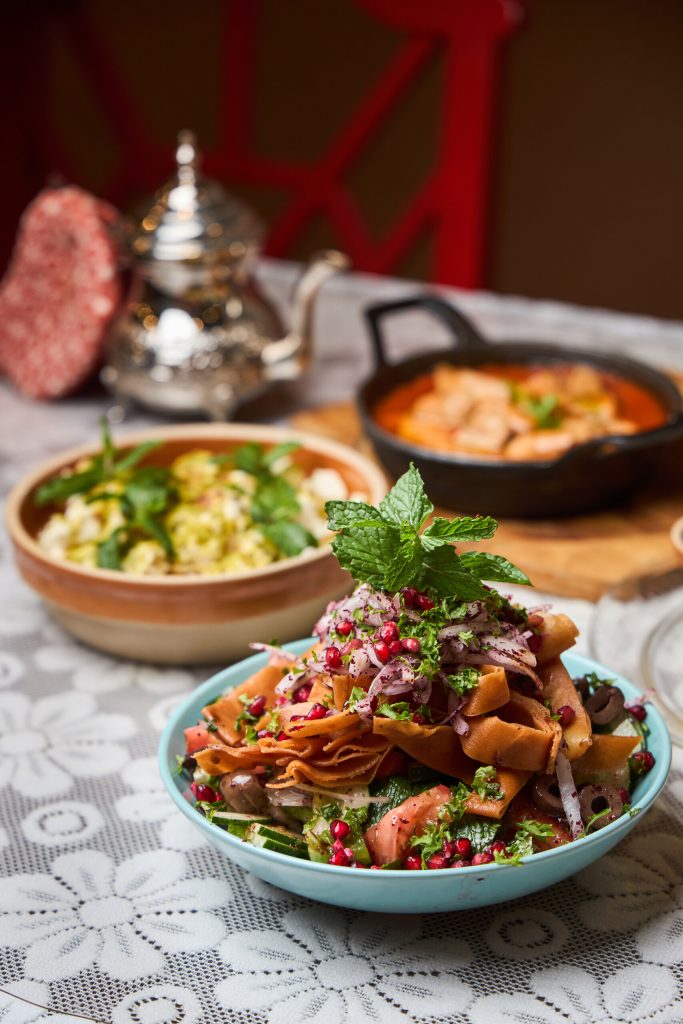
Zara was already a fan of Mediterranean food. She learned everything about Palestinian cooking from her mother-in-law. “Yes, everything I know is from her air tangan,” she says. She admires her mother-in-law for managing a household of nine children. “Her house is like a really well-run mini restaurant.”
One of the signature dishes at Yafa is the maqluba, a beloved Palestinian dish cooked in a large pot of rice, eggplants, potatoes and onions, then flipped upside down to finish.
Most countries in the Syam region have their own way of preparing maqluba. Although they differ in preparation method, it’s still made to be eaten at family feasts on a communal platter, like much Arabic food.
However, at Yafa, you can order maqluba individually, thanks to Ahmad adopting a Malaysian technique and refining his own approach. Ahmad observed how nasi kukus is cooked at one of his favourite stalls, and tried the same methods to make smaller maqluba. “The way we cook the maqluba, that’s our own idea,” he says proudly.
On the other side of the Klang Valley, another Palestinian restaurant stands strong after five years of opening. Mohammad Saleh is the owner of Gerai Nasi Arab Palestine in Keramat.
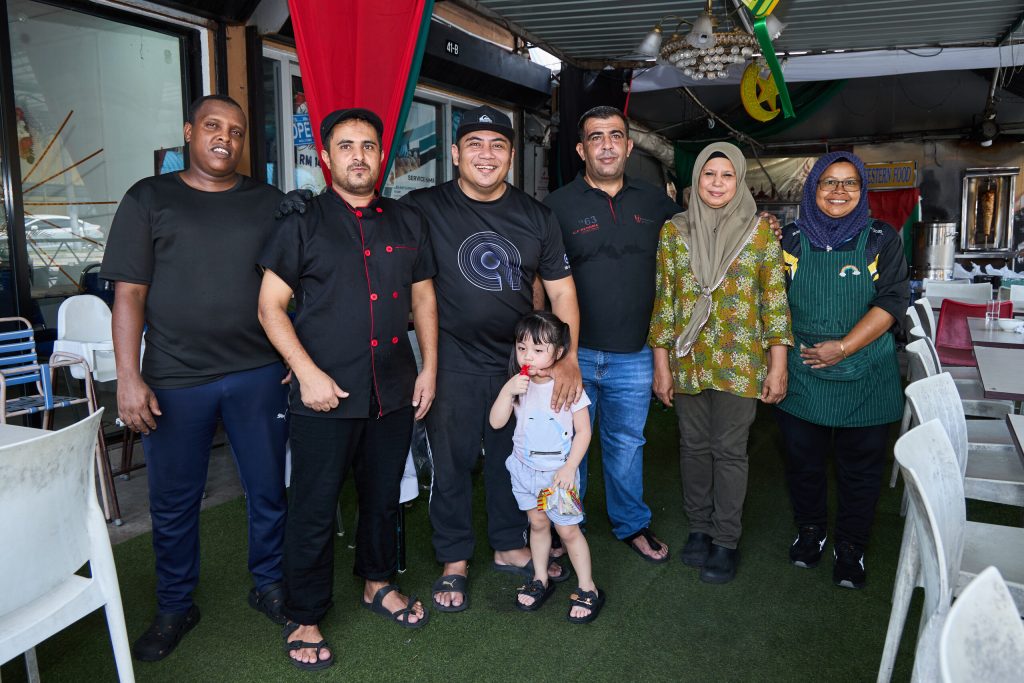
He has lived in Malaysia for 16 years and is now married to a Malaysian. They lived in Kuala Perlis together before moving to KL. He is from Gaza, where his parents and siblings still live, but has some family in Malaysia too. “My aunt’s family just arrived here in Malaysia six months ago, one of my cousins is here to do his Masters degree.”
All the food served at the humble little gerai are based on his mother’s recipes, with slight flavour tweaks to suit Malaysian tastebuds.
“My mother taught me how to cook, these are all her recipes. Back then in Gaza, I lived with my mother to take care of her, most of my siblings moved out of the house with their own families. I have five brothers and one sister.”
At Gerai Nasi Arab Palestine, Mohammad only makes maqluba upon request. Preparing it for the restaurant’s everyday menu does not make sense economically. His customers prefer nasi mandi, which he admits is more Yemeni than Palestinian. But he is still passionate about the food of his homeland.
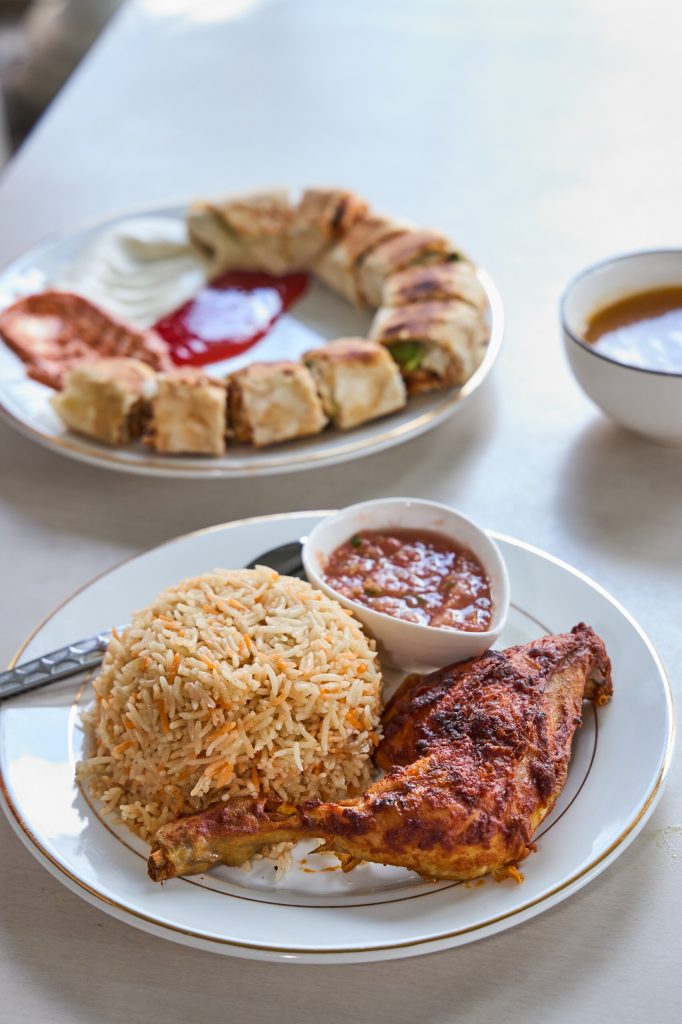
“My favourite is maqluba. It has all the vegetables; cauliflower, eggplant, potatoes, tomatoes, onion with chicken or lamb. I also like the sayadieh, it’s similar to maqluba but with fish.”
For now, he keeps the menu small, catering to crowd favourites, with occasional specials such as the weekend lamb shank. His relatives sometimes come to help him with the cooking and service.
Mohammad has learned how to speak Malay fluently from previous jobs, and expresses his gratitude to Malaysia often. He has been featured in numerous media outlets and foodie accounts, which helps keep the orders coming in. His customers are mostly local Malaysians.
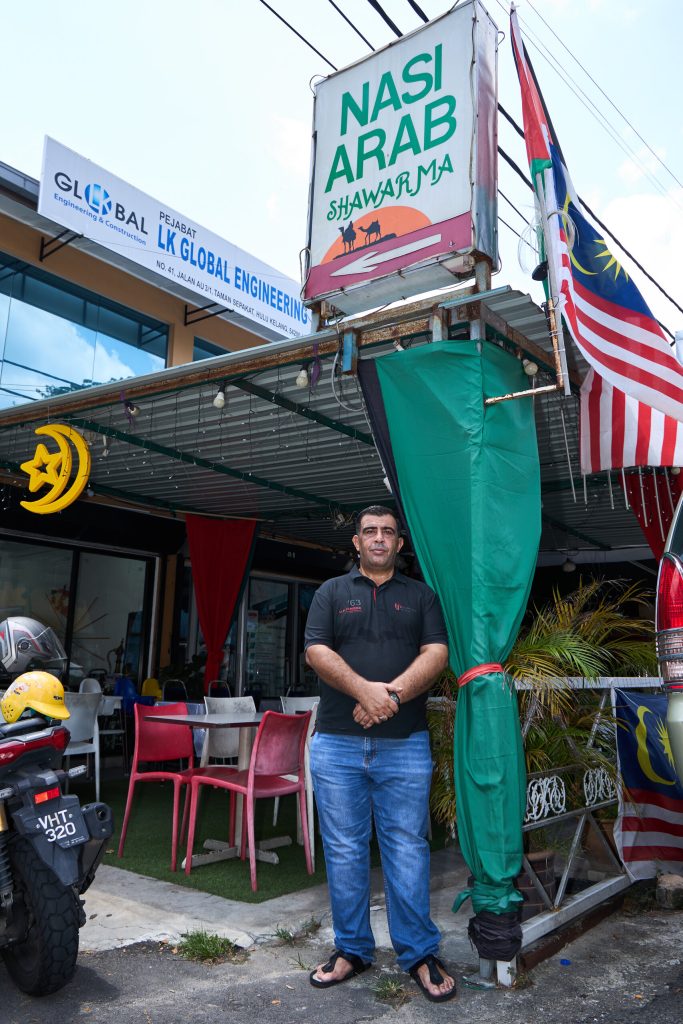
The prices at Mohammad’s gerai are reasonable. He also donates meals to those in need, and feeds the stray cats in the area.
“While I’m trying to find my rezeki, I can also secure my pahala,” he smiles at the reminder of divine reward.
What keeps Palestine alive for him? “Prayers. I hope for all the prayers to keep it safe.”
At Yafa, one particular menu item conjures personal memories for Ahmad. Back in Gaza, his favourite post-prayer snack was a gigantic falafel sandwich packed with cauliflower, eggplant, zucchini, potatoes and all kinds of pickle.
Now, the falafel sandwich is on the menu at Yafa too. Another signature is the musakhan, a roast chicken dish served on soft bread with caramelised sumac onions.
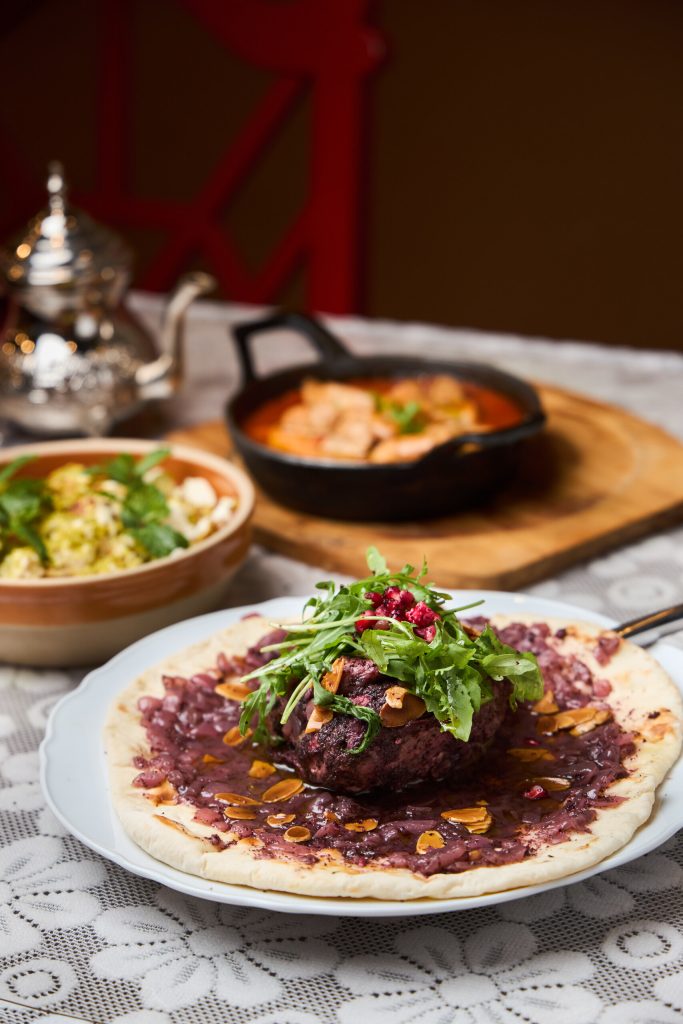
“Musakhan is a hard sell because people are less familiar with the ingredients. They wonder why it’s pink. It takes effort but if it’s good, people will eventually know,” says Zara. Her faith in the dish has been rewarded as the musakhan is now one of their bestsellers.
Zara is passionate about serving up lesser-known dishes, but it’s difficult to develop some of these recipes due to the ingredients. Herbs such as purslane, za’atar and sumac have to be imported.
“Sumac is a light purple spice, we use it in the musakhan. It comes from berries that grow in bunches and has a tart, umami flavour.”
She is also often in search of a specific type of zucchini called kousa. It’s small, light green in colour, and is the main ingredient for kousa mahshi, a delicious stuffed zucchini dish. At Berkat Madinah, KL’s biggest Arab supermarket, this specific type of zucchini sells out within a day whenever it’s in stock.
One day, she hopes to be able to collaborate with a farmer to grow more of the zucchini. For now, her priority is on managing the increasing price of crucial ingredients. “I'm a little bit worried because of the war, ingredients will get very expensive. Do I raise prices? Do I make the portions smaller?” she wonders.
The support that Ahmad and Zara has received through Yafa has been tremendously positive. Their customers include former and current volunteers who have been to Gaza, as well as Palestinians who now live in Malaysia.
“A lot of people bring Palestinian refugees to our restaurants for a treat,” says Zara. She takes comfort in knowing that Yafa is a community-approved spot for Palestinians who want a taste of home.
Many Palestinians in the Klang Valley live in Ampang, where there are gatherings and community activities for the small diaspora. While Malaysians have broadly been supportive of the cause, Palestinian refugees in Malaysia currently do not have the right to work.
“There are a lot of refugees who cook from home. If they were allowed to work properly, they would probably open restaurants too.”
Zara doesn’t feel pressured to be an ambassador for Palestine. It’s something she is more than willing to do, and she is aware that there is a lot of support. But she hopes for more Malaysians to learn about the conflict and educate themselves, beyond supporting “blindly”, as she puts it.
“If we were at war, how do you want people to treat us? This is our time to give back because you don’t know what will happen next.”
In the menu at Yafa, the team has written a history of the port city that inspires its name: “erased but not forgotten.” “Every bite you take today carries the taste of resilience. Because remembering is an act of resistance.”
Being an immigrant has made Ahmad a more cautious person. His experiences with immigration have been painful (for example, he has been denied visas to visit Singapore, the UK and the United Arab Emirates). But he finds healing in the home he has built with Zara.
Gatherings with her huge extended family, the chatter of aunties, uncles and cousins together, remind him of Palestine. “When we have family gatherings with her family—the aunties and uncles and cousins all together, that reminds me of home.”
Photography by Teng Soul Wong

Esquire Malaysia
©2026, Heart Media Pte Ltd
