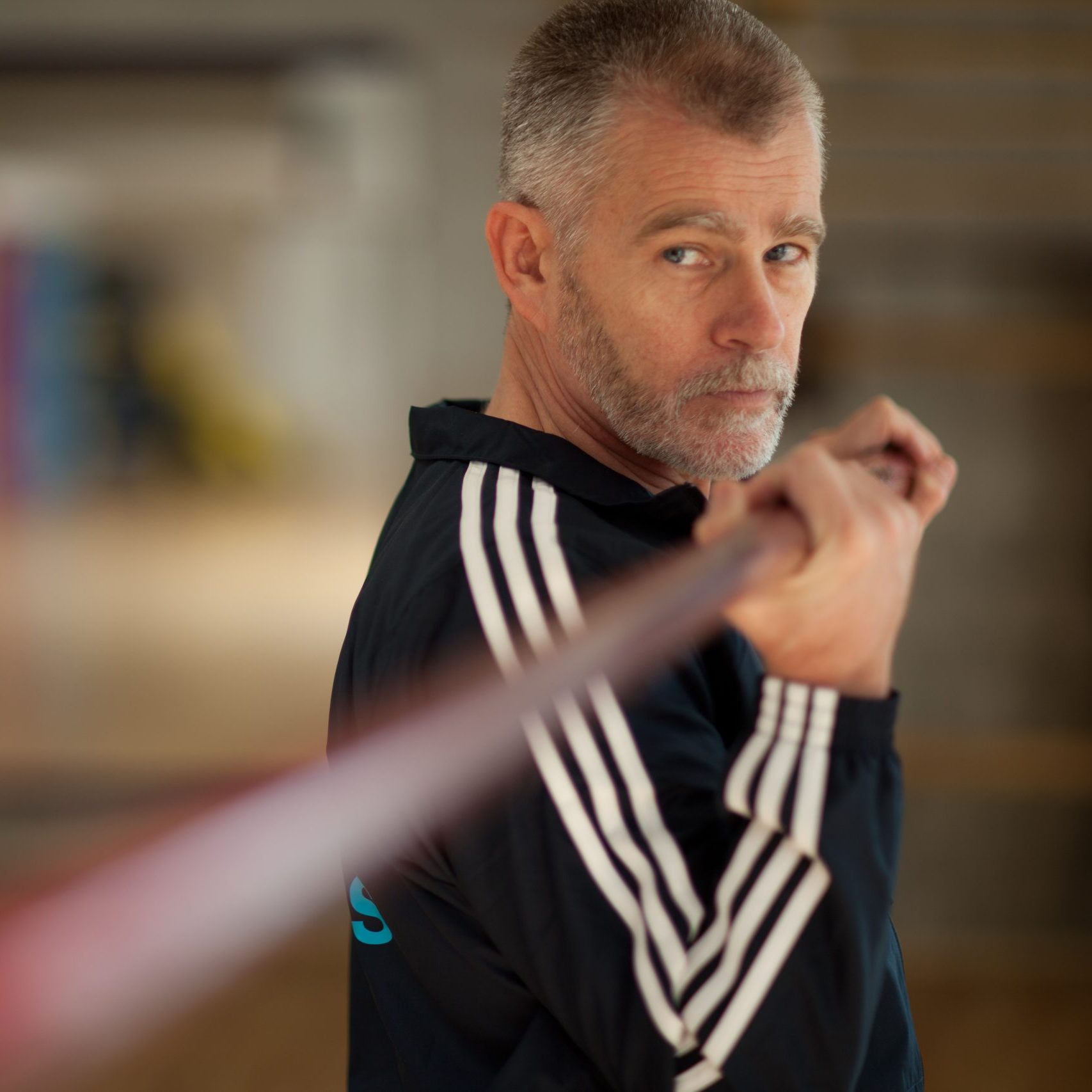
David Peterson, 69, Seremban, Wing Chun coach
I have a policy of not referring to myself as “Sifu”. “Sifu” is a title you earn through your efforts, if people decide you are worthy of that name, that acknowledgement. I’m okay with other people saying it—but I don’t call myself that. I would call myself a Wing Chun teacher, or Wing Chun coach.
A lot of people put big titles in front of their names, to make themselves more than they really are. “Master”, “Grandmaster”. It conjures up in most people’s minds something that’s mystical or wonderful. But there is no secret knowledge. It’s all hard work and effort. That’s what “kungfu” literally means: “skill you have achieved through time and effort”.
When I teach, I am very technical. If you ask a question, you get a full answer. Even if you are a raw beginner, and don’t understand the answer completely when you first hear it, we can talk about it and practice, again and again, until you understand.
No telling people: “You are not ready for this knowledge yet, come back when you are ready.” Because if you don’t have all the details of what you are doing, you won’t be able to do it very well. Plus: if you are ever in the position of teaching someone, you won’t be able to teach them all they’d need to know.
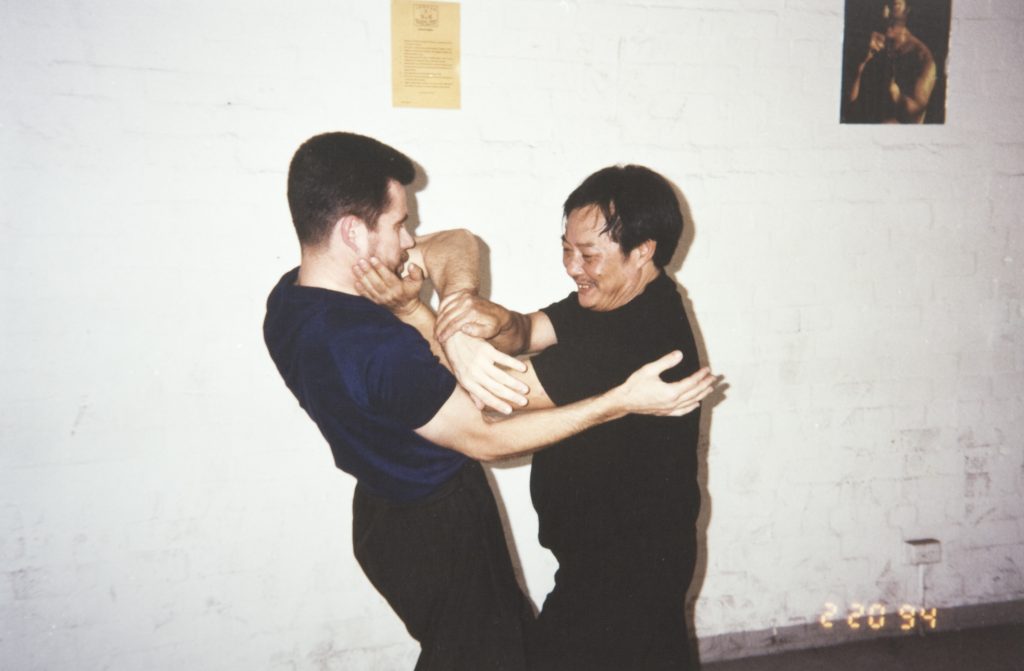
I get all this from my teacher, Wong Shun Leung. It was how he taught. He never called himself “Sifu”. If somebody wanted to call him “Master” or “Grandmaster” he’d say: “No, no, no. Just call me coach.” That was his way. Down to earth, pragmatic—he wanted things to make sense, to be logical. He always let his hands do the talking. That’s why people called him the “Gong Sau Wong”: the King of Talking Hands.
I started with Shaolin kungfu. I expected it to be more like the movies, and it wasn’t. The teacher was Italian-German, could speak fluent Mandarin, curse in Cantonese, and was very traditional in the way he taught. He just held back his knowledge. He made you wait and wait. Very hard exercises, very little martial arts. Attrition took out most of the students. Only when he was down to the last handful, was he prepared to start teaching.
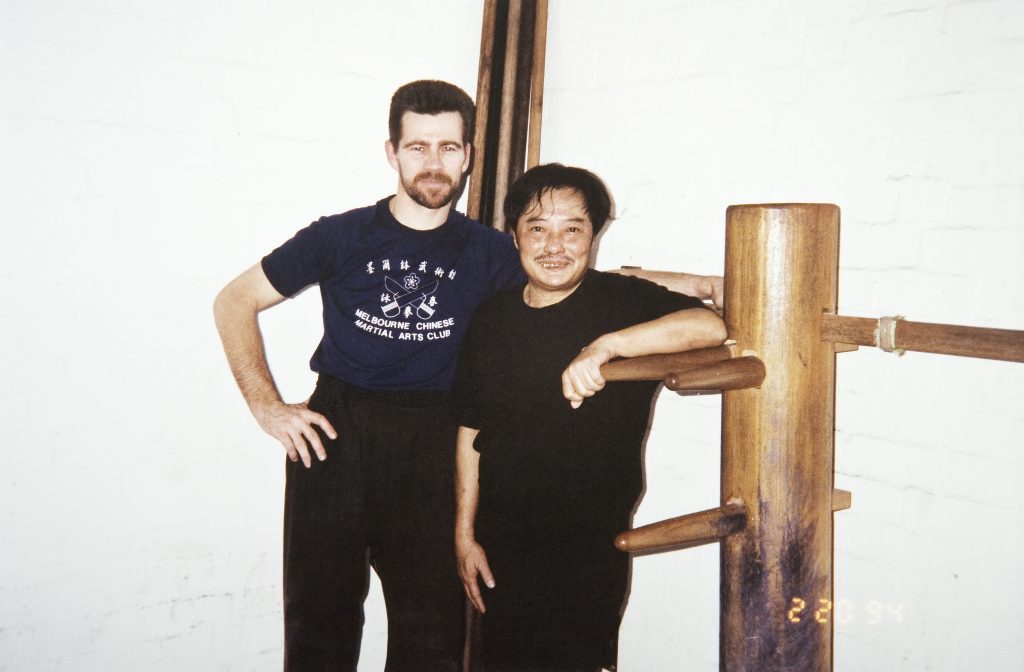
I was a big fan of Bruce Lee. Everybody in my generation was. In 1966, in Melbourne, one of the shows we used to watch after school was The Green Hornet. I had a pop culture fixation. I’d learned from magazines and documentaries that he’d been a Wing Chun guy, and trained in Ip Man’s school. Another name kept coming up: Wong Shun Leung.
I got wind of a guy who was teaching Wing Chun in Melbourne. He claimed to have studied under Wong Shun Leung. It was all a lie. He’d only spent a month in Hong Kong. He didn’t learn the whole system. But he came back to Australia, knowing he could tell stories. In those days you could get away with it. There was no Internet. He hid behind the idea that—“Oh, when you are ready I’ll show you the whole system.”
There was a Chinese magazine called New Martial Hero—it’s still around after all these years. Back then, at the back of the magazine, were pages where people advertised their schools. There was a tiny ad, no more than 1” x 1”. It had Wong Shun Leung’s name, an address, a phone number. I thought it’d be rude to call him up, so I wrote a letter. By then I was learning Chinese. Lo and behold: he wrote me back, saying that he would be happy to have us as students.
My friend John was the first to go. He was on the phone constantly, saying: “You’ve got to come over! It’s nothing like what we’ve been taught!” Eventually I went. We got a vastly different interpretation of Wing Chun that was a thousand times better than what we’d been shown before.
When we got back to Melbourne, we started teaching and sharing what we could. I started running my school in a little basement on the edge of Chinatown. The guy I used to learn from wasn’t happy with that arrangement. He started sending around his people to cause trouble. One night they came around. I fought them. I managed to beat up one of their toughest guys.
When I look at it now: it was a very martial-arts-movie thing to happen, sadly. School versus school nonsense. It happened because their idea of martial arts was based on what they’d seen in the movies. And their teacher was filling their heads with nonsense. Pop culture rubbed off on the real world.
Every five to ten years there is a new fad in martial arts. Mixed Martial Arts, Brazilian Jiu-jitsu. People like to talk about how these work better than traditional martial arts in competitions. I respect all these arts. The people who train in them are damn tough guys. But they are mostly geared to fighting in competitions. The ring is their measuring stick. Their best fighters are people below thirty.
There’s no real cut-off, age-wise, to learning Wing Chun. We kick low. Grandmas can kick low. When Ip Man started teaching in Hong Kong, he was an older man. In his 60s he could still handle people who were in their 20s—in their prime. Ip Man trained a martial art that, like a fine wine, gets better with age.
Did Wing Chun begin as a women’s martial art? If you believe the stories. Clearly people of a smaller stature had something to do with it. Wing Chun isn’t the thinking of a big person. A big person would use their size and power. Somebody who’s not so big has to come up with something that’s smarter.
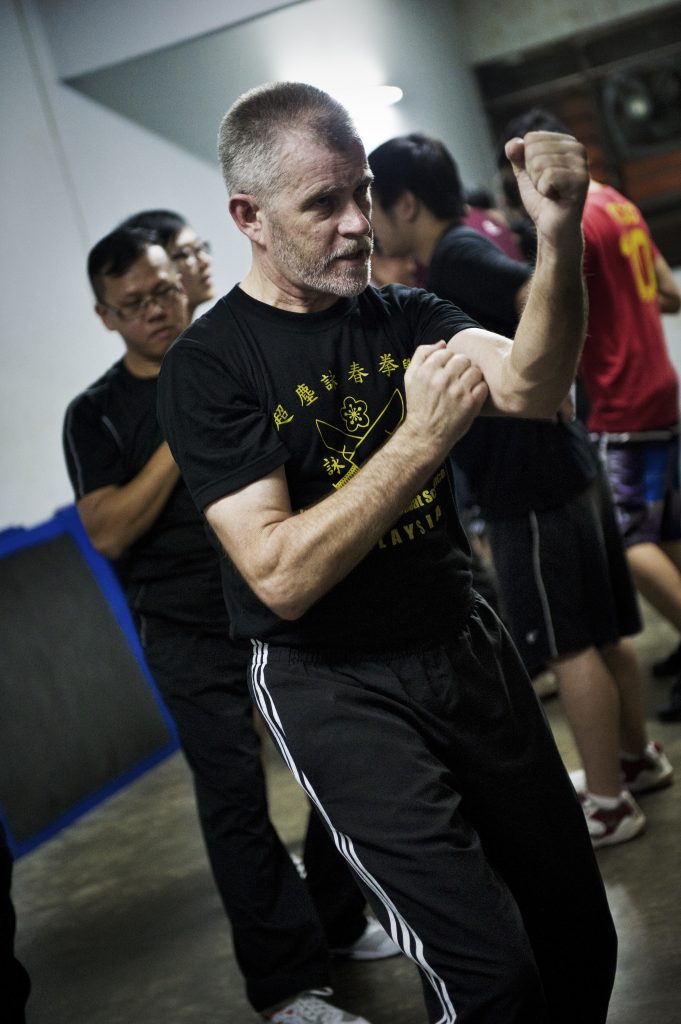
When we train Wing Chun, we train for the possibility of being attacked. A violent situation we are completely unprepared for. A situation where we aren’t physically powerful, we aren’t warmed up, we aren’t necessarily young and in our prime. When you are walking to your car, and get jumped by somebody.
We train at a range where it’s almost impossible to miss the target. We go through a ritualised pattern that gets the body ready for this distance—this in-your-face distance. The distance where real fights happen, where nobody is good. We get comfortable at this distance, and we know our enemy probably isn’t.
I’m an Australian of Viking background. I used to work as a Chinese language and Chinese history teacher. Now I teach a Chinese martial art. I live in Malaysia, because I married a Malay OB-GYN doctor.
I definitely feel a strong connection with Chinese culture. And I feel more at home with Asian people. I know people might criticise me for saying so. But most of the amazing things I’ve learnt and experienced in my life are—directly or indirectly—connected to Wing Chun, Chinese culture, Asian languages, and the people who I’ve met while pursuing these connections.
Is it cultural appropriation if you love and respect something? I’m old-fashioned. For me it is not about the woke thing. It is about respect. To share something that you love and respect and deeply believe in. To make sure its legacy lives on.
I owe a debt to my teacher. He didn’t impose this debt on me. But I loved my teacher like a second father. When we lost him at such a young age, it was heartbreaking. He’s almost thirty years gone now. I’m still promoting Wong Shun Leung’s name, his martial arts system. We call it WSL Ving Tsun Kuen Hok. His initials are in the front, because this is his interpretation of Wing Chun. I can share the knowledge that he shared with me, as accurately as I can recall it. To pass it on.
They’ve called me: “The Blueprint of Ving Tsun”. I didn’t come up with that! Other people did, and it is nice that my teacher felt that way about me. He never said all this to me personally, of course, because Chinese fathers never say these things directly—but when visitors to Hong Kong asked him about who his best non-Chinese representatives were, the first person he named was me. That brought a tear to my eye when I found out, years later.
I’m almost 70 years old. I’m not going to be here forever. I think about what comes after me. I’ve written books about my teacher. We’ve made two documentaries. Hundreds of articles in magazines, journals. My students run schools in eleven countries—South Africa, the UK, Germany, Denmark, Finland, Bulgaria, Italy, Singapore, the USA, Australia, Japan. I’ve sprinkled the knowledge all around the place. This tree is not withering. It is going to continue.
Of course I’m incredibly proud. Ip Man is my Sigung—my teacher’s teacher. His student Wong Shun Leung is my Sifu. Bruce Lee is my Sisuk—my uncle. It’s pretty darn cool! Stephen Chow, Nic Tse and Philip Ng are my kungfu brothers. I’ve trained with Jesse Glover, Bruce Lee’s original American student. I’m closer than six degrees of separation with all these people.
When people come in and ask: what are all these photos on the wall? I’m very proud to say: “This is our lineage.” From Ip Man and Wong Shun Leung in 1950s Hong Kong; right down to me, here in Malaysia. You are part of an amazing pedigree. Not many schools can say that.
David Peterson is a practitioner, teacher and documentarian of Wing Chun, the Chinese martial art made popular by Ip Man, Bruce Lee, and Wong Shun Leung.
As a former student of Wong Shun Leung (who in turn trained with Ip Man), Peterson is one of the foremost authorities of the WSL Ving Tsun Kuen Hok combat system. He is also a prolific author on the subject, publishing numerous books and regularly contributing to Wing Chun Illustrated magazine.
The head instructor at WSL Ving Tsun Combat Science, he runs weekly classes in Seremban and Kuala Lumpur. Find out more at www.wslwingchun.my

Esquire Malaysia
©2026, Heart Media Pte Ltd
