“Culture is not fixed. It needs to move,” Aaron Khor says decisively.
He’s talking about the idea behind Jalinan, TTDI’s buzziest new restaurant which he founded with Aaron Phua and Bimmy Soh. The trio are also behind the acclaimed noodle bar Fifty Tales in SEA Park.
The three of them conceived Jalinan after recognising that Fifty Tales had naturally become associated with modern Malaysian Chinese cuisine. Rather than opening another restaurant with the same concept, they wanted something that celebrated Malaysian food as it has always been: a weave of layered, interconnected and constantly evolving cuisine. So came the name of the restaurant, aptly named, as “jalinan” is Malay for “to weave”.
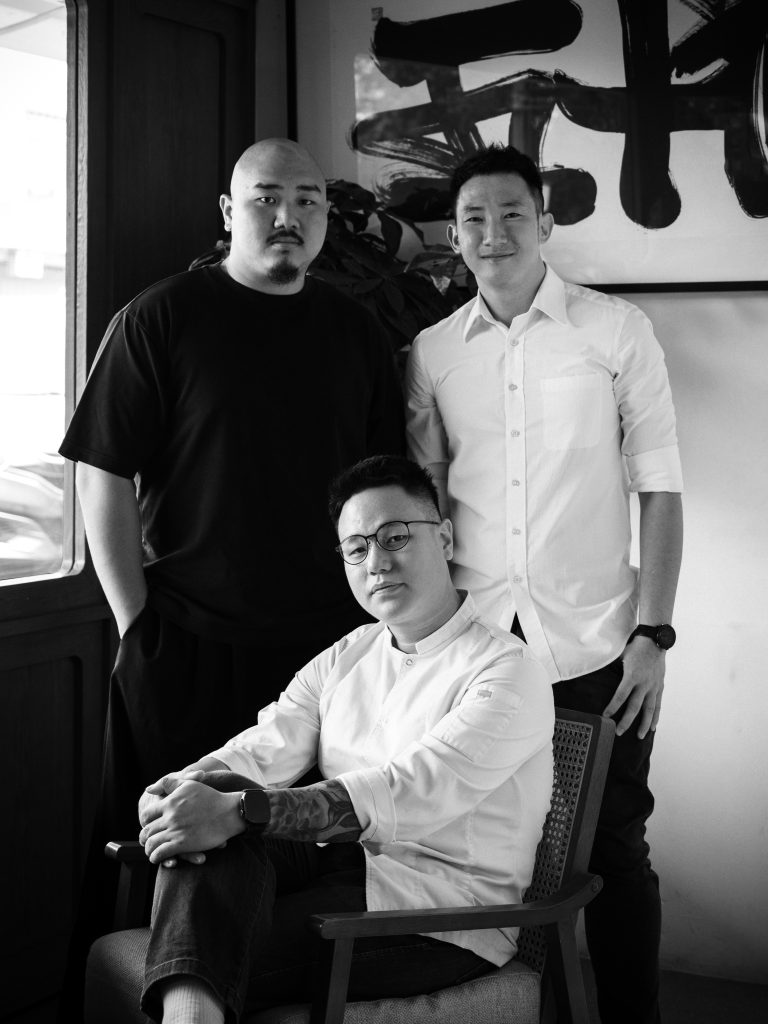
At the same time, the three of them weave their own skills as a team: Khor is Head Chef, Phua is Beverage Director and Soh is Restaurant Director.
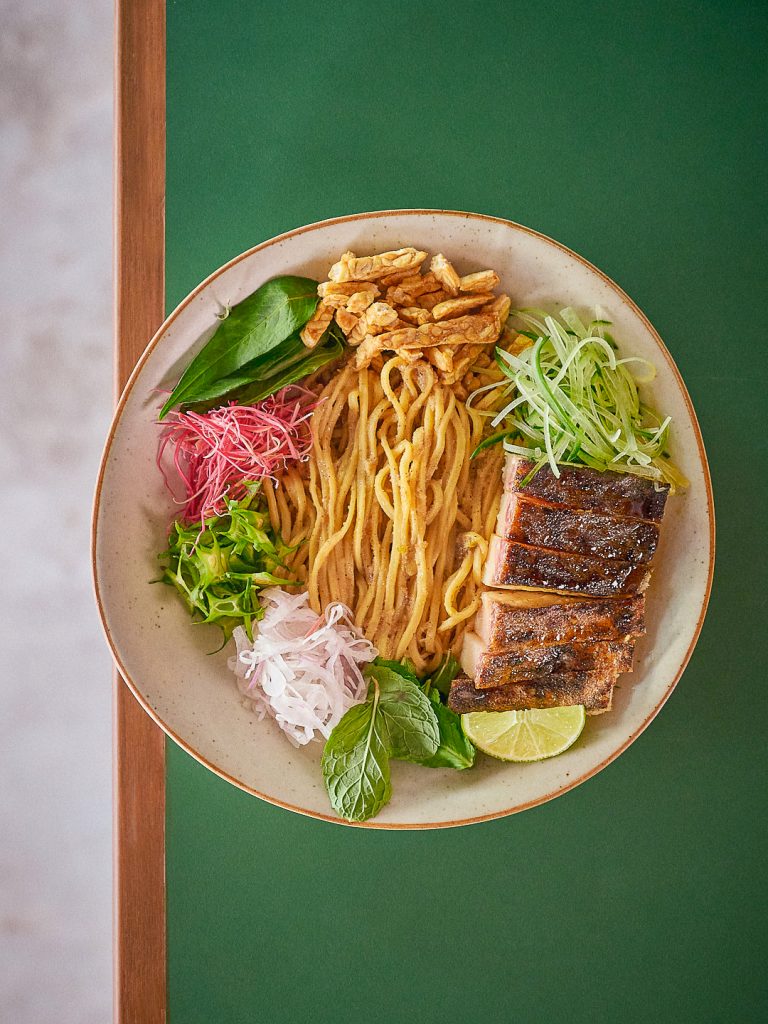
The braided direction surfaces repeatedly throughout the menu. In the Dry Laksa Ulam, Malay nasi ulam is reimagined as a noodle dish tossed in a white laksa paste with fresh herbs.
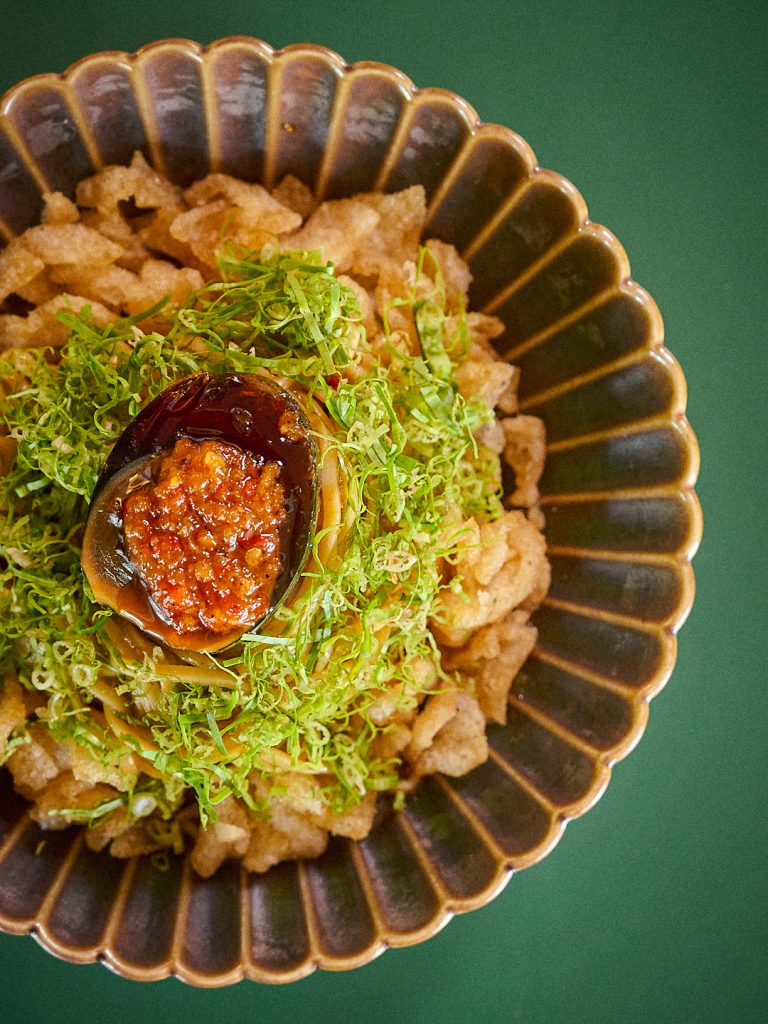
Meanwhile, Hunan lei la jiao inspires a fiery noodle dish of century egg and smoked habanero sambal in the Sze Ha Century Mee—with the habanero chillis sourced from Cameron Highlands.
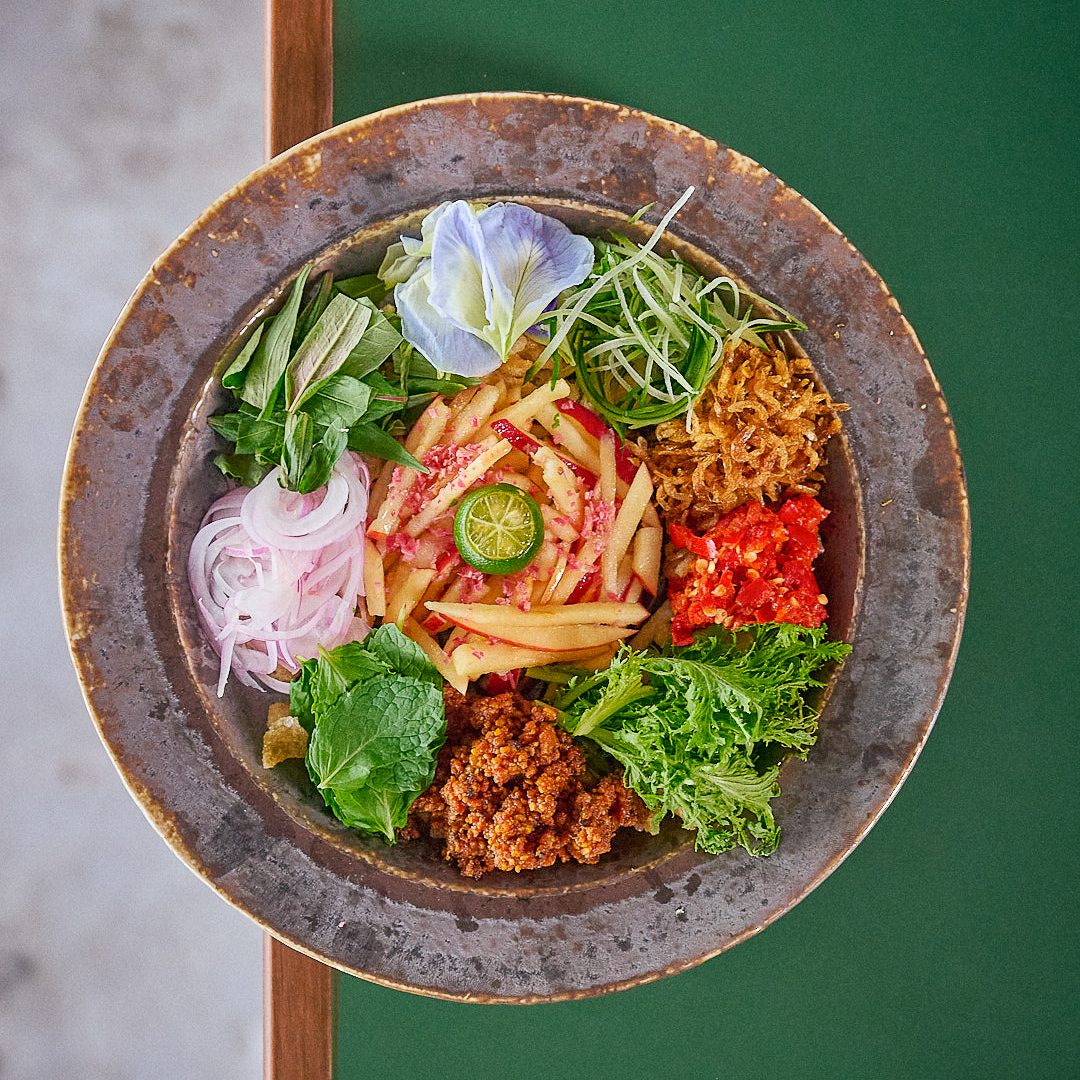
Among the shared plates, the Northern Peranakan-inspired Apple Kerabu combines fresh herbs, edible flowers, apples, hand-pounded chilli paste, udang geragau, and tempeh crumb. Sweet, refreshing, and a sound introduction of the meal to come.
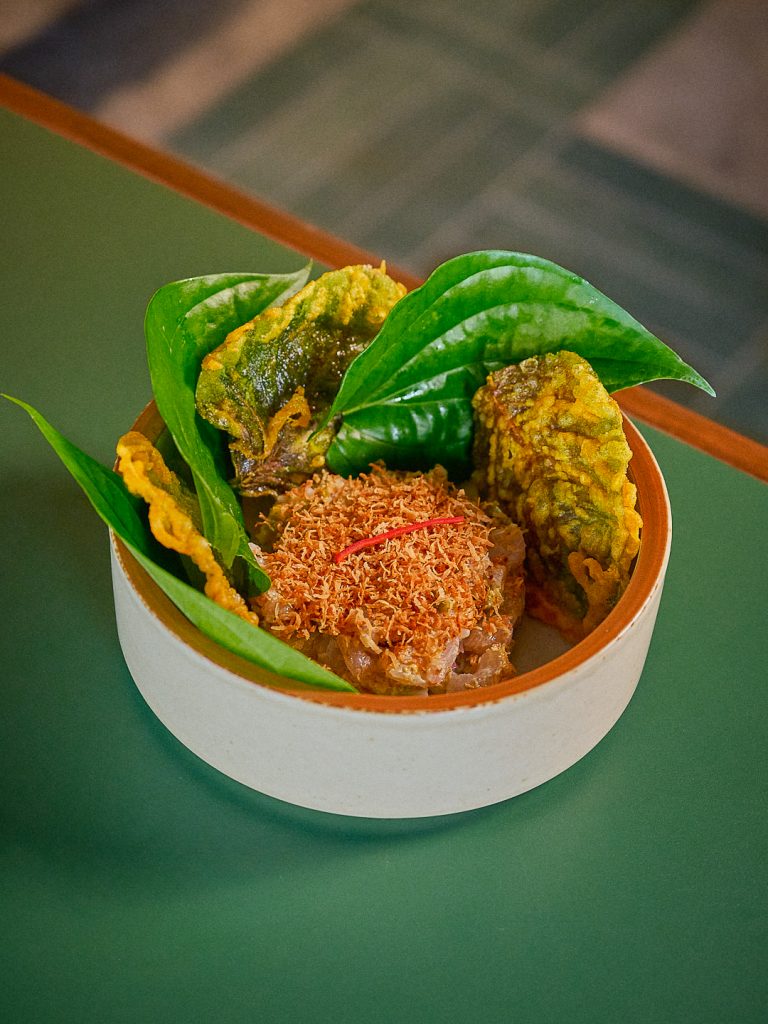
Another star emerges in the shared plates: this time, the homage to Chetti Peranakan Urap Ikan. In Jalinan’s rendition, cured red snapper is treated like a ceviche, garnished with toasted coconut and herbs. It’s served with kaduk leaves and crispy spinach leaf fritters, ready to be eaten taco-style.
We continue our meal with the Beef Gulai Tiga Sekawan, a rich curry with three cuts of beef: belly, tongue and tail. The richness is lifted by daun semomok, an indigenous herb traditionally used by the Temuan and Semai communities. We found ourselves doling out spoonful after spoonful of the gulai on our rice.
And of course, we’ve got to talk about the noodles. The noodles here are finer than those at Fifty Tales, but still have that signature, addictive, handmade chew.
In the Dry Laksa Ulam, the golden pomfret shines, grilled and glazed with soy and gula Melaka. The texture of the fatty fish is complemented by the tangy medley of kesum, kantan and mint, and the galangal and lemongrass-forward laksa paste.
Dessert is a surprise solo entry here, with just one dish for sweet tooths. The Pineapple Doughnuts and Cucumber Raita Ice Cream is a delightful take on Malay cekodok pisang, where the pisang is swapped for a pineapple paste inspired by Chinese pineapple tarts. The crisp, fluffy doughnuts pair perfectly with the cool cucumber raita ice cream.
Instead of treating heritage recipes as untouchable traditions, Jalinan approaches them as modern dishes capable of evolving while remaining true to their roots.
The food is comfortable in its familiarity evoking everyday dishes, yet sparks a sense of wonder and curiosity with its reinterpretation.
That same weaving of the old and new extends beyond the plate. Playing softly in the background is a soundtrack of Malaysian music: classic melodies from P. Ramlee and Sheila Majid, alongside contemporary musicians OJ Law and Kyoto Protocol.
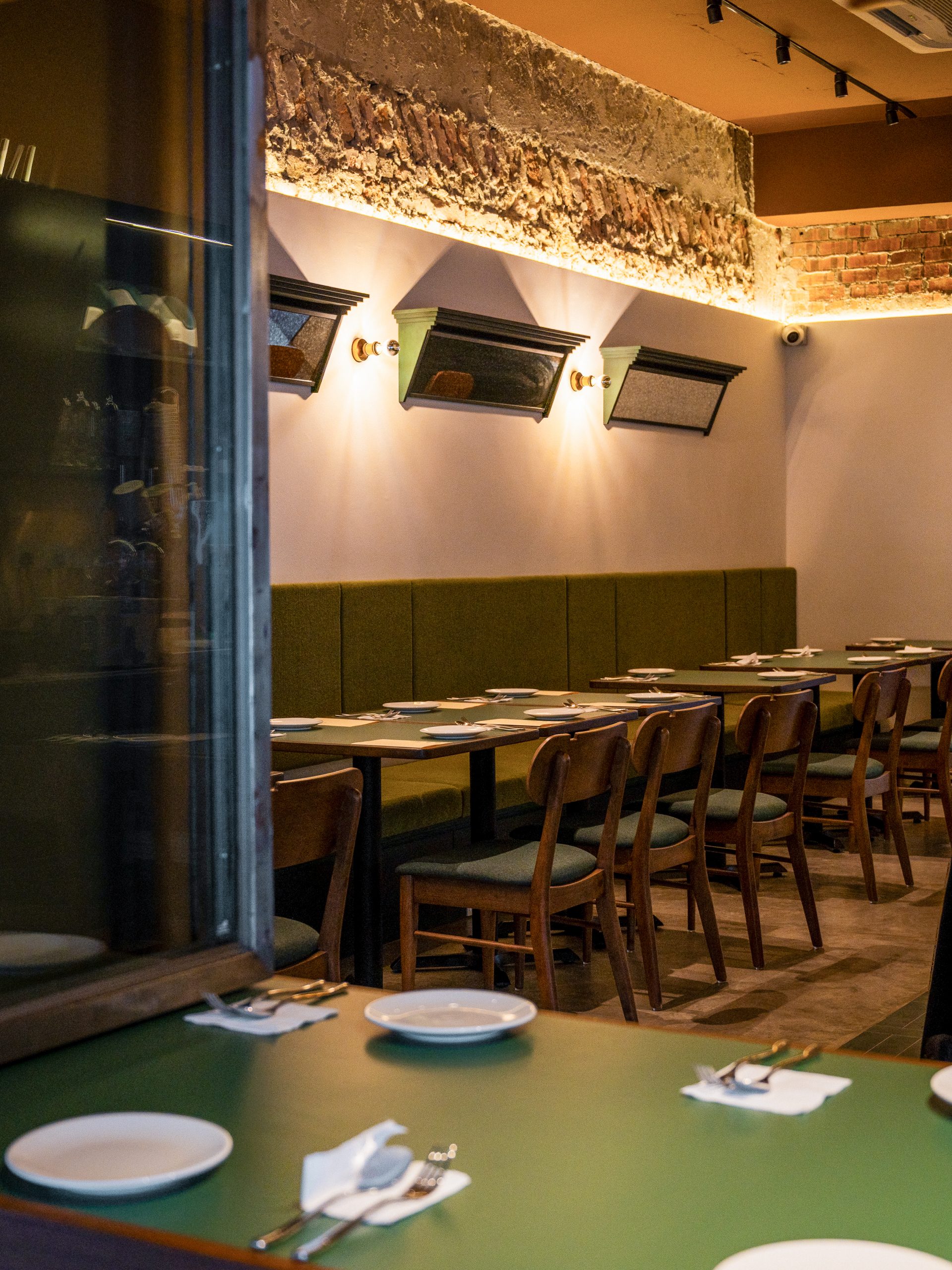
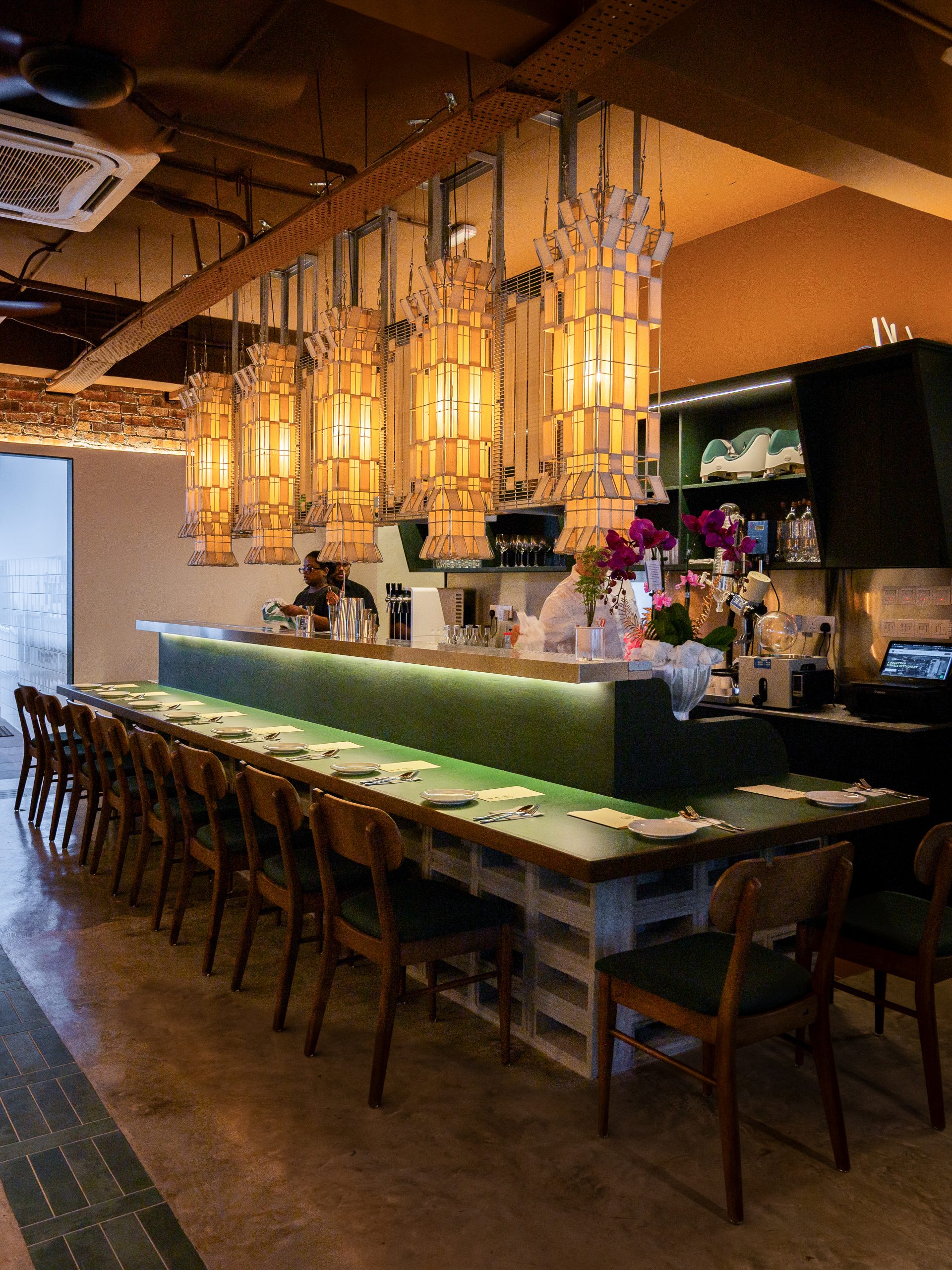
Warm lighting, exposed brick, forest green accents and steel mesh lanterns hanging above the bar cast a glow, creating a contemporary, inviting space.
When we dined here, our seats at the open-front counter at the entrance provided an excellent view of the goings-on in the inner dining area and the kitchen, while the seamless connection between the restaurant and the street kept things grounded and informal.
Like the food, the drinks menu has been carefully curated, with intriguing, inventive twists.
The easy-drinking Jalan 6, Kampung Baru cocktail is inspired by resident bartender Nelson Wong's childhood memory of kuih lapis and Ribena at his grandmother's home, anchored in a mellow coconut oil fat washed gin.
Scanning down the menu, the intriguingly-named Vadai cocktail lived up to its name; the cumin, fennel seed, coriander and gin drink is fragrant with the moreish aroma of a savory, spiced vadai.
It’s a compelling and memorable menu done well. Khor believes Malaysian cuisine has become overly comfortable preserving its heritage, sometimes at the expense of allowing it to evolve.
What’s served here can’t be siloed as Malay, Indian, Chinese or indigenous; the cross-pollination is where the magic happens.
While discussing several of Jalinan’s roots in Peranakan cooking (Khor himself is of Peranakan heritage), he immediately points to dishes like jiu hu char, arguing that many recipes have remained untouched for decades.
“I'm not a purist,” says Khor, who previously trained with Chef Darren Teoh at Dewakan. “I love tradition. I love heritage. I respect it. But we need something that can relate to the current generation.”
Conversation eventually drifts away from the menu and towards Malaysian culinary education. He wonders why students in KL often spend years mastering French techniques before properly understanding their own food tradition, while countries like Japan, Korea, China and Thailand teach their local cuisines first.
“Aren't we the experts of our own food?”, he points out.
And so he, Phua and Soh chose to honour Malaysian cuisine while embracing evolution.
With their thoughtful dishes and drinks drawing inspiration from traditions across Malaysia, and the trio’s skilful reinterpretation, Jalinan is food for both the stomach and for the mind.

Esquire Malaysia
©2026, Heart Media Pte Ltd
