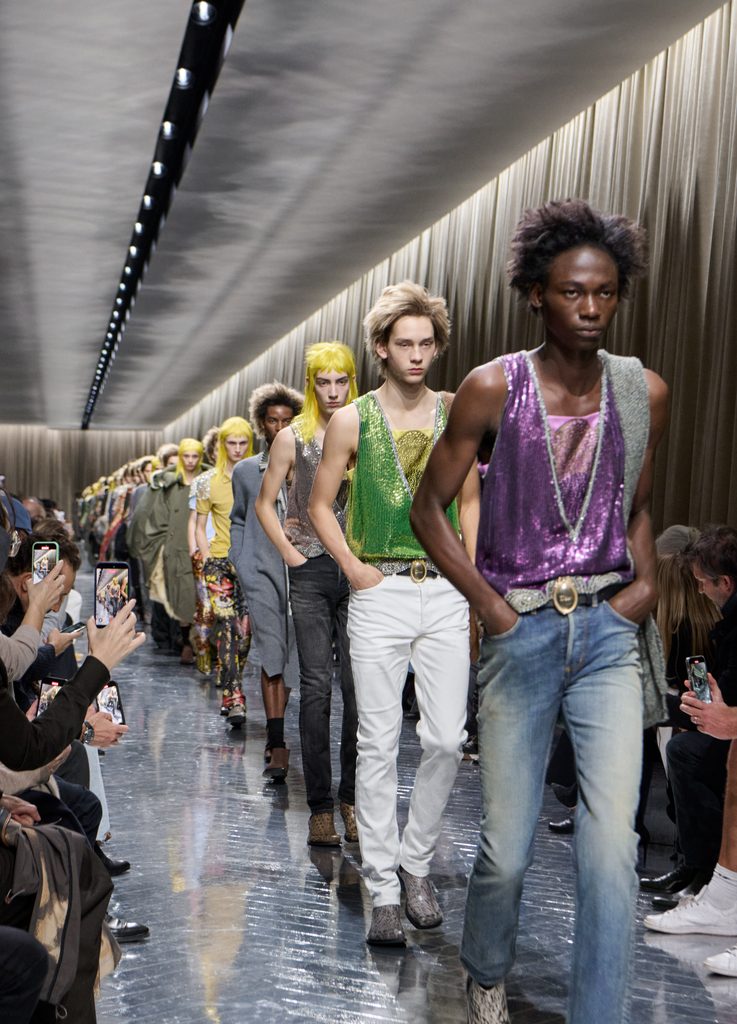
At Dior's Winter 26/27 menswear show, Jonathan Anderson made a case for wearing contradictions well. It’s clear he’s never felt more unrestricted with the House. A story plays out— restless characters envisioned by Anderson, running around Paris as modern-day flâneurs, discovering Paul Poiret along the way, with a sense of rebellion running underneath it all.
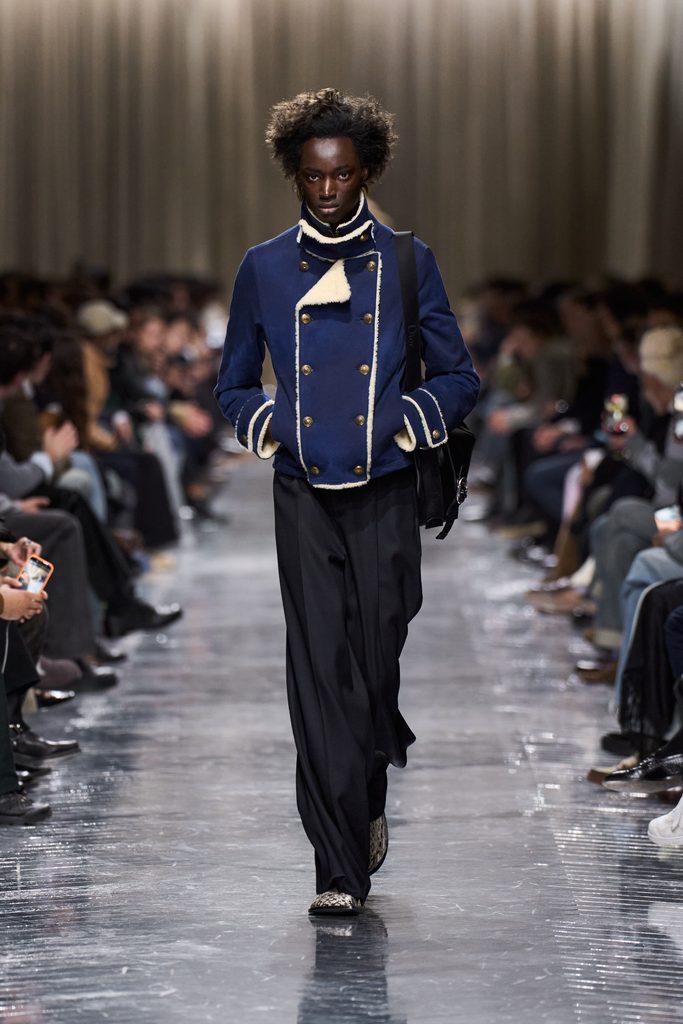
Tweed jackets and long trench coats hung wide open over bare skin, while just a few looks away, models came in sharp with a precisely tailored coat. Their collars were replaced by accordion-like pleating, folded like paper and tied around the neck with a loose ribbon, as if something untamed had been startled awake. The tailoring of it all feels like it's finding balance. A balance between ease and unease, and that's exactly the point.
At the heart of it all is Paul Poiret, the early 20th-century couturier behind the collection's inspiration, whose boutique once stood steps from Dior's own Avenue Montaigne address. The word "punk" did not exist for Poiret. Yet he was subversive in his own time. Poiret freed women from uncomfortable, tight corsets with soft, liberating silhouettes that flowed rather than being restrained.
Both, in their own ways, are rule-breakers whose connection is spiritual, not stylistic. Poiret broke his era's conventions as much as punk broke its own. Anderson channels that same instinct through a distinctly punk lens, rejecting the norms of traditional, rigid menswear.
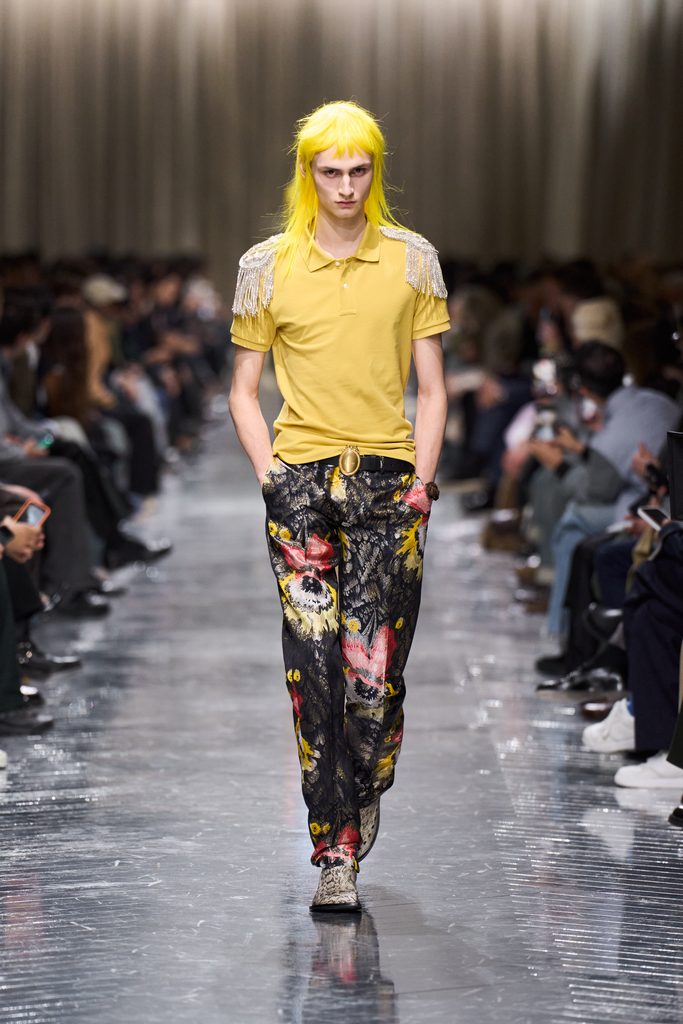
You can see Poiret’s echoes take shape as models strode in with his signature bright, non-conformist yellow wigs and even then, the colour is a recurring motif in this collection. High-shine sequins meet casual denim; a light yellow polo shirt with ornate silver bullion-fringed epaulettes on the shoulders lets sportswear collide with couture embellishment.
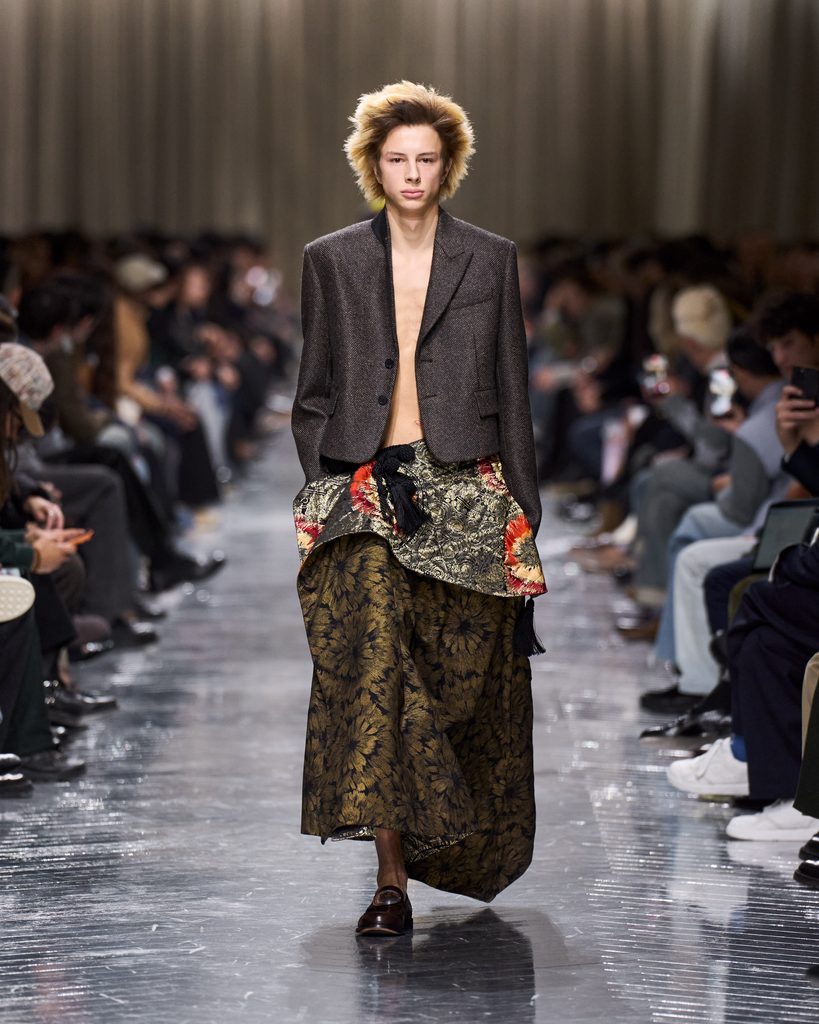
That same instinct of rule-breaking is seen again with gender this season as the collection is deliberately softened, merging menswear and womenswear through cuts that feel slimmer, more gestural. Bar jackets come cropped, borrowing feminine structure, and are paired with distressed denim. Shortened tweed blazers contrast against floral jacquard skirts, joyfully blurring the line between feminine and masculine even more. Anderson finds exactly where Dior’s codes can bend without breaking.
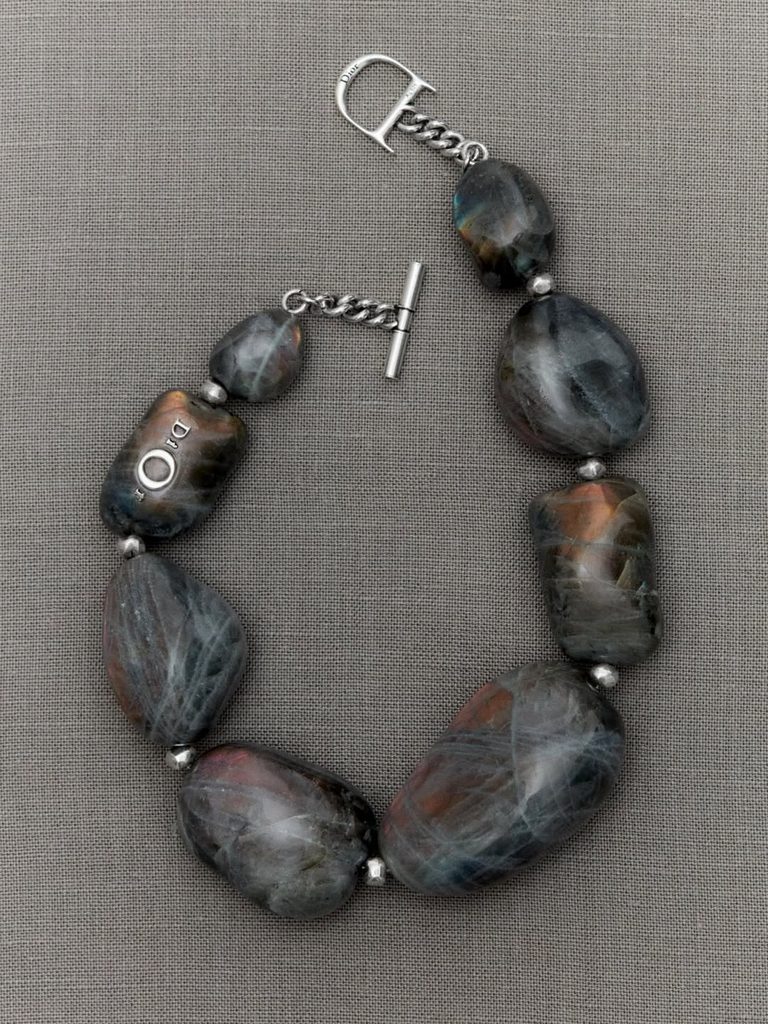
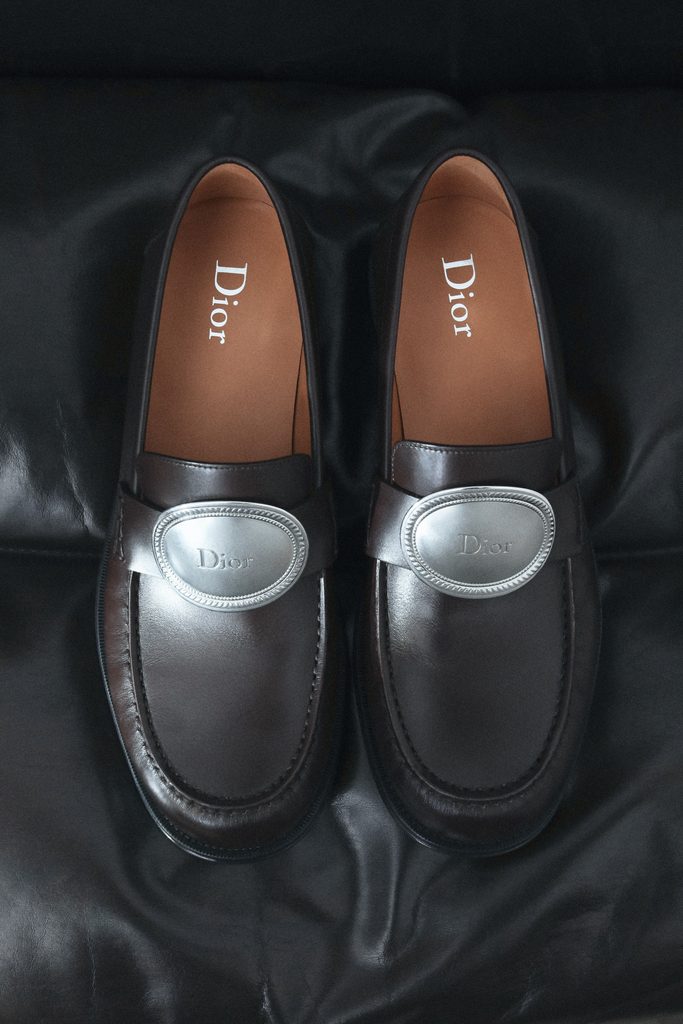
Now comes the accessories, and how that rebellious streak continues on. You might’ve seen the Dior oval belt in previous collections, too, as it has become a recurring signature from the idea of mixing Aristocratic symbols with workwear modern clothing. Coats are shaped into an open tailcoat, paired with chunky, eccentric necklaces, letting them stand out as statement pieces. Dior Medaillon Loafers give the whole thing a modern edge against all that heritage grandeur.
The contrast and play of silhouettes is definitely more apparent in this collection. Anderson feels more liberated with his creativity in his second menswear outing for the house. It won’t be for everyone, this eclectic and punkish energy. But that's the point, Anderson isn't playing it safe, and Dior might be in for a much wilder ride ahead.

Esquire Malaysia
©2026, Heart Media Pte Ltd
