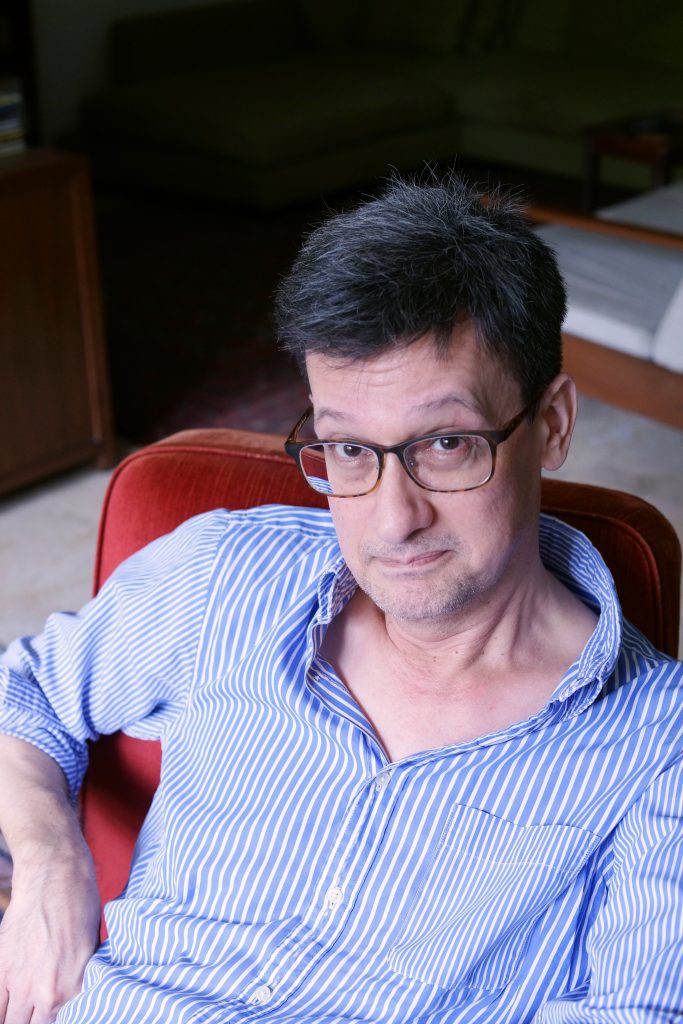
Honouring Esquire's tradition of publishing culture and literature, How I Wrote It is a monthly series that puts the writing process front and centre. Each edition invites a writer to speak plainly about how a specific piece of work came together.
This issue features Kam Raslan on the making of his second novel, Malayan Spy (2025), which revisits the protagonist from his first book, Confessions Of An Old Boy: The Dato' Hamid Adventures (2008, 2024). Kam walks us through his writing routine at the time and the historical research that shaped it. He also reflects on returning to that character after all these years and how his background in filmmaking influences his approach to fiction.
A thousand years later, and in the smog and darkness of London in December 1952, I collapsed onto my bed in Malaya Hall, Bryanston Square, and I watched Salim, with whom I shared a room, prepare himself for the evening. He lacquered his hair with Yardley hair cream, plumped up his cravat, and sang smugly about going where fashion sits and putting on the Ritz.
As the years have gone by, Salim’s complexion has become progressively darker—and he was really quite dark-skinned to begin with. He had the sharp narrow face of a matinee idol and had always fancied himself to be an oriental Ramon Novarro, the star of Ben Hur, which is why we called him Bin Hur.
‘What are you getting dressed up for, Bin Hur?’ I asked.
‘I’m going to the Café de Paris tonight. Johnny Dankworth is playing,’ Salim whistled. ‘My father has finally left London and gone back to Malaya so now I can enjoy myself again.’
Salim’s father had recently been in London with a group of senior Malayan civil servants to initiate initial talks about starting preliminary discussions for first-round conferences about greater self-governance, and even possible independence for Malaya. They had been tasked with ushering into existence a wholly new concept—a nation, one that did not yet have a name. My father shared Salim’s father’s scepticism about the viability of the whole thing, but my father was not involved in the negotiations. Despite being a loyal and capable senior civil servant, my father did not have the wherewithal, ruthlessness, and imagination for politics, and few people relish the ruthlessness of politics as much as the Malays. Ultimately my father and Salim’s father were merely loyal and capable senior civil servants who were to be swept aside when independence finally came.
My views were always close to my father’s. And yet, our relationship was cold and distant—as was once the Malay tradition between a father and his son. Although we shared much in common, I was never more lonely than when in the company of my father. Now, ironically, I am never more alone than when in the company of my own son, The Ayatollah. When I was young, I had been very close to my mother, but then I went into the world and ate the forbidden fruit of French cheese. After that, there was no going back.
Salim had been putting on a good show of being the dutiful son and had accompanied his father throughout the London negotiations, but Salim’s views, and more importantly his ambitions, were very different from his father’s. Now that his austere and remarkably humourless father had gone, Salim wanted to have some fun again.
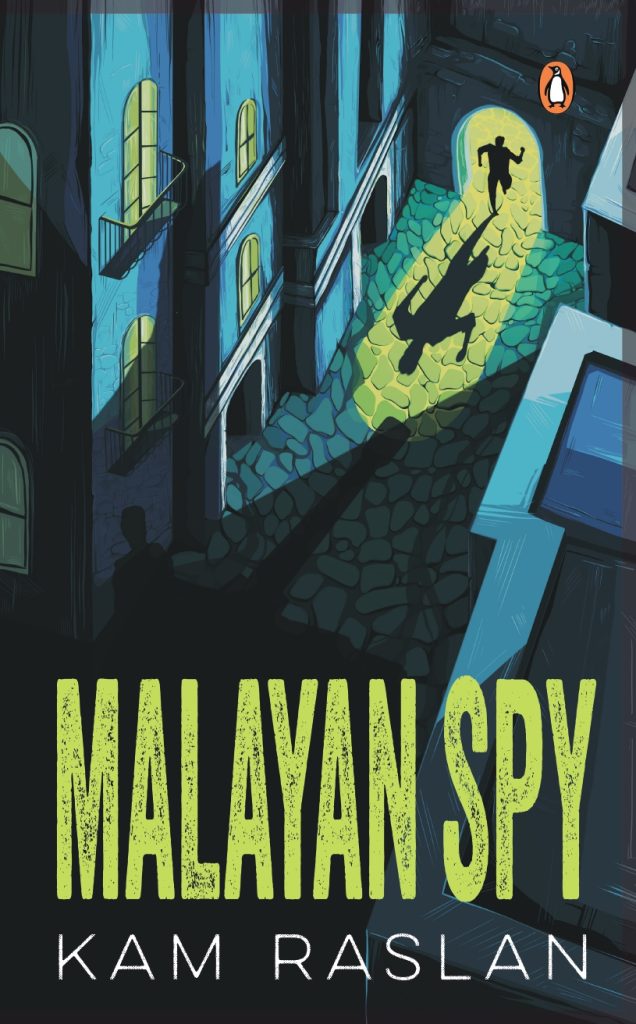
I wanted to write something that I would read myself. A story that's a gap in the market. Previously, I had written a murder mystery with Dato’ Hamid—an Agatha Christie, Sherlock Holmes kind of story. I felt that the stories were building on each other, and I really wanted to jump genres, so my second novel turned out to be a sort of sex-comedy espionage.
I am Malaysian, and I grew up in and around London, England. I have a great interest in European history as well. The history of our times. The foundational histories. I realised that all these different things had happened at the same time. So, it felt like an opportunity to put these experiences together.
The first lines I wrote down were for the first part of the book. I had always known about the Great Smog of 1952. When I asked my mother, she told me that the smoke was so thick that you couldn't see a hand in front of your face. In 1997, the haze came to Malaysia, and it just kept coming back. I thought that it was just like the Great Smog. It's not that well-known. Cinematically and thematically, they can be put together.
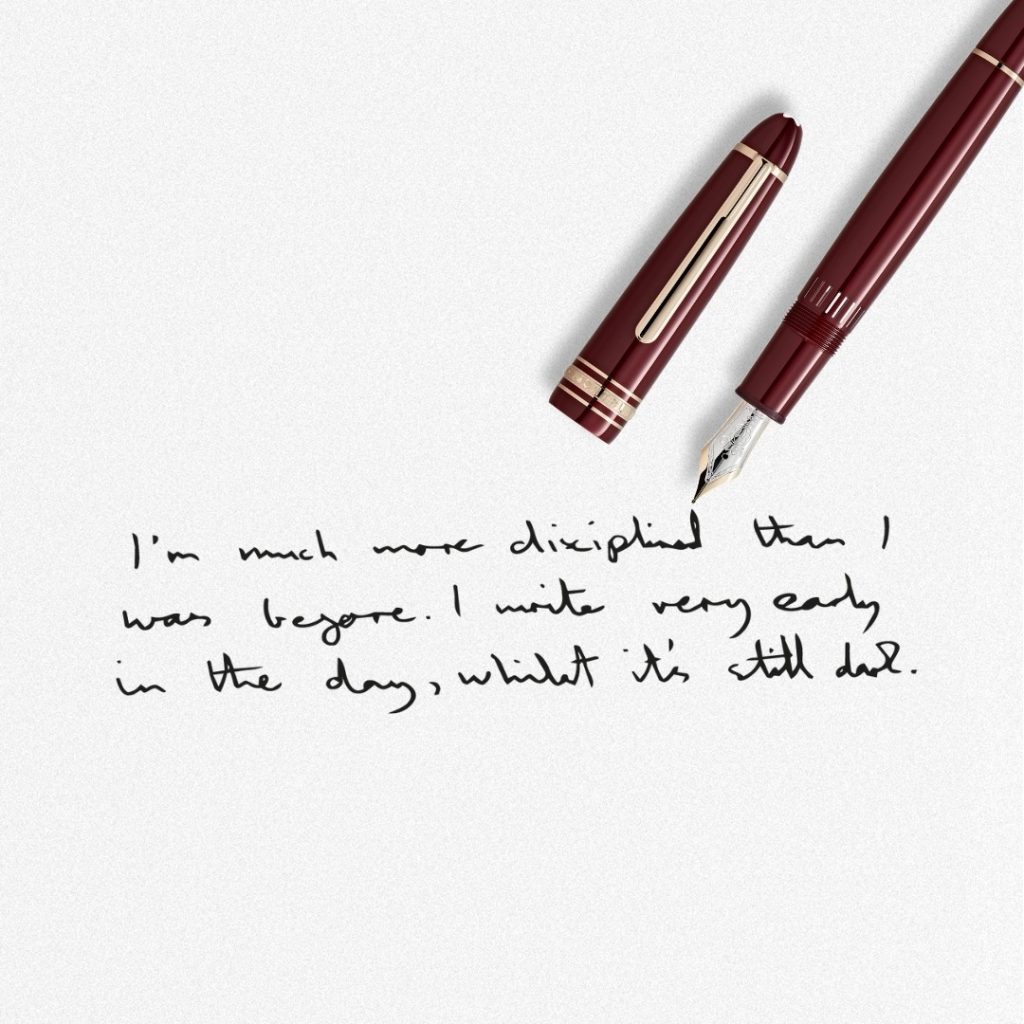
My writing routine has changed. In those days, I would start work quite late in the day. I kept working till it got dark. I liked it that way. Nowadays, I've completely swapped it around. I'm much more disciplined than I was before. I write very early in the day, whilst it's still dark. I read about how other authors do it. For instance, Anthony Burgess would sit down first thing in the morning and write a stream of consciousness. After lunch, he would then write the proper thing. He aimed for about 500 words every day.
The hope is that I can write 500 words a day, which doesn't sound like much, but it's really hard. When you're absolutely in the zone, it can all come out in pure concentration. A typical writing session would be about four hours. By the time the sun comes up and certainly by lunchtime, I'm done. I'll go and do other things.
It took me five years to write this piece, so I read it through on my own and changed it here and there. When an editor got involved, we went through it three or four times. I thought it was pretty good. Then I gave it to someone, and she said that it was like a history lesson. I was like, "Oh, really? Thank you," but it's not a good thing. They would say things, and I would cry, but it's a nonlinear experience.
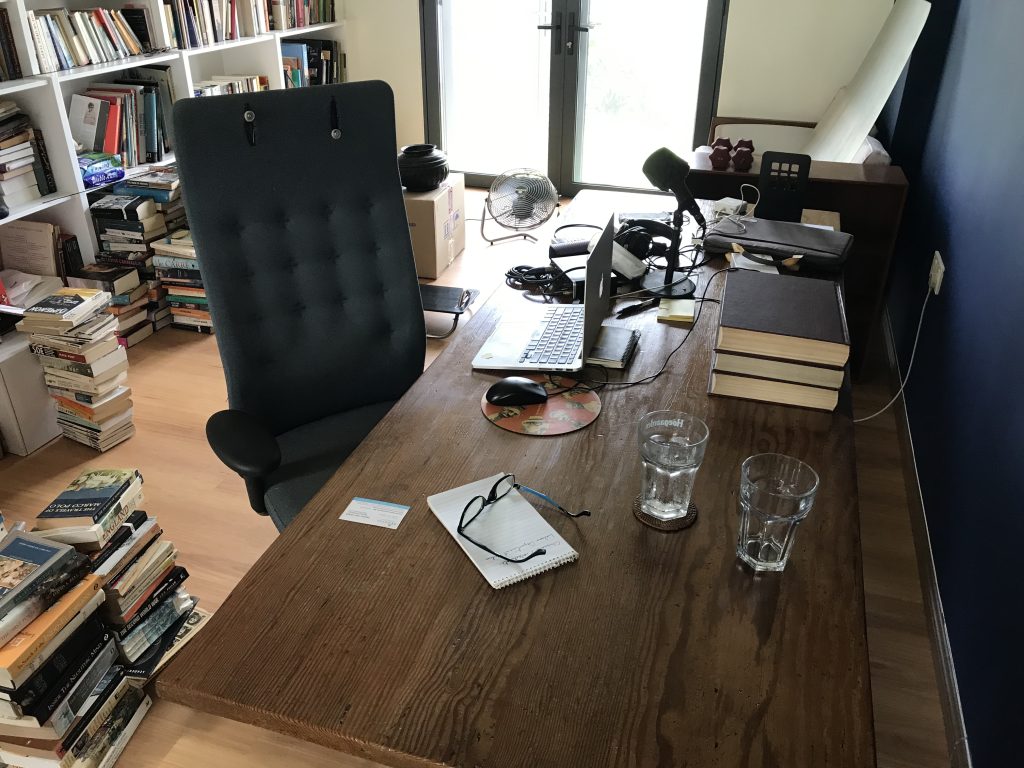
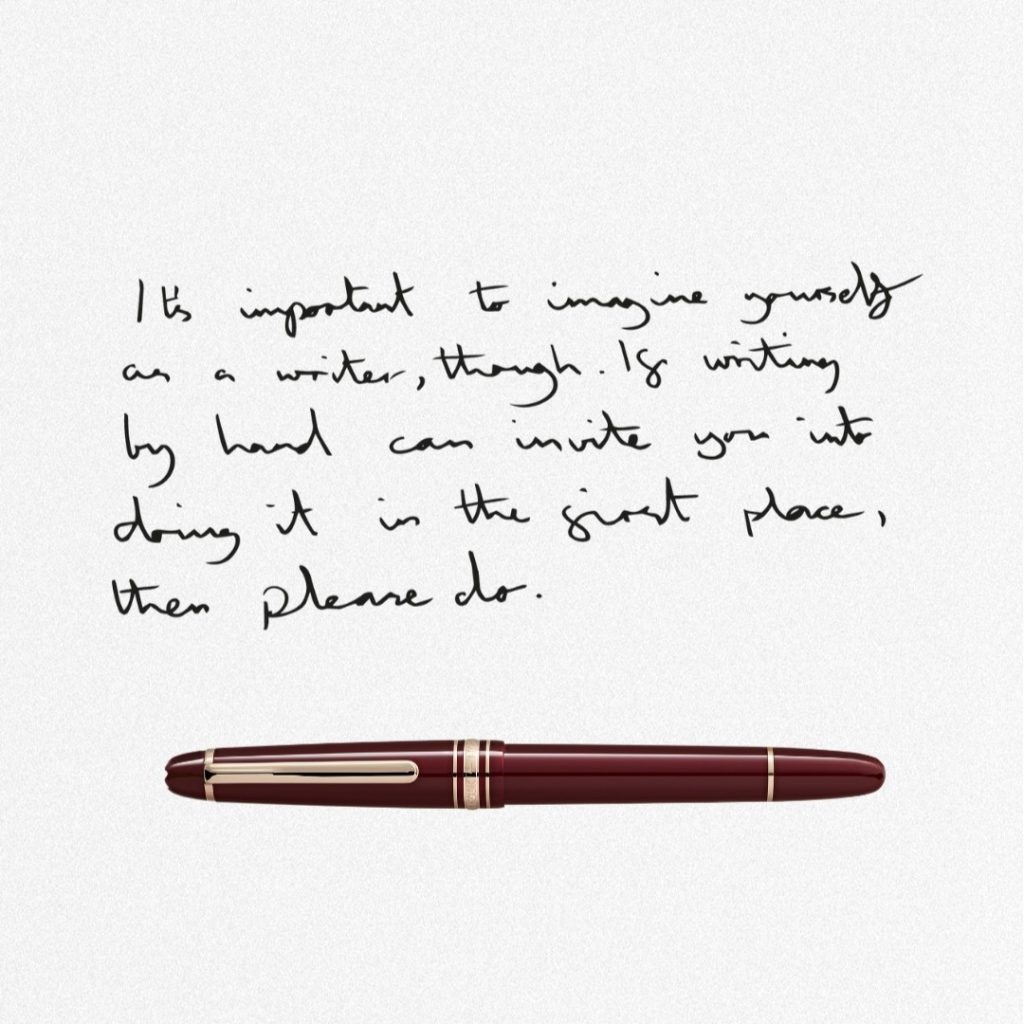
If I write by hand, a few months later, I go back to it and have no idea what I put down. My handwriting is really terrible. I went to school in the age of handwritten notes, but nobody ever sat me down and taught me how to write. Nowadays, when you go to university lectures, everyone opens their laptops. My first thought, “What's going on? This is crazy. How do you learn like that?”
I began on a typewriter, but computers are useful too. I do everything in a Word document. It's not like in the movies, where writing a novel is just a montage of randomly pressing buttons, then they cut to the book launch or collecting a Pulitzer Prize. It’s important to imagine yourself as a writer, though. If writing by hand can invite you into doing it in the first place, then please do.
John le Carré writes by hand, then his wife types it up. I would imagine he has beautiful handwriting. I’ve looked at manuscripts written by Charles Dickens. He would have different colours of ink, then would lay another piece of paper over it. Editing was hard back then.
If there’s inspiration, it has generally happened before. Now, I'm converting that into words with structures and disciplines. Once I met Hamid, I wanted to work with him and cover many aspects of Malaysian, postcolonial, and Cold War history. About 20 years ago, I went to Berlin through the Goethe Institute. I always loved the place, even before I'd been there, because of David Bowie and its history. What if I put him in the middle of it?
You had the death of King George VI, the coronation of Queen Elizabeth II, and the Great Smog. You had an uprising in Berlin that barely anyone talks about. Then, the death of Joseph Stalin and the Cold War. You also had this crossover moment before Malayan independence became inevitable. If you stay true to the character, it’s about history.
Instead of focusing solely on a nation-building story, which is very singular, many facets of Malaysia’s history remain unknown. There are all these people who have done something, only to be ignored. I would like us to look at them, pick up on them, and be creative with them. I like the idea of introducing Malayans to the English, but also introducing the English to Malayans.
In a way, Hamid is halfway between my grandfather's and my father's generation. My grandfather was a senior civil servant in Perak. He loved the British and thought they were the most efficient administrators. On the other hand, my father didn't like them and wanted them gone. He disliked them so much that he married one. It's a contradiction I've always been trying to solve.
He's not an anti-hero, is he? James Bond is British, so he knows that when he goes into a situation, he has the right to save the world. A Malayan character doesn’t. Hamid wishes that he were like that, but he's a coward. He's unable to do these things and wants a quiet life filled with beautiful things. That's his motivation. I don't see him as being involved in espionage, per se.
The manuscript was submitted to an agent or publisher in London, and she said that it wasn't an espionage novel. I never said that it was. It had spy tropes, but I didn’t follow all the genre conventions. With film, you can only see what the characters are doing. You can't hear what they're thinking. If a person is lying, you have to tell the audience. Whereas, in literature, you can write what’s in their head. I find that very liberating, especially with Hamid. If you just had his dialogue, he doesn't say that much out loud. He's not a great talker, but he's thinking away.
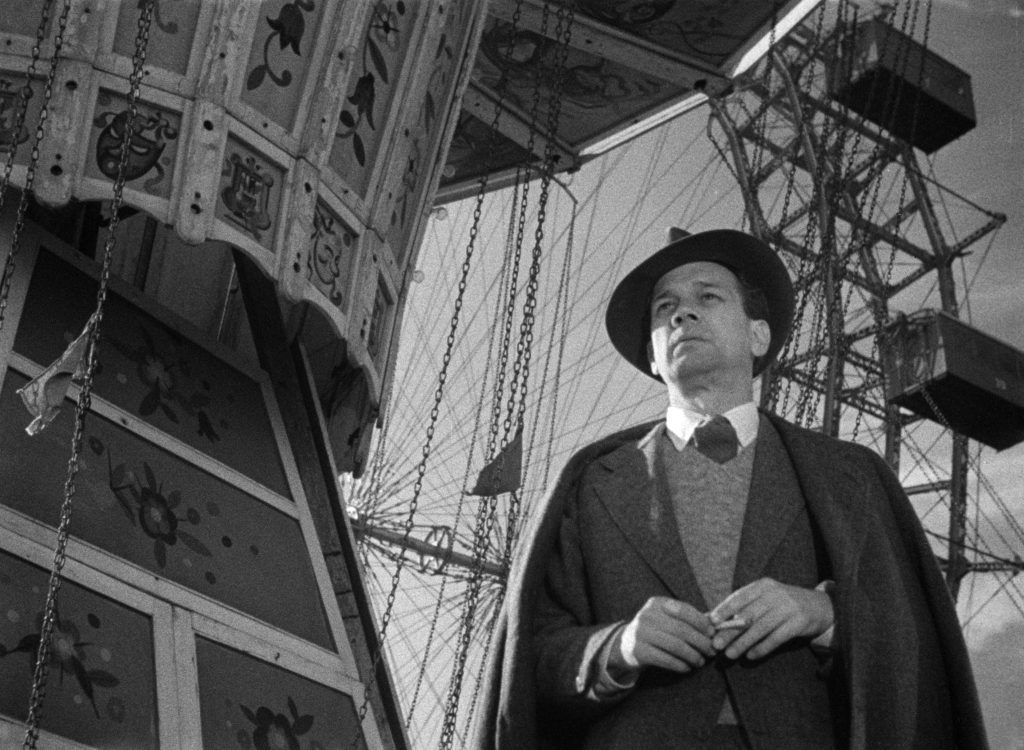
I come from a film background, so movies have been a great inspiration. The Third Man (1949) was always on my mind. It’s set in post-war Vienna and was made just after World War II. Based on a story by Graham Greene, starring Orson Welles, it's about black-market medicine being stocked and sold. I grew up watching these kinds of 1950s British films with my parents, so I wanted to shine a spotlight on that period.
Also, I remember watching Terminator 2: Judgment Day (1991). There’s a scene where Arnold Schwarzenegger is on his bike, and he’s crashing through Los Angeles. Innocent motorists and people in cars swerve to avoid him. I just thought, “What about them? What's their story? What did they make of seeing this?” No one writes about the anonymous people. You're always concentrating on the characters who are aware or motivated.
In Die Hard (1988), John McClane is an innocent man. But at the same time, as a policeman, he knows what to do, and he's very determined. What if it were some regular person who's completely incompetent and stupid? What if it were Hamid in that situation?
Kam Raslan is a Malaysian author and broadcaster. He has written a short-story collection, Confessions Of An Old Boy: The Dato' Hamid Adventures. It was first published in 2008 and has been reissued in 2024. He has written essays and columns for The Economist, Mekong Review, and The Edge Malaysia. Malayan Spy (2025) is published by Penguin Random House SEA.

Esquire Malaysia
©2026, Heart Media Pte Ltd
