Honouring Esquire's literary tradition, How I Wrote It is a monthly series that puts the writing process front and centre. Each edition invites a writer to speak plainly about how a specific piece of work came together.
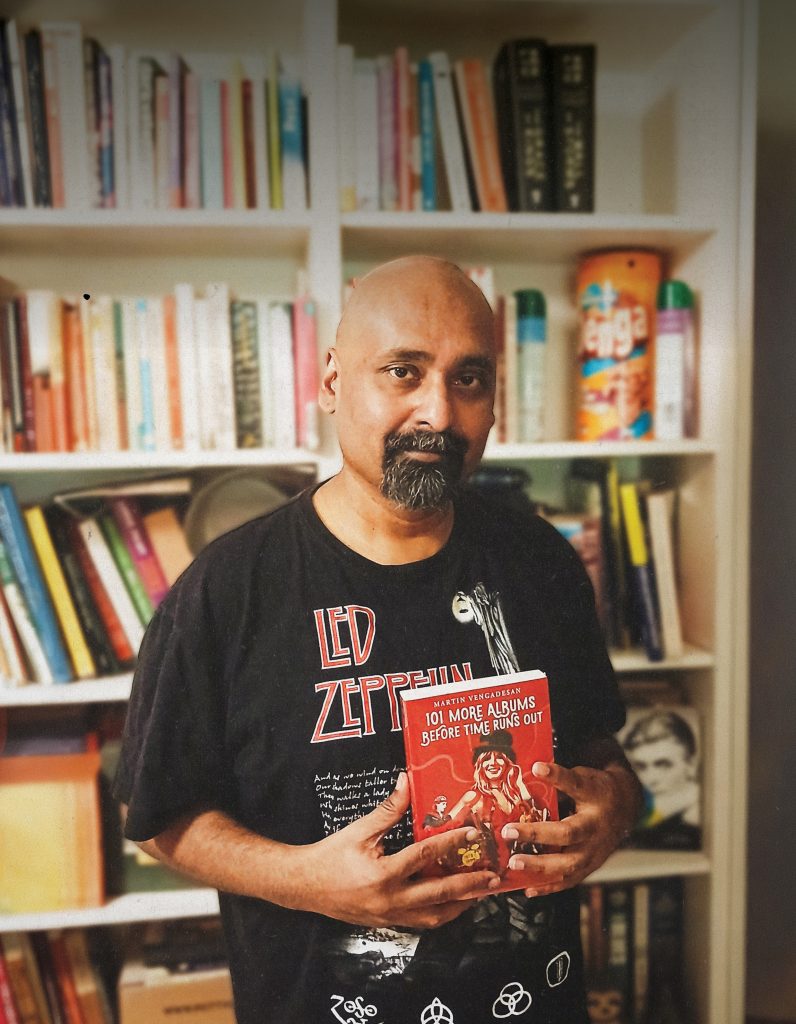
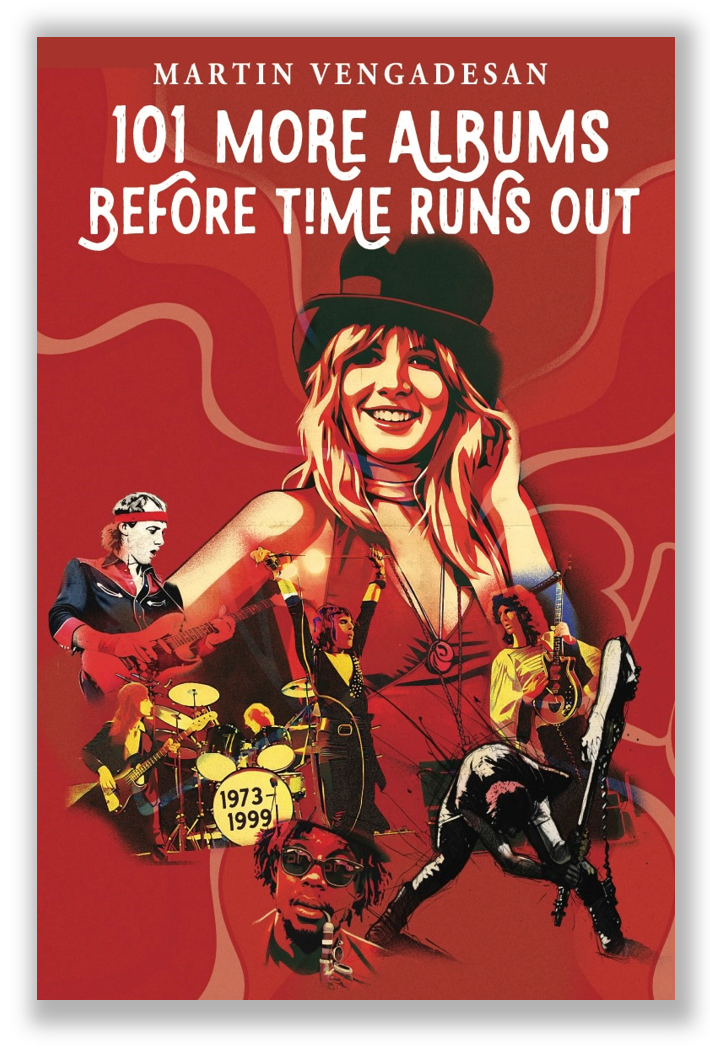
This issue features Martin Vengadesan on the making of 101 More Albums Before Time Runs Out (2026), the follow-up to 101 Albums You Need to Hear Before I Die (2023). His latest volume covers music released between 1973 and 1999. Martin reflects on how he organised a lifetime of listening, including interviews with the iconic artists he admires.
From ‘Genesis – Selling England By The Pound (October 1973)’, 101 More Albums Before Time Runs Out
Things were a little different by the time I interviewed Phil Collins in 1996 for his Dance Into The Light album. He had spent the 1980s as one of the best-selling pop vocalists in the world, but his music, while still catchy, had become tame and predictable in my opinion.
I didn't tell him that outright but I asked him: “When you first started with Genesis, the band was doing a lot of experimental and daring compositions. Do you think that you are currently challenging yourself to the same extent?”
It went down like a lead balloon.
We were actually doing a video conference from Geneva to KL and thus Phil fixed me with a glare that straddled half the earth and said:
“I don't think I am doing the same old *#! every time if that's what you are asking.”
Cue awkward silence. It was my fault, really. I was five months into the job and hadn’t yet learnt that you save difficult questions for nearer the end of the interview – in case they get annoyed, you’ve still got a good story.
Anyway, I tried to make amends but Phil was having none of it. When I asked about the relatively low-profile Hackett, he was sarcastic.
“Do you want his phone number?”
He then elaborated – “Some people when you’re making music you think you’re close but later on, you realise that the music was all you had in common. Steve and I hardly meet up since he left Genesis, I used to see him at Michael Rutherford’s parties.”
Luckily, my editor loved it and even toyed with making “same old *#!” the headline! The funny thing is, Phil knew exactly what I meant and he must have encountered people like myself who were in love with his Genesis work but a bit bored by parts of his solo career.
It was a pity that I’d made such a bad impression. I mean, this is a man who gives me chills every time I hear the sensational crash of drums making their entrance in In The Air Tonight.
Music trivia was one of the things I was interested in. I’ve been a fan all my life. The second element is personal anecdotes—where I was, and what the music meant to me personally.
Then thirdly, I was a music journalist, so I got to interview a fair number of [music artists]. And fourthly, there’s also this element of review by assessing the music. Things like, Do you capture that time? Are you musically innovative? Is your album coherent?
I started journalism in 1996, and I left in 2024. I saved almost every important story I did over the 29 years as a soft copy. This project is based on the column I wrote for The Star for 10 years, touching on music history. I don't just republish them. I update and then identify the specific link.
This is my rough process. I kept the articles and spent a month arranging them chronologically, adding a chapter title to each. Then, I saved each chapter on my phone and wrote whenever I was free. I saw that maybe 60 per cent of them already had column entries, like the Genesis one. I had to start 40 per cent from scratch, like the Electric Light Orchestra one.
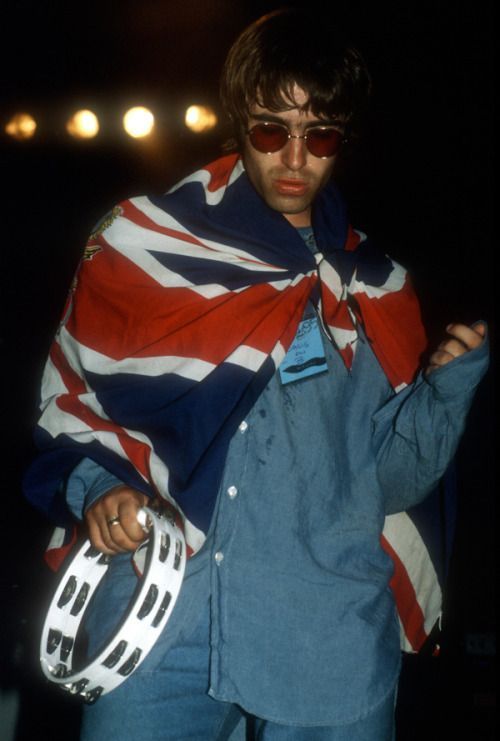
It’s something that I struggle with. For example, when I started journalism, Britpop was at its height—Oasis, Suede, Blur, Radiohead. I didn't include every album that I loved from that era. I grouped them. For example, I might place my opinion and comments about Blur under Oasis, so I don't have many overlapping entries.
I try to mix more mainstream artists with artists you have never heard of. If you mention Fleetwood Mac and AC/DC, everyone knows they have some of the biggest-selling albums of all time. If you look at the latest volume, I have Caravan from Thailand, which is a political band. There’s also Guruh Gipsy from Indonesia. Those artists aren't very well known, but I would like people to know them.
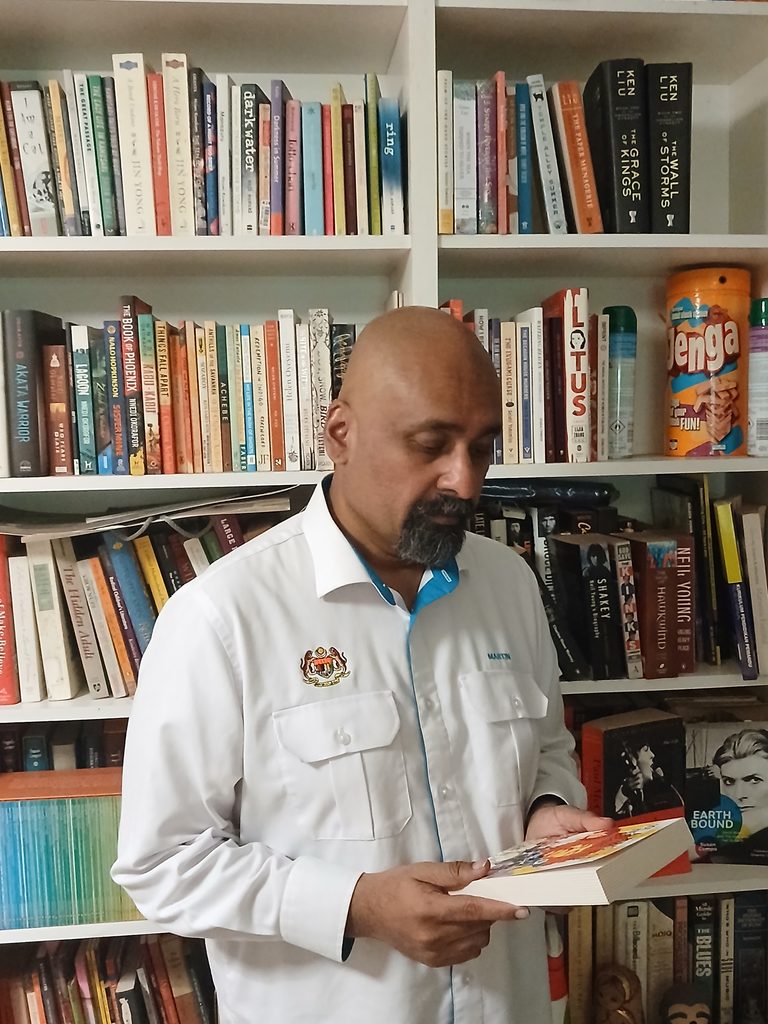
[My house] actually looks like a library. There are about 3,000 books and 2,000 CDs in the house. When I write an entry on an artist, I listen to the music while I write. It puts me in that frame of mind. I have 100 books on individual artists, so I would also read those for reference. For example, about five on The Beatles and lesser-known artists like Buffalo Springfield or Suede.
When I began writing my music column, there was no Wikipedia, no YouTube and all that. A lot of what I wrote required research. Over time, it became more mainstream, and that was one reason I stopped the column. Whatever I told the audience seemed new in 2002, they could already find it quite easily by 2012.
I remember interviewing Sammy Hagar of Van Halen. He was doing a solo album and complaining quite bitterly about Eddie Van Halen. Nowadays (with the internet), if you looked up what Eddie Van Halen was saying at the time, you would get a different side of the story. I try to resolve conflicting themes whenever possible.
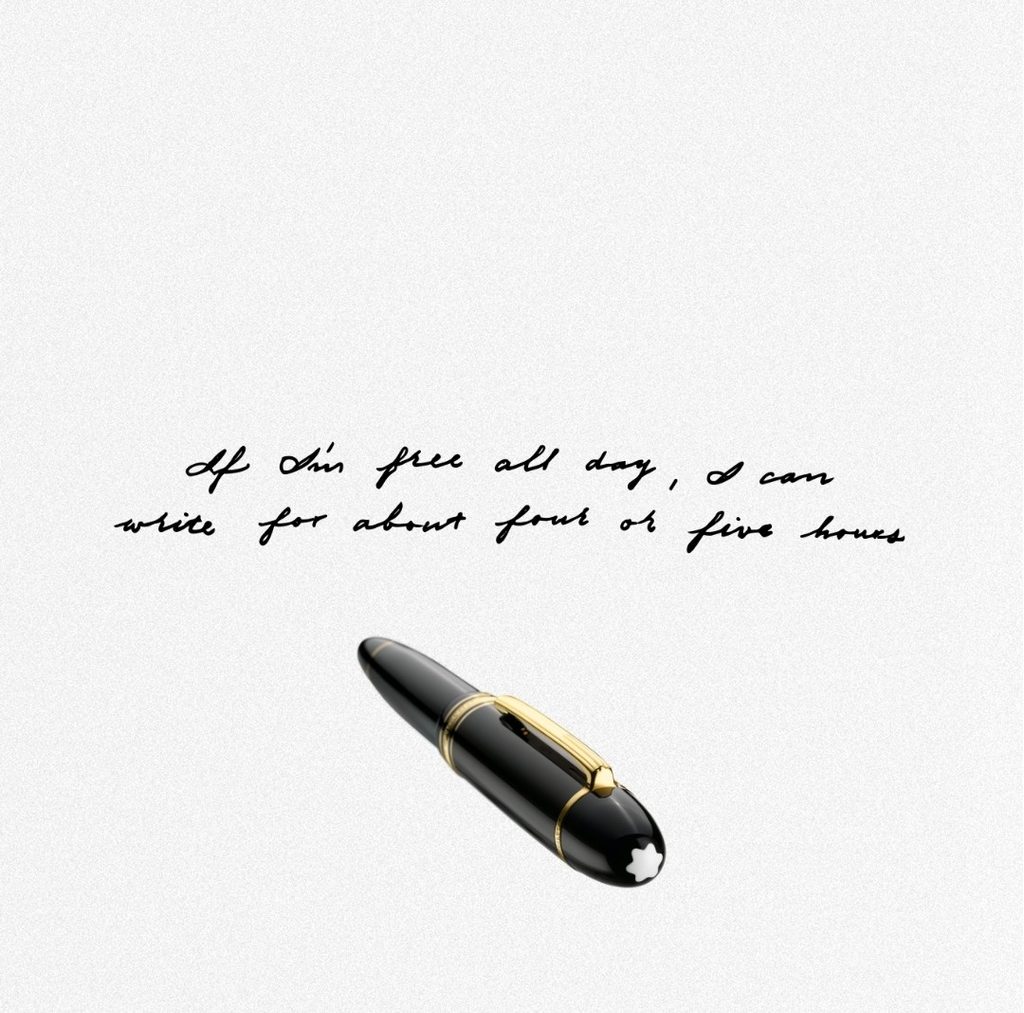
Usually late at night or when I'm just waiting for something. That's been my MO for the last eight or nine years. If I'm free all day, I can write for about four or five hours. Quite often, it's half an hour to an hour at the end of the day.
Physically, the two most common places to write are on my laptop at home and my phone when I'm on the go. I'm always writing.
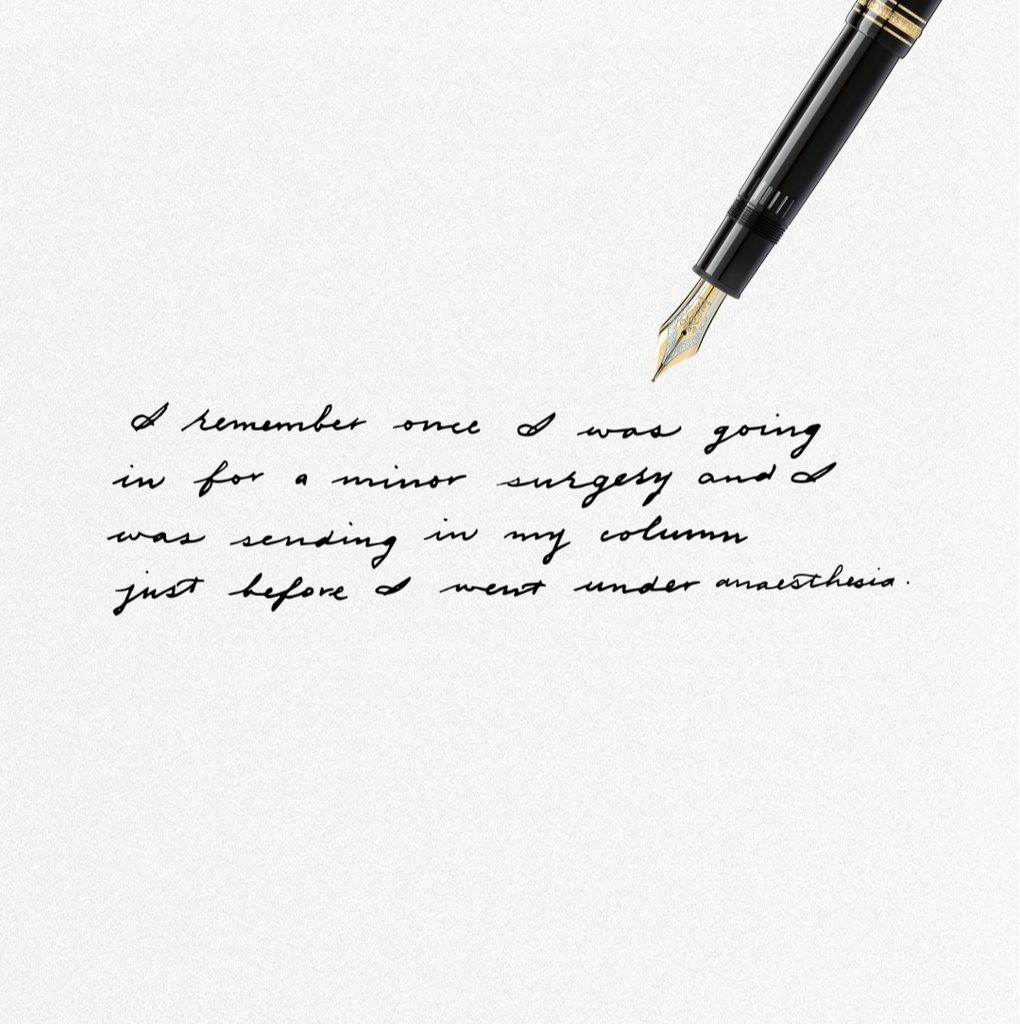
I remember once I was going in for a minor surgery and I was sending in my column just before I went under anaesthesia. I shouldn't confess this, but I also have a habit of writing breaking news while pulled over by the side of the road or at traffic lights.
I think it's a sort of habit that formed over the course of my career. When I first joined, I was in magazines, so the deadline was once a week. Over time, I became an online news editor, so that's quite instantaneous.
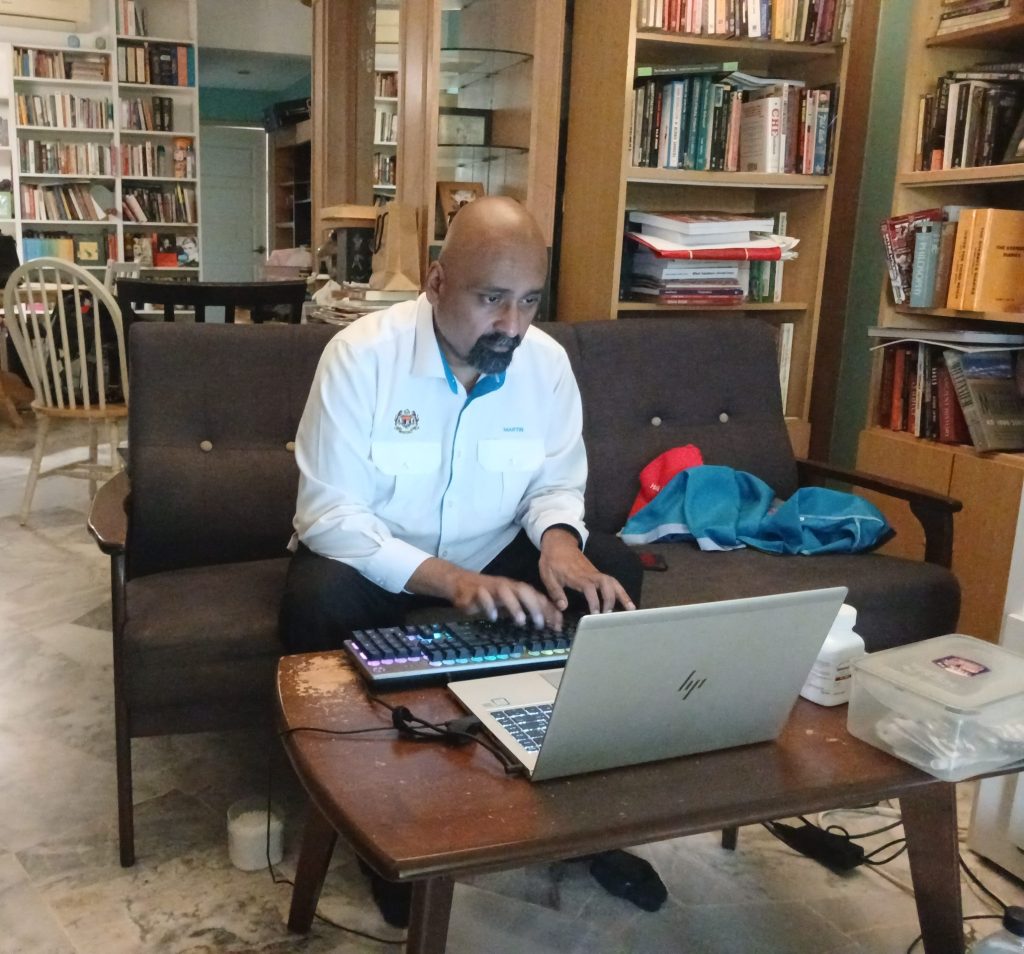
Definitely digitally, using soft copies. Three or four of my books correlate directly to my journalism career. I saved the articles, then went through them and asked, “How much of this will work as the backbone of a book?” It took about one month each to organise them, and then I had follow-up interviews.
At the time, I used a digital recorder. I also jotted down notes to remind myself of the key points. Then, I would do this whole process afterwards, where you go through and compare. Back then, it was quite laborious. Nowadays, that process is significantly easier. You can auto-transcribe the interview.
Sometimes, I like [the music artists] more than I thought. When I interviewed Chicago's keyboardist Robert Lamm, we got along very well, which I hadn't realised would happen. Carlos Santana really did talk like a laid-back, Woodstock-era hippie. He was like, “Hey man, you know, just resonate with the universe.” Ian Anderson of Jethro Tull was full of wisecracks, which you can tell from his sense of humour in his album.
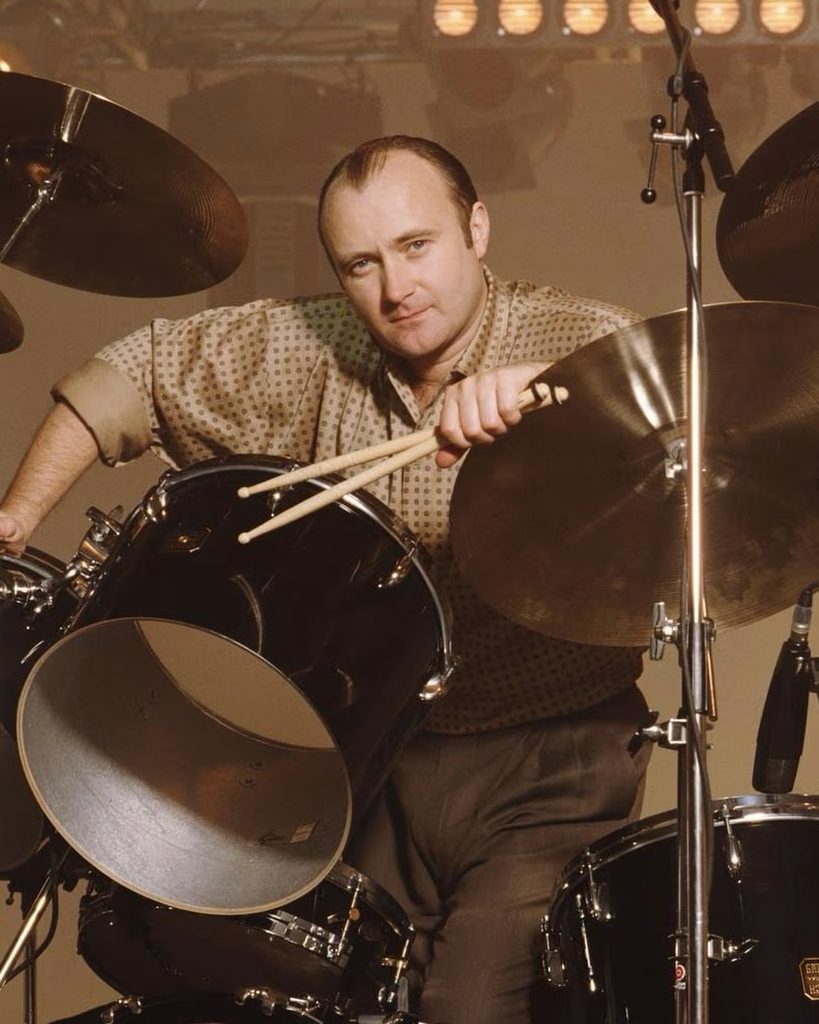
If I did see any cranky displays, I sort of understood it because many of the artists had to travel quite a bit to get here. There were three or four incidents where an artist was a bit bad-tempered, but I also understood why. In fact, the Phil Collins incident...
I said something like, “In an earlier incarnation, you had this cutting-edge kind of vibe to your music, and do you think you're still living up to that now?” and he fixed me with a glare. I began the interview with that, so every question, he got progressively more sarcastic. I learned my lesson.
In Malaysia, one in particular was RS Murthi. He was the dominant music writer for the New Straits Times in the 1980s. He was probably the music journalist who influenced me most. Murthy had a bandmate who also wrote for The Star, who’s similar in terms of Sujesh Pavithran's influence. Another guy, Rom Mohd Nor, wrote for a magazine called Rhythms of the Third World.
I did see that Malaysia had a less developed sense of art criticism. Many music writers tend to just deliver, “Someone just released this, it sounds good, it sounds great, be there.” That's it. I strongly believed my basic role was to help promote the artist. By writing about them, I was helping them, whether I loved it or not. I could see the logic of that role, but I noticed not every musician could accept it.
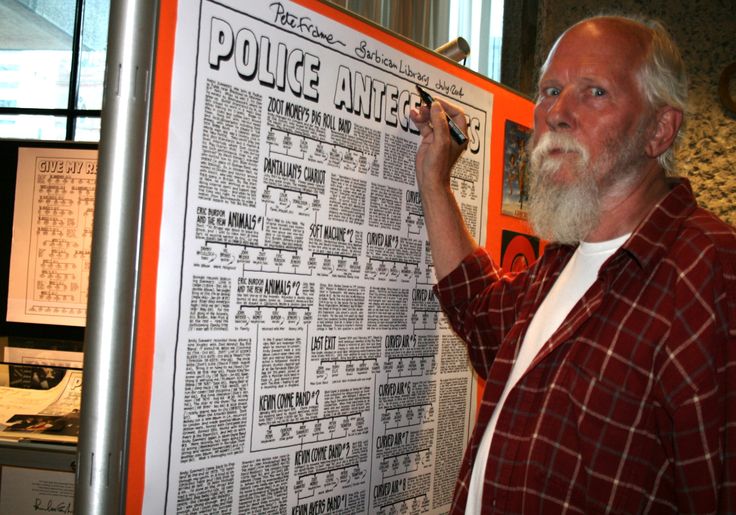
Overseas, there are quite a few, such as Pete Frame. He liked to do this rock band family tree to document who quit what band. For example, Ritchie Blackmore started in Deep Purple. In 1975, he left to form Rainbow. Then, Ronnie James Dio left to join Black Sabbath. Somebody's life is there. Most of the time, that person is gone. They’re actually speaking to you across space and time, and there are a lot of stories behind it. I feel that's worth putting into context.
Martin Vengadesan is a Malaysian writer, musician and journalist who began his career at The Star in 1996. His books include Malaysian Murders & Mysteries (co-authored with Andrew Sagayam, 2019), Malaya 2057: A Thousand Moons Have Passed (2021), and 101 Albums You Need to Hear Before I Die (2023). 101 More Albums Before Time Runs Out (2026) is published by Matahari Books.

Esquire Malaysia
©2026, Heart Media Pte Ltd
