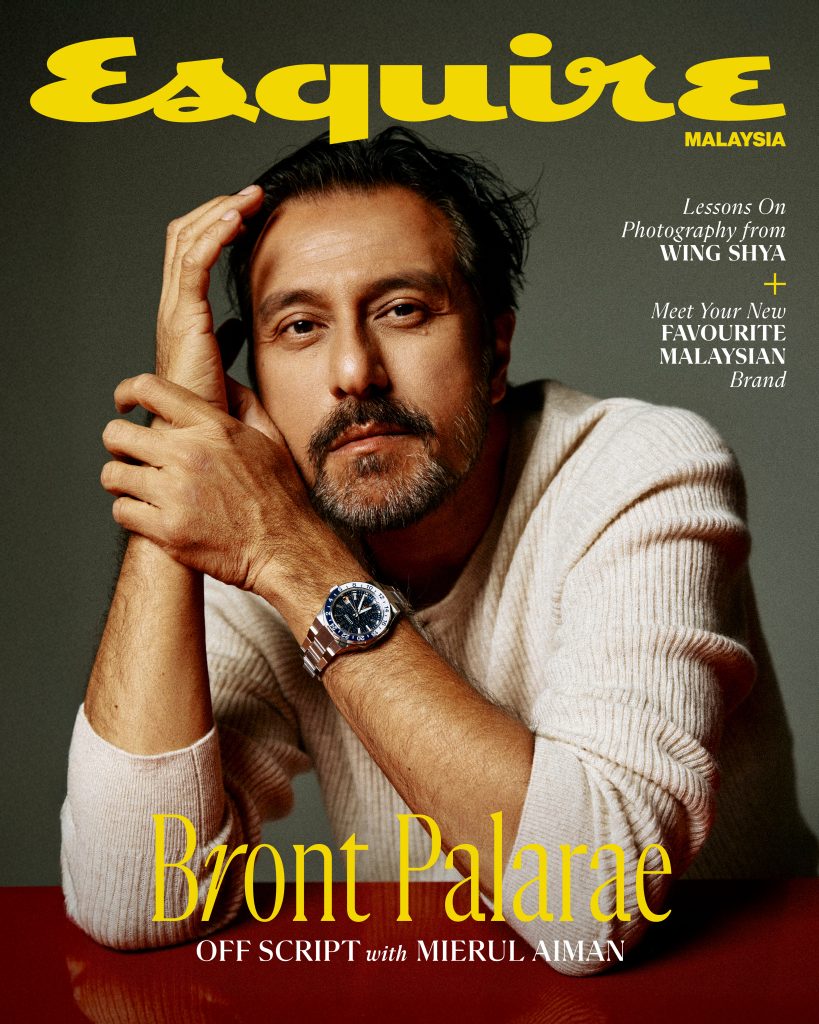
“Every shoot, I still feel like it’s my first shoot,” says Bront Palarae.
He’s drinking an Americano as we talk. During the course of the day, which includes the Esquire photo shoot we’re about to do, the 47-year-old actor drinks a few more coffees, but doesn’t eat anything. You get the sense that with any job, big or small, he really likes to lock in.
There’s resting on your laurels, and then there’s what Palarae is doing: the total opposite. He’s been acting for more than 20 years, but there’s no hint of complacency here.
He doesn’t watch his own performances, he tells me, lest he’s filled with either regret or sentimentality—“it’s like meeting your ex.”
And despite winning several awards for his acting over the years, he doesn’t display any of them. Every time he receives an accolade, he accepts it on behalf of a team, seeing each film as a group effort. At home, he puts the awards away.
“Then we start again,” he says.
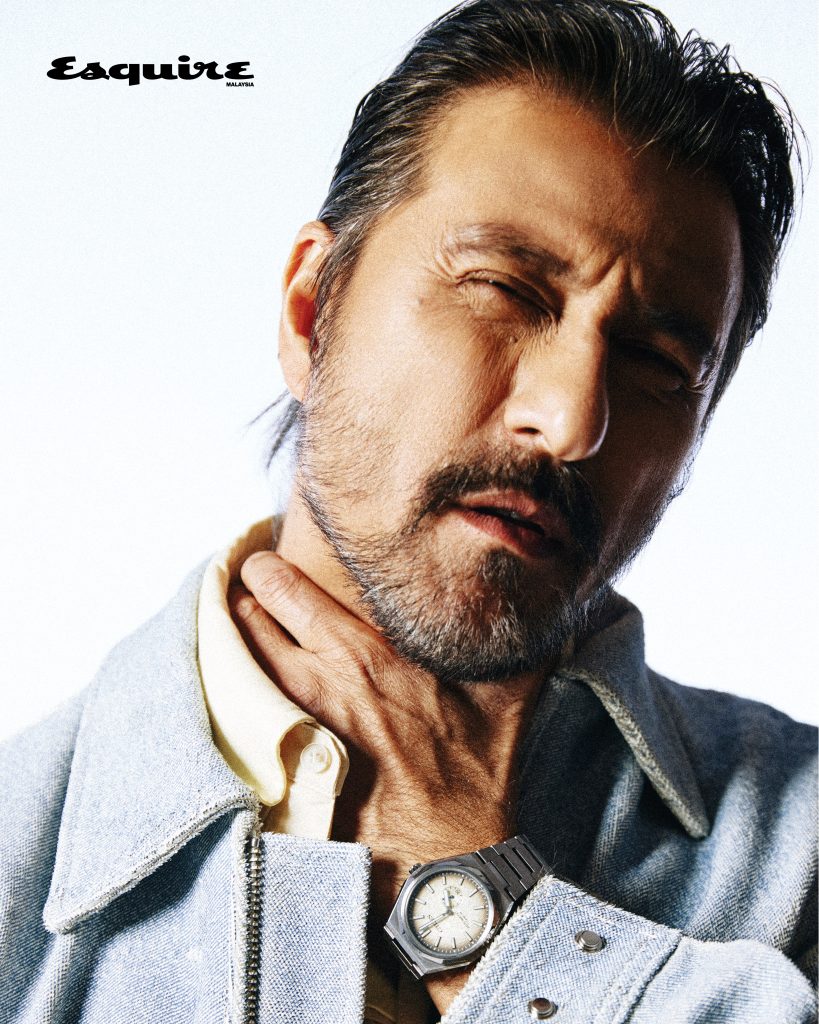
Since earning his first film and TV roles in the early 2000’s, Palarae has worked consistently, becoming the household name he is today. He’s also the rare Malaysian actor with a regional profile, starring in films in Indonesia and Thailand (it helps that he’s fluent in Thai).
And he’s done it with versatility and verve, tackling all kinds of genres. Certain roles do recur—for example, he’s played police detectives and inspectors in Fly By Night (2019), The Bridge (2018-2020), and Dendam Malam Kelam (2025).
But there are also his leading turns as a sports commentator in the feelgood football film Ola Bola (2016); a stubborn filmmaker in the roadtrip comedy Terbaik Dari Langit (2014); and a struggling father battling the occult in Pengabdi Setan (2017). Just to name a few.
He also finds time for the arthouse projects, like Tan Chui Mui’s Barbarian Invasion (2021) and Woo Ming Jin’s Stone Turtle (2022). For a star of his stature, you sense that he has an indie soul.
When I bring up his many years in the industry, he laughs: a warm, raspy, relaxed laugh that bursts out repeatedly. “Wow, time to retire.”
It’s a joke, of course. He’s not really the retiring type.
This year alone, Palarae has appeared in two box office hits, in two countries: Tarung: Unforgiven in Malaysia, and Ghost in the Cell in Indonesia.
Ghost in the Cell, a raucous and gory horror comedy, premiered at the Berlin International Film Festival. It was Palarae’s fifth time working with the acclaimed Indonesian director Joko Anwar—their first was the HBO Asia series Halfworlds in 2015.
Their new film together sees Palarae playing a sadistic prison guard, in a prison where the inmates are hunted by a supernatural force.
In the past few years, Palarae has also made his debut in Thai films. An ideal schedule, he tells me, would be to make one film in each country—Malaysia, Indonesia and Thailand—every year, although it doesn’t always work out that way.
“I enjoy it,” he says of his cross-border career. “I’m a celluloid tourist. It’s interesting. And what I enjoy most is stories that say something about the country.”
“Socio-economic, socio-political, historical. In the process of doing it, you get to learn about history, world views, and the people of that era.”
“Secondly, I enjoy the friendship. You meet nice, beautiful people along the way. I wouldn’t trade it with anything else.”
Palarae grew up in Alor Setar. Both his parents are of mixed heritage, and he speaks Malay, Thai, English, a bit of Hokkien—and “half-baked” Indonesian, in his own words.
Did he feel different from his peers, growing up? He says he didn’t mind it. “You kind of have less judgement along racial lines. And you see people as people. You acknowledge racial biases. Which I think helps in the craft of acting. You go in with a bit more of a non-biased approach to life, and you try to see it as universally as possible.”
As a teenager, he was into football, but then an injury set him back. To pass the time, he rented movies to watch. He loved the fighters and warriors: Jaka Sembung, Rambo, and Jackie Chan.
Renting movies eventually led him to other kinds of films, like Pulp Fiction. In a small town, movies were “a window into the world.”
“Movies made me fascinated with stories, people, places, in a different kind of way from books. And then once MTV came along, then I think it triggered all the senses. ‘Oh yeah, I think I want to turn it into a career.’”
Palarae enrolled in the (now shuttered) Malaysia Film Academy to study filmmaking, which is also where he met his future wife, producer-director Rozi Izma. They have a ten year old daughter.
Because he started his career working various jobs on a film crew, he still doesn’t really see himself as an actor. “The way I work, I always see myself as part of a film crew, in the acting department.”
Over the years, he’s worn different hats, including writer-director (for Kolumpo, in 2013) and producer (for One Two Jaga in 2018).
Beyond these projects, however, Palarae is known among his peers as someone with a good instinct for the business side of film. He observes the workings of the industry in each country, and brings these insights back to Malaysia.
He’s also spent the past year studying for an MBA. While he jokes that this came out of a fear of dying poor, it’s been another way to sharpen his acumen on the industry.
It’s hard to think of a better person to champion Malaysian film.
Indeed, for the past eight years, he’s been an ambassador for the Malaysia International Film Festival (MIFFest). The festival is led by his friend Joanne Goh (who co-produced One Two Jaga).
Before MIFFest, there was really nothing comparable to this festival in Malaysia: a platform for world and international premieres, an official competition with a jury and an awards ceremony, and talks from film experts and auteurs.
“It’s a bunch of like-minded people curating a bunch of films that they think are worth watching,” says Palarae. “And I think the commitment shows. The maturity shows through each and every new edition. I'm so proud of the team.”
For that boy in Alor Setar, movies were in a window into the world. Now, he’s bringing the window to more people.
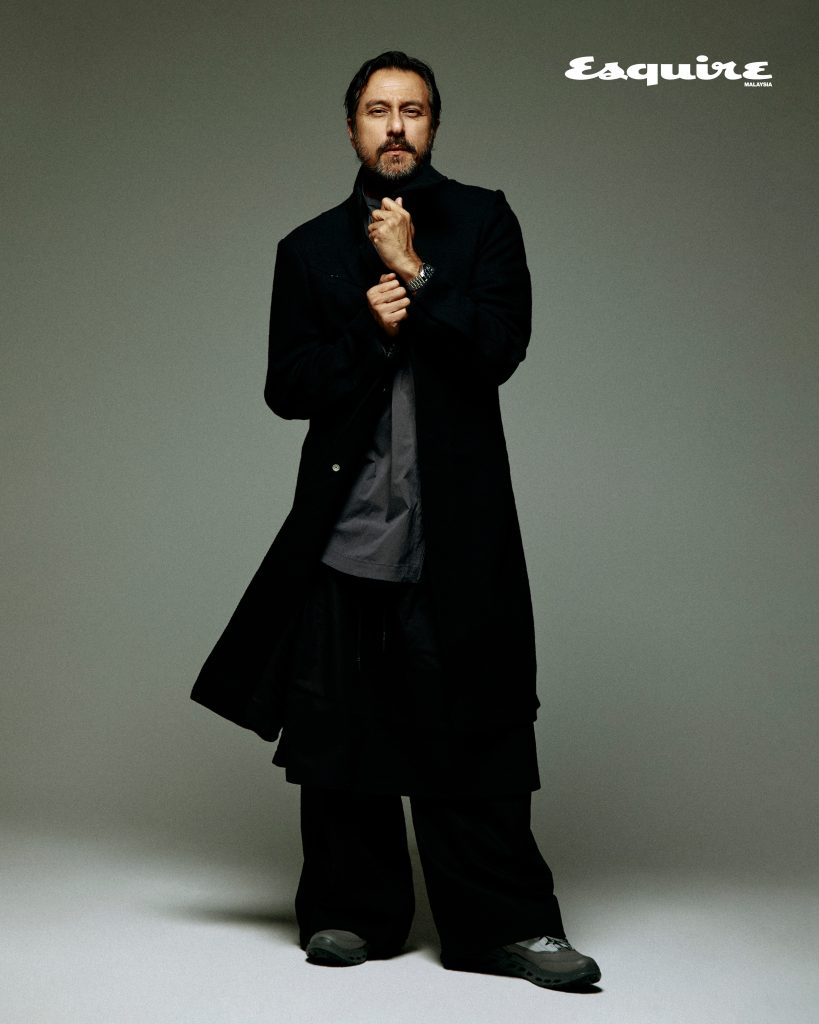
With so many projects under his belt, the challenge is to find the next one that really excites him. This goes back to Palarae being allergic to complacency. He’s seen the same kinds of storylines and tropes come around in scripts countless times.
As a younger actor, he’d avoid accepting projects unless he really believed them, holding out until his bank account was “screaming”—even if it meant many lean months.
“I used to be known as the guy who’s willing to say no to almost everything while waiting for the right one to come along.”
To this day, he’s looking for projects that are “better in every sense.”
When he read the script for Tarung, co-written by director Razaisyam Rashid and Amar Amir, there was one scene that stopped him mid-read. It was so gripping that he immediately messaged Razaisyam about it.
“I told him, it’s one of the best—if not the best—scene written in a Malaysian gangster film.”
If you’ve seen Tarung, you probably know the one that got his attention: if you’re like me, you might have gasped at the same moment in the film.
Tarung was a hit with Malaysian audiences. To date, it is this year’s top domestic film, pulling in more than RM24 million at the box office.
The film had some great cards to play—compelling character relationships, dynamic fight sequences, and suspenseful storytelling. It was also staggeringly well cast with an ensemble of old hands and rising stars.
Palarae plays Ayah Khalid, a mafia boss who’s doing his best to hold onto his position as the leader of the crime network, Marga. For a chance at the throne, the crime bosses from each district pit their chosen young fighters against each other in underground fights.
The concept allows two generations of actors to come together. Palarae plays off against his rival Ayah Badrul (Zul Ariffin), while rising stars Mierul Aiman and Aedy Ashraf face off as Hatta and Isa in the fighting ring.
“Of course I was intrigued to actually see how the kids are doing,” says Palarae, of his young co-stars. “They have so much potential. So I thought it would be good to actually work with them.”
More impressive still: Tarung is the first production from Alpha47 films, with a passionate first-time producer in Aedy Ashraf.
“We need 10 Aedy’s,” Palarae says, of his on-screen son. “If we had ten Aedy’s, I think [the industry] will be off somewhere.”
Asked to describe Palarae, director Razaisyam is effusive.
“Bront brings layers to the script that you didn’t even realize were missing until he steps in front of the camera,” says Razaisyam. “He elevates every scene, not by overpowering it, but simply by being completely present and making everyone around him better.”
He reminisces about meeting Palarae back when he was a new director doing small, indie projects. Although Palarae was already a star by then, he approached Razaisyam first.
“That’s just who Bront is. He’s incredibly humble, he respects people, and he validates newcomers. He always makes space for the next generation.”
So what does Palarae do when he has a day off? The truth is, he doesn’t really have days off.
There’s another side to Bront Palarae the filmmaker; beyond acting, producing, directing and generally lifting up the industry. He’s also writing.
He tells me he’s been developing a few scripts, including one about the George Town riots of 1867. After getting pulled into some fascinating research, he’s also been working on a novel about bandits in Kedah, in the 1900s.
“You know, some people do jigsaw puzzles. Some people collect butterflies.” His way of unwinding is writing, which he describes as a kind of “therapy”.
So when he’s waiting to pick up his daughter from somewhere, or in between set changes at a photo shoot (like ours), he takes out his phone and continues to work.
When it comes to the future, Palarae is meditative. There’s no “dream project” or “dream director”. He feels grateful for what he already has.
As for the past, he’s equally sanguine. Looking back, is there anything he wishes he could tell his younger self?
“Nothing,” he says, with that trademark warm laugh again. “No regrets.”
Photography: Chuan Looi | Yipieyaya Studio
Creative Direction & Styling: Low Zhen Yang
Art Direction: Amirul Arrifin
Producer: Ling Low
Grooming: Eranthe Loo
Photo Assistants: Bee Ang & Edison Liew | Yipieyaya Studio
Styling Assistants: Ezra Motijol & Felisya Elriani

Esquire Malaysia
©2026, Heart Media Pte Ltd
