One of the reasons I’m still unable to wean myself off social media is due to the algorithm feeding me a constant stream of house tour content. There’s something vaguely voyeuristic about being allowed to peek inside other people’s homes—learning about their taste, how they live, what they chose to spend their money on.
I like to judge their renovation choices from the comfort of my beat up sofa, or scoff at their decision to have ostentatious marble floors while I walk on the white tiles of my basic rental.
But Caleb Goh, a 32-year-old lawyer in Kuala Lumpur, doesn’t have to live through other people’s fantasy homes. He’s already living in his own.
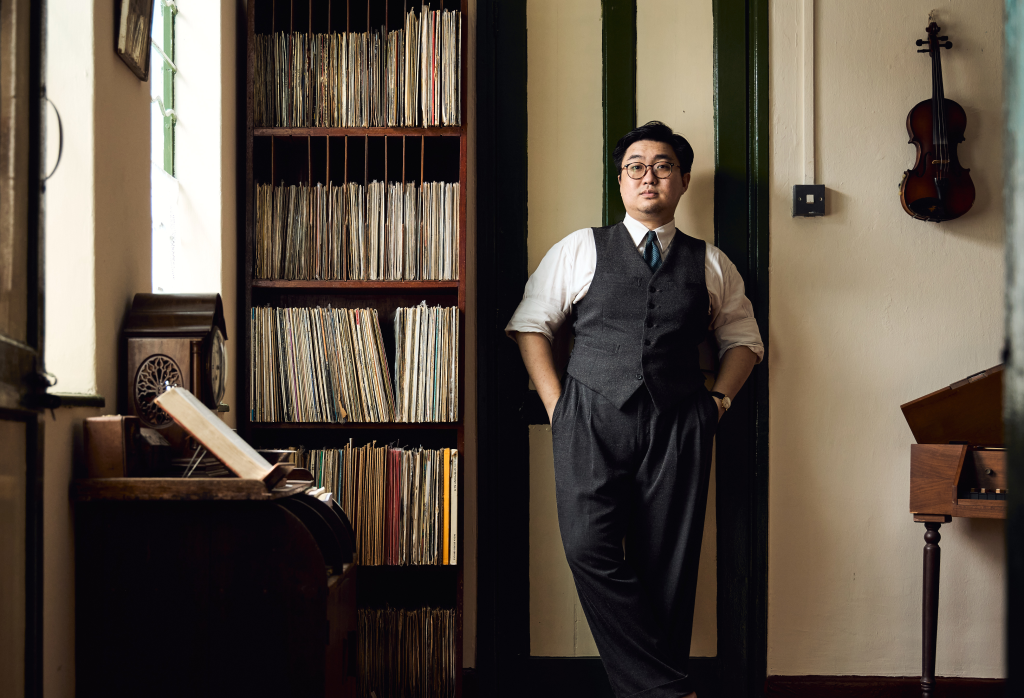
I first saw Caleb Goh’s place in an Instagram Reel on my feed, as he walked interviewers through his apartment: a space overflowing with an incredible collection of books, instruments, typewriters, gramophones, old clocks, and vintage furniture.
Back then, Goh was renting a shophouse unit above a cafe in Brickfields. He had transformed the space into the dream apartment for history lovers, and it came to be known as the Nam Hoe Brickfields.
Growing up in a shophouse in Muar, Goh’s family lived above his grandfather’s tinsmithing shop, Chop Nam Hoe. Eventually, his family moved to a terrace house in the suburbs. “Staying in shophouses was noisy lah. No privacy also. No one wanted to stay in a shophouse in those days. When my dad was more financially stable, he decided to move us all to a taman.”
As the son of an engineer father and a music teacher mother, Goh inherited both a sense for repairing things, and a deep and abiding love for music. As a child, he began collecting things. “It’s just me. Everyone else in the family is normal,” he quips.
It started with books, then led to vinyl records. Which led to gramophones. Photographs. Cameras. Clocks. Typewriters. As for instruments? He’s learned how to play 32 of them.
“I’m the sort of person who would learn an instrument and then move on. Once I’ve figured out how to play it, I’ll move on to the next. So I have never truly mastered an instrument.”
He also repairs antique clocks, salvages period-specific furniture, fixes harpsichords and hosts vinyl gatherings in his home.
While we’re all living through various vintage photo filters and bursts of nostalgia, Goh has gone further than most.
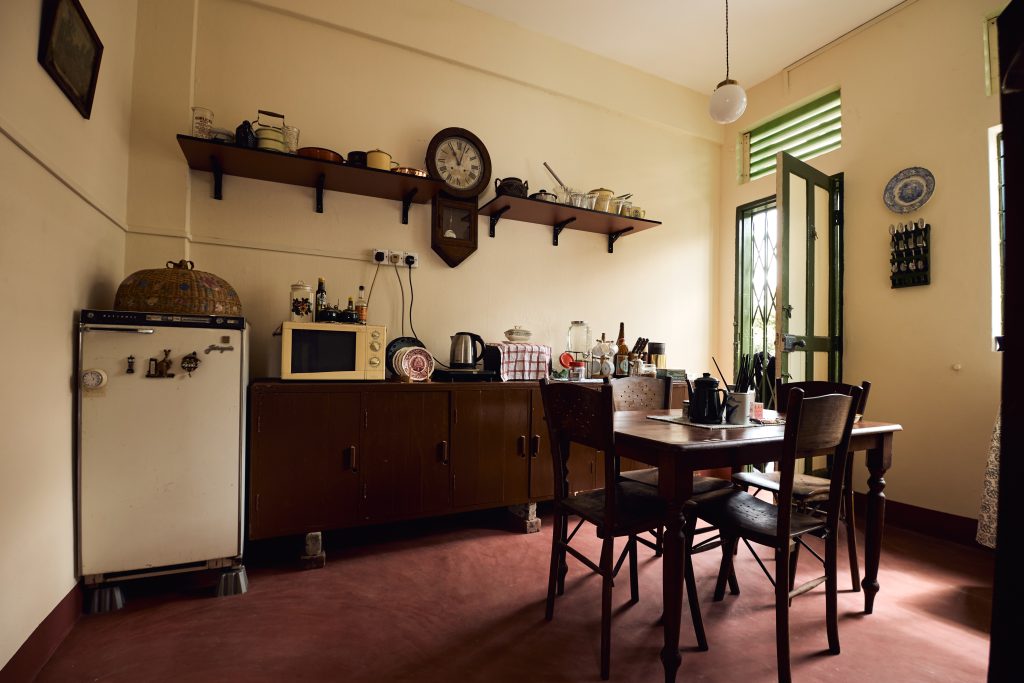
“As a collector, I have come to a point where I’m curating almost a movie set,” says Goh. “I’d say I’m creating my space like a living diorama, I suppose.’
But it didn’t start off that way.
Goh’s first rental in KL was a rundown apartment in Chow Kit where he had to share a toilet with twelve other tenants. Then Covid struck. Spending the first lockdown in a tiny box was enough to drive anyone crazy, and that desperation drove Goh to embark on this journey to create the apartment of his dreams.
“I really needed to move out, but the thing was, I didn’t want one of those modern apartments. I call them ‘White Tile’. They all have white tiles. Plus, I really hate waiting for the lift.”
Goh began hunting around the Chow Kit and Petaling Street area for a place to fulfil his cinephile dreams. After constant disappointments with rundown units, overly renovated places and cutthroat rentals, he met a friend at a photography workshop, who knew of a vacant unit in a shophouse above a cafe in Brickfields, putting an end to his hunt.
“The shophouse looked plain on the outside, but on the inside, it’s beautifully preserved. It had original red oxide flooring, black and white doors, high ceilings, an airwell, even the original British Crittall windows. So I took it.”
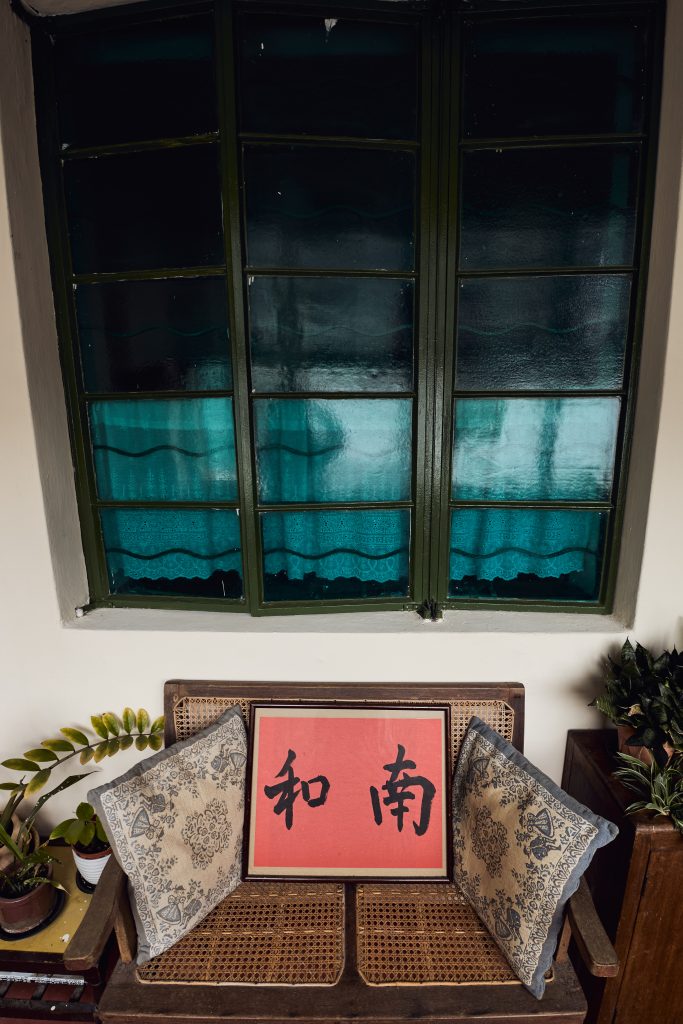
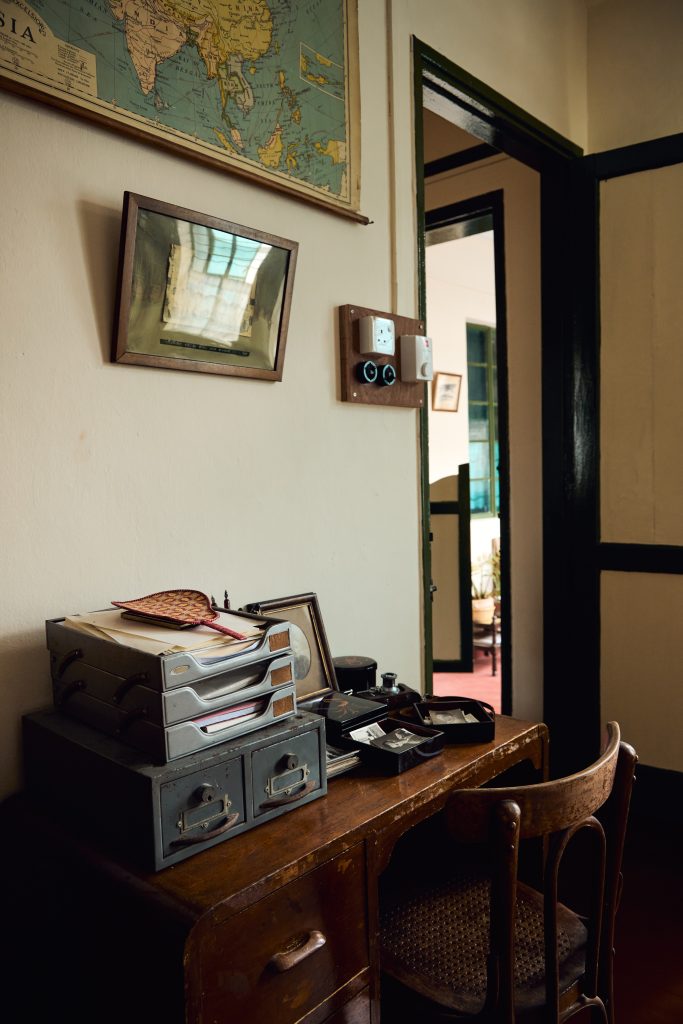
The Nam Hoe Brickfields became Goh’s proof of concept. “I just wanted to prove that it is possible to live in a place like this, on a budget like this, in a city like this.”
“My friends didn’t think that I’d be able to survive the roof leaks, the noise. It’s near a main road, there’s a Punjabi club in the row below us, there are traffic lights nearby, and when it rains, the leaks get so bad that a river runs through my house,” he says matter-of-factly. “But I like it.”
It took a village to bring his home to life. Friends helped with the move, accompanying him on furniture junkyard hunts, working with fixtures and ceiling leaks. As Nam Hoe Brickfields came together, it began attracting attention, and with it, a community.
One thing led to another, and Goh began opening up his home to host gatherings on things he’s always loved—music, arts and culture. French horn recitals, vinyl listening parties, jam sessions, workshops, heritage walks, and socials. “We became a sort of club of vagrants: citizens of a lost version of KL, gravitating around what little is left of the city that was.”
After four and a half years renting at Brickfields, Goh became a homeowner at 32 years old. A tipoff from a friend led him to purchase a 1950’s postwar unit in Setapak, believed to be one of the few surviving art deco flats in KL. It was complete with wooden saloon doors, brass doorknobs, fish scale ventilation blocks, ziggurat-shaped gables. It even retained the original wall-mounted glass lamps. But the original red oxide flooring had been covered in tiles which Goh hated. He had the tiles removed and the flooring resurfaced, sourcing contractors from India who knew how to do it.
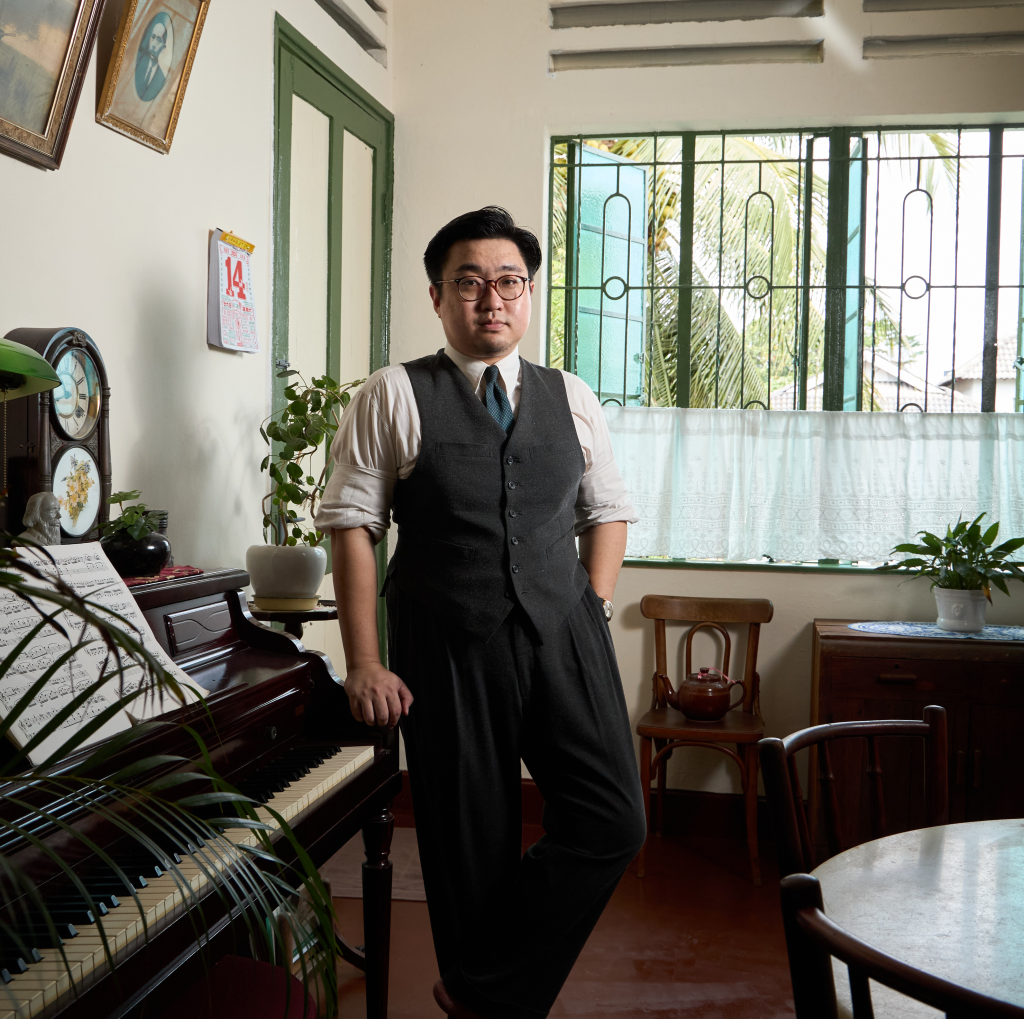
So Nam Hoe Brickfields became Nam Hoe Setapak. On a visit to his home on a Sunday afternoon, I was welcomed with warm music from a gramophone that drifted languidly through the air. A ceiling fan spun slowly in the living room, lined with bookshelves filled with ornate hardcover tomes. (Goh’s hot take: “There’s more value in an unread book than in a read book.”)
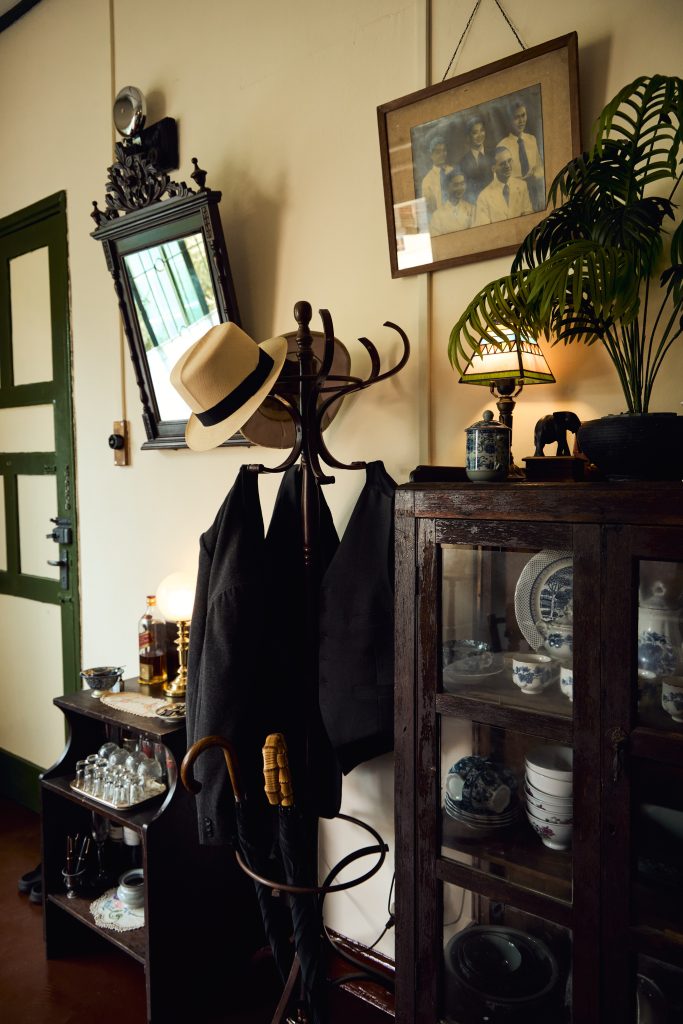
A coat rack topped with jaunty panama hats and tailored waistcoats stood by the entrance, while the walls were filled with vintage photos.
The overall experience felt disorientating, like I had travelled back in time to someone’s home from the early postwar era. Goh came out from the kitchen, a blue and white checkered dishcloth in hand, “Sorry, I’m doing the dishes.”
In looking around, I noticed that Goh is selective in his curation. For example, he doesn’t have any ornate antique Peranakan furniture, because it wouldn’t suit this middle class style of house.
He explained that he was inspired by creatives such as Dennis Severs and Bomti Iyengar in not just studying history, but actually living history. American artist Dennis Severs moved to London and bought an eighteenth century townhouse in Spitalfields in the 1960s, decorating it in a way to look as though what it would have looked like in the 1700s. Not just the furniture, but even recreating the smells, the chamberpots, the half-eaten food to complete the experience. Bomti Iyengar is a Calcutta-based art curator who made his home in an apartment in a refurbished colonial-era department store.
“When I was living in the crapbox in Chow Kit, I saw pictures of Bomti’s flat. It had art, antiques, a grand view of the city, and for a small fee, you can attend a curated dinner where he will cook for you, show you artworks, and introduce you to very interesting people.”
“And I thought, if I had a flat like that, all my problems in life would be solved.”
But even as he settles in, Goh continues to be on the lookout for a home to fulfill his conservationist dreams.
“People may call this my forever home, but the ultimate goal is to own a prewar home. I want to show that it is possible to achieve this in KL.”
Sitting among Goh’s curated accoutrements, one can’t help but wonder what’s the most prized item in the apartment. “What would I save in a fire? My family photo albums. I collected thousands of photos of random strangers, but I have very few pictures of my own family, because we didn’t take a lot of photos.”
“I’m always jealous of those old Malacca and Penang families because they have their ancestral portraits and all that. We don’t have that. I think my collection is a way of rebelling. You always want what you never got growing up. I didn’t have a lot of family history. So now I’m acquiring all these fake ancestors.”
Incidentally, Goh traced the history of his current home to the family of Tan Sri Low Yat, who commissioned an architect to design these rows of houses for his extended family.
I’m curious as to how Goh has dealt with the publicity around his home, which is now a sought-after location for photo shoots.
“I feel responsible. I am not a historian nor am I an architect, and what little that I do is self-taught, but the elevated visibility has given me the platform and agency I need to spread my ideas of how we as a society should approach old buildings.”
“I hope to engage and educate more fellow Malaysians and Singaporeans, and open people's eyes to see that there is more than one path to adaptive reuse. And most importantly, to try living in old buildings again, repopulating the older parts of KL that have long since gone downhill after the urban flight of the last 30 years.”
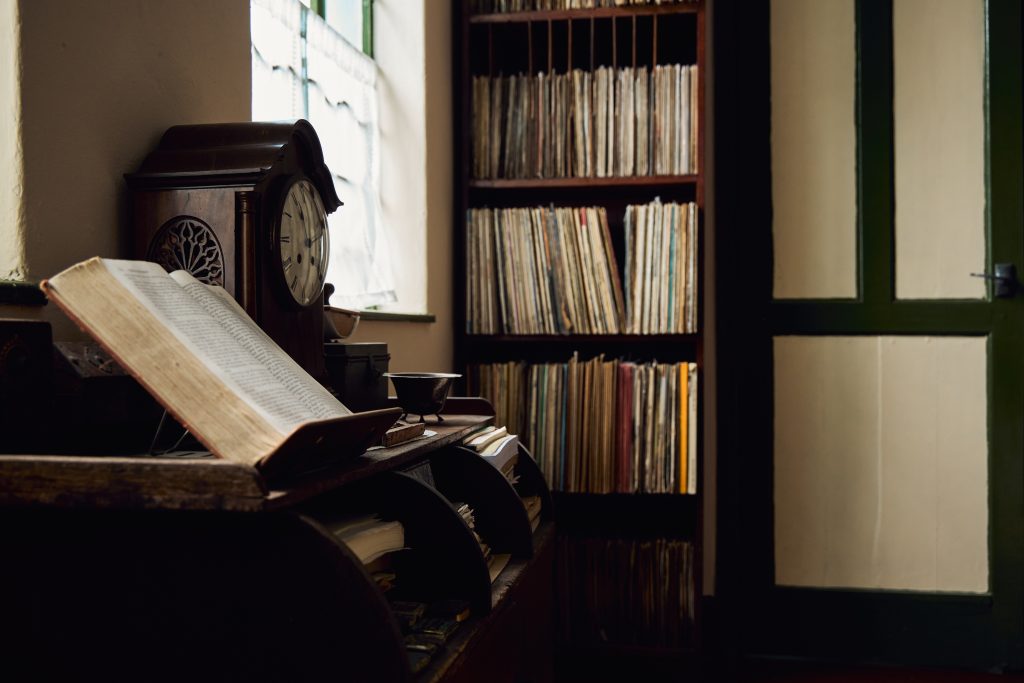
Vintage living is not for everyone—and Goh admits he doomscrolls and loves ASMR videos as much as the next person. But when most of us would simply fantasise about escaping from our digitally powered lives, Goh is walking the talk.
Meanwhile, to friends and acquaintances who’ve borrowed his typewriters, cameras, waistcoasts and more for shoots and props, he has a message: “I want them back”.
Photography by Teng Soul Wong

Esquire Malaysia
©2026, Heart Media Pte Ltd
